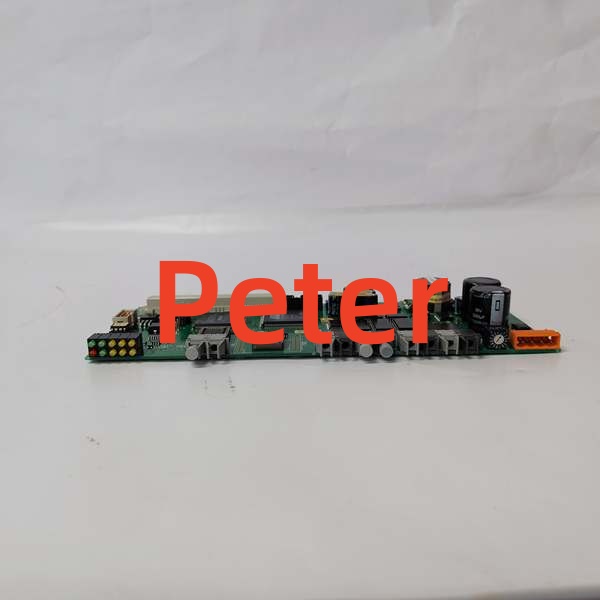
Description
Product Core Brief
- Model: PPC905AE101 3BHE014070R0101
- Brand: ABB
- Series: AC 800PEC Power Electronic Control Platform
- Core Function: Executes microsecond-level power converter regulation, grid synchronization and fault detection for excitation, SVC, wind turbine and medium voltage drive systems.
- Product Type: High-Speed Power Electronic Main Processor Module
- Key Specs: 32-bit RISC 100MHz core | 512MB RAM / 1GB Flash | Dual 10/100Mbps Ethernet
- Note: Limited OEM residual spare stock; factory sealed new units and fully bench-tested surplus stocked for power conversion plant maintenance.
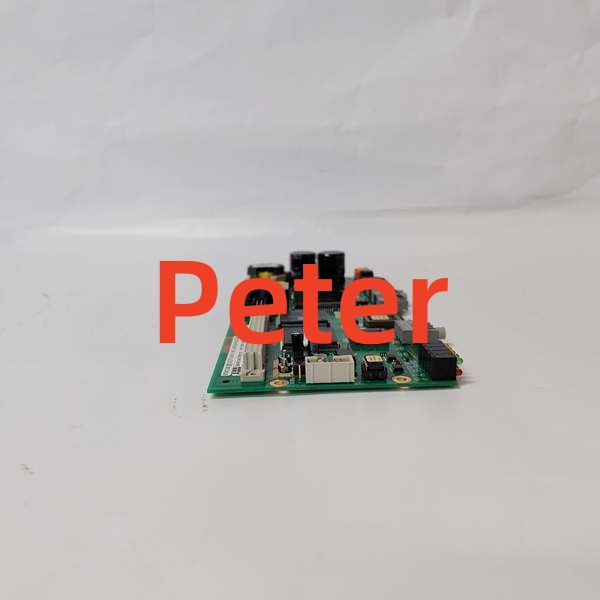
Key Technical Specifications
| Parameter | Value |
|---|---|
| Full OEM Part Identifier | , 3BHE014070R0101 |
| Processing Core | 32-bit high-speed RISC, 100 MHz clock speed |
| Runtime Memory | 512 MB DRAM for converter control algorithms and tag buffers |
| Non-Volatile Storage | 1 GB onboard flash for firmware, tuning parameters and fault event logs |
| Operating Supply Voltage | 24 VDC, 18–32 VDC tolerance, max 15 W power dissipation |
| Rack Backplane Interface | AC 800PEC proprietary high-speed power bus for gate drive I/O expansion |
| Onboard Communication Interfaces | 2× RJ45 10/100 Mbps Ethernet; 1× isolated RS485 redundancy sync port; 1× RS232 service debug port |
| Supported Industrial Protocols | Modbus TCP, IEC 61850, Profibus DP, proprietary PEC internal fieldbus |
| Deterministic Control Loop Speed | Minimum 0.1 ms converter regulation scan for grid power loops |
| Redundancy Capability | 1oo2 hot standby pairing with matched units, <20 ms bumpless switchover |
| Operating Ambient Temperature | 0 °C to +60 °C ventilated power cabinet rack mounting |
| Storage Temperature Range | -40 °C to +85 °C |
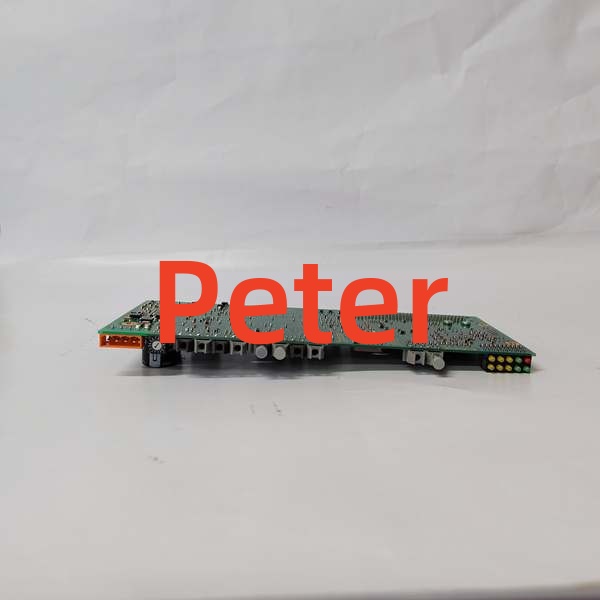
| Enclosure Protection Rating | IP20 rear PCB, conformal coated for corrosive gas environments |
| Physical Dimensions | 220 mm L × 115 mm W × 40 mm D |
| Net Unit Weight | 0.85 kg |
| Compliance Standards | CE, UL508, RoHS, ATEX Zone 2, IEC 61131-3, IEC 62477 |
| Mount Format | Standard 19-inch DIN subrack slide-in module design |
Product Introduction
This board acts as the dedicated real-time processing core for ABB AC 800PEC power conversion racks, purpose-built to run fast switching control algorithms for generator excitation units, static var compensators, wind power converters and medium voltage variable speed drives. It delivers sub-millisecond fault detection to isolate power semiconductor damage before hardware failure occurs.
Dual isolated Ethernet ports separate supervisory SCADA traffic from internal converter fieldbus communication, eliminating cross-talk induced control latency that destabilizes grid-connected power assets. The large flash memory bank retains full converter tuning curves and fault waveform archives through complete rack power outages.
QA & Testing SOP (Transparency Building)
- Incoming Inspection: Cross-reference module serial numbers against OEM spare registry to reject counterfeit hardware; inspect gold edge backplane connectors, power terminal blocks and conformal PCB coating for scratches or oxidation; log batch codes and serial IDs for full traceability records.
- Live Testing: Seat the unit into matching AC 800PEC backplane, supply stabilized 24VDC bench power, load reference converter control logic, run continuous 24-hour cyclic grid simulation and Ethernet/RS485 redundancy handshake stress testing.
- Electrical Testing: Use Fluke 115 multimeter and insulation resistance tester to validate chassis ground resistance below 0.5Ω and PCB power-signal insulation resistance above 10MΩ.
- Firmware/Config Backup: Record exact factory firmware revision via ABB Control IT engineering software, photograph onboard DIP switch rack addressing settings, export full converter tuning parameter datasets to encrypted offline storage.
- Final QC & Packaging: Clean exposed PCB surfaces with anti-static solvent, seal the module inside static shielding bag, attach printed QC test tag with technician ID and test timestamp before foam-lined anti-shock carton packaging.
Installation Pitfalls & Guide (Engineer to Engineer)
❗ Firmware Rev Mismatch: Firmware builds newer than site Control IT software block high-speed converter bus scanning and disable grid synchronization loops; cross-check OEM software compatibility matrix before flashing the unit.❗ Redundancy Sync Cable Polarity Error: Reversed RS485 sync wiring between paired units disables bumpless failover and triggers continuous grid oscillation alarms; label cable ends before disassembly to match board silkscreen markings.❗ DIP Switch Address Conflicts: Duplicate rack node addressing floods the plant Ethernet bus with broadcast errors; capture high-resolution photos of original switch layout prior to removal.❗ Power Supply Underrating: The unit draws peak 15W during cold startup; shared rack 24VDC supplies with multiple processing boards trigger voltage sag and incomplete converter boot sequences.❗ ESD Dangers: Unwristed technician contact with exposed PCB traces corrupts flash tuning parameter storage; field service logs show ungrounded handling destroyed this board with over $3,800 in hardware and power asset outage labor costs.
4-step replacement guide:
- Pre-install: De-energize full AC 800PEC rack 24VDC supply, fit certified anti-static wrist strap, photograph power wiring, Ethernet/RS485 cabling and DIP switch positions.
- Removal: Release rack slide latches, disconnect 24VDC power terminals and all serial/Ethernet communication wiring, slide the unit fully out of the 19-inch subrack slot.
- Install: Align the new board’s edge connector with the backplane power bus, lock mounting latches, replicate original DIP switch node addressing and reterminate all communication and power wiring.
- Power-on Test: Restore 24VDC rack power, upload matching firmware and converter tuning parameter set, execute full backplane I/O scan and run 30-minute steady-state grid regulation test to confirm no power loop drift.
FAQ (Frequently Asked Questions)
Q: Can this board directly replace PPC902AE101 or PPC902CE101 Symphony Harmony processors?A: No. Hardware backplane bus and firmware architecture are exclusive to AC 800PEC power converter platforms; mechanical rack form factor does not match Symphony Harmony racks, zero cross-system drop-in compatibility.
Q: Does the board support hot-swapping while power converters remain grid-connected?A: Hot-swapping is fully unsupported. Removing the unit mid-operation cuts all gate drive control signals, triggering immediate converter trip and potential grid voltage instability; full rack 24VDC power shutdown is mandatory for replacement.
Q: What warranty coverage applies to stocked hardware?A: Remaining factory-new OEM spares carry a 12-month manufacturer warranty covering all onboard processing and power circuits. Bench-tested surplus inventory ships with a 6-month functional warranty; physical damage from miswiring, ESD or overvoltage voids all coverage terms.
Q: Has ABB issued an official EOL notice for this hardware?A: Formal end-of-production status applies; OEM no longer manufactures new batches, only limited residual surplus stock is available for existing excitation, SVC and renewable converter sites. Verify with OEM datasheet for modern PEC upgrade controller alternatives.
Q: Will converter tuning curves and grid protection parameters persist after swapping the board?A: Loop gain setpoints, voltage ride-through curves and fault thresholds do not store natively on the hardware. Back up the full parameter database from the old board before removal and re-download to the new unit post-install; firmware mismatches corrupt parameter upload sequences.
Q: What I/O and communication accessories pair with this processor?A: Compatible AC 800PEC rack accessories include high-speed gate drive interface cards, analog grid measurement modules and Ethernet to IEC 61850 protocol converters. Cross-reference the AC 800PEC system hardware manual for maximum rack expansion limits.
Q: Can this unit operate for general discrete manufacturing automation outside power conversion assets?A: Native firmware is hard-coded exclusively for power electronic switching, grid synchronization and excitation control algorithms. Repurposing for standard factory PLC logic requires custom firmware rework which ABB does not authorize or provide technical support for.