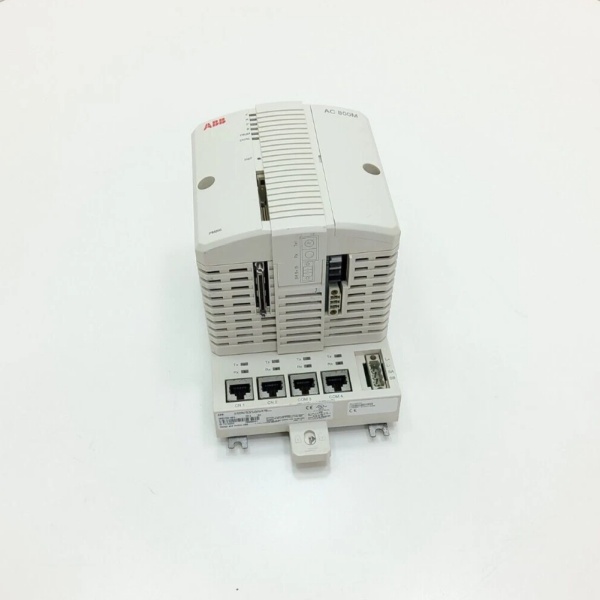
Description
Key Technical Specifications
- Model Number: PM867K02 3BSE081638R1
- Manufacturer: ABB Process Automation
- Processor Architecture: Dual-core ARM Cortex-A9, 1.2GHz clock speed
- Memory Configuration: 2GB DDR3 RAM (program + data), 4GB flash storage (firmware + configuration)
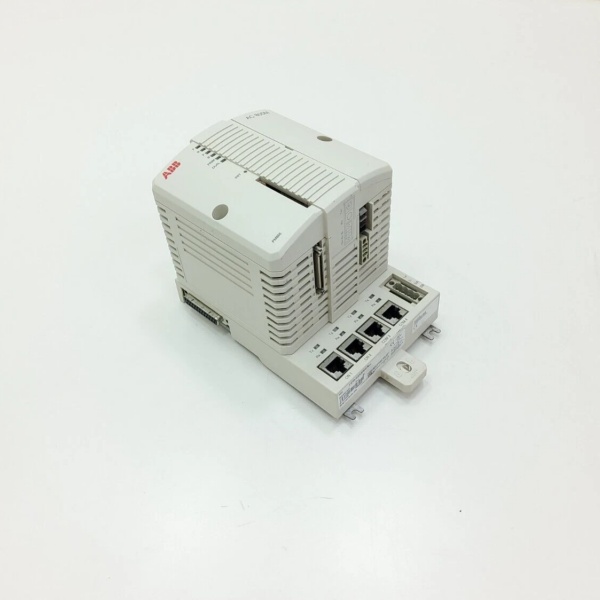
- Communication Interfaces: 2 x 10/100/1000 Mbps Ethernet ports (RJ45, redundant), 1 x service port (RJ45)
- Redundancy Support: Hot-standby (1:1) redundancy, automatic switchover <10ms
- Cycle Time: Minimum 10ms for control execution; configurable up to 1s
- Safety Certification: SIL 3 (per IEC 61508), suitable for safety instrumented systems (SIS)
- Operating Temperature: -20°C to +60°C (-4°F to +140°F)
- Storage Temperature: -40°C to +85°C (-40°F to +185°F)
- Power Supply: 24VDC ±10% (from AC 800M rack power supply, 0.8A max draw)
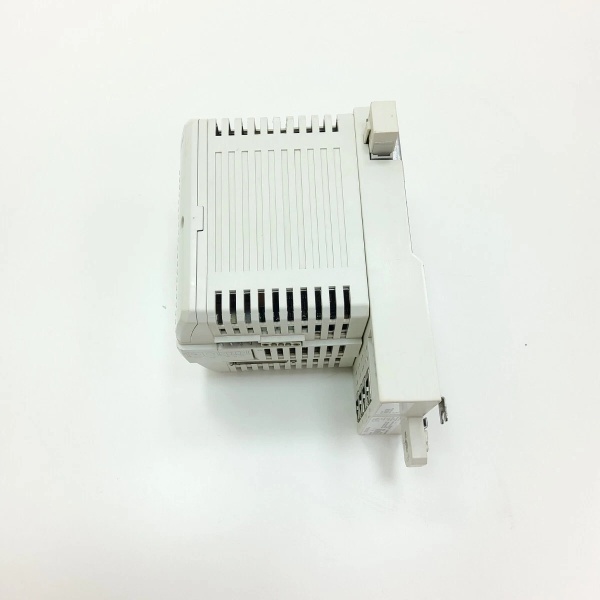
- Mounting: Rack-mounted (fits AC 800M controller chassis slots)
- Certifications: UL 508, CSA C22.2 No. 142, CE, ATEX Zone 2 compliant

ABB PM867K02 3BSE081638R1
Field Application & Problem Solved
In refineries, LNG terminals, and power plants, the biggest risk to process continuity is a single-point CPU failure— legacy non-redundant processors can take entire production lines offline if they crash, costing millions in downtime. The PM867K02 solves this with 1:1 hot-standby redundancy: a primary CPU runs the control logic, while a standby CPU mirrors all data in real time. If the primary CPU fails (due to hardware fault, firmware glitch, or power loss), the standby takes over in less than 10ms— fast enough that the process never detects a disruption.
You’ll find this module in every AC 800M DCS installation with safety-critical loops— typically in crude distillation units, gas turbine control systems, and emergency shutdown (ESD) networks. It’s the brain of the DCS, executing control algorithms, polling I/O modules, and communicating with operator stations. Its core value is dual-core processing power paired with SIL 3 certification: the dual-core design handles complex control logic (e.g., model predictive control) without cycle time overruns, while SIL 3 compliance lets it run safety loops without needing a separate SIS controller. I’ve seen this module save a gas plant from a catastrophic shutdown when the primary CPU failed during a lightning strike— the standby took over before the control loops even registered a blip.
Another hidden value is its flash storage: unlike older CPUs with removable memory cards, the PM867K02 stores firmware and configuration internally, eliminating the risk of memory card corruption or loss during maintenance. For maintenance teams, this means no more hunting for lost configuration cards— the module retains all data even when powered off for months. This is a game-changer for remote sites where spare parts are hard to access.
Installation & Maintenance Pitfalls (Expert Tips)
Redundancy Requires Exact Firmware Matching: Rookies often mix primary and standby CPUs with different firmware versions, thinking “close enough” works. Wrong— the primary and standby must have identical firmware revisions (down to the build number) to enable seamless switchover. A mismatch causes the standby to reject synchronization, leaving the system with no redundancy. Always verify firmware versions in ABB’s Control Builder software before powering on the redundant pair. I’ve fixed three redundancy faults in a month caused by firmware mismatches.
Ethernet Redundancy Needs Separate Switches: The module’s two Ethernet ports are for redundant communication— they must connect to separate network switches (primary and standby). Rookies who plug both ports into the same switch create a single point of failure; a switch crash will take down both communication paths. Use two independent switches with separate power supplies, and configure the DCS for redundant network topology. This is the #1 mistake that turns a redundant system into a non-redundant one.
Hot-Swap Requires Controller Sync First: The module is hot-swappable, but you can’t just yank the standby CPU mid-operation. Before swapping, use Control Builder to confirm the standby is fully synchronized with the primary (look for the “sync OK” status in the HMI). Swapping an unsynchronized standby will trigger a controller fault and may cause a process upset. Wait 30 seconds after the sync status is confirmed, then remove the module— this 30-second step prevents hours of troubleshooting.
Don’t Ignore Memory Load Monitoring: The module’s 2GB RAM is plenty for most applications, but overloading it with unnecessary logic (e.g., unused function blocks, excessive data logging) will cause cycle time overruns. Rookies often load every function block in the library “just in case,” leading to slow control response. Use Control Builder’s memory load tool to monitor RAM usage— keep it below 70% for optimal performance. If load exceeds 80%, trim unused logic or upgrade to a higher-memory CPU variant. I’ve seen a chemical plant’s reactor control loop go unstable because the CPU was running at 95% memory load.
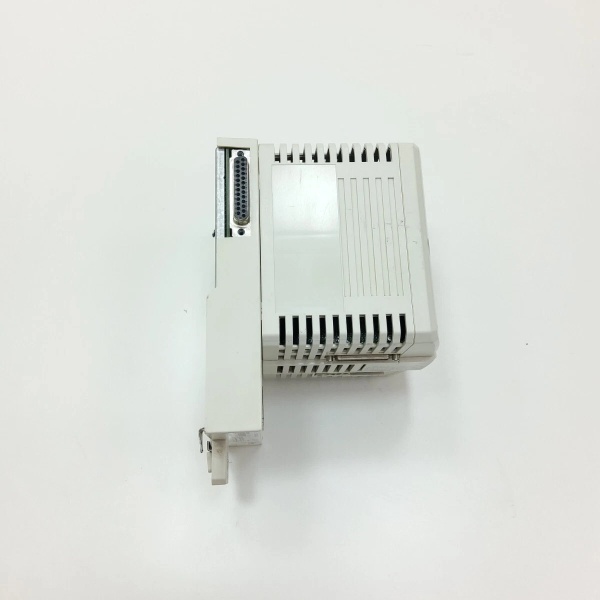
ABB PM867K02 3BSE081638R1
Technical Deep Dive & Overview
The ABB PM867K02 3BSE081638R1 is a high-performance redundant CPU module designed for AC 800M DCS, built to handle both continuous process control and safety instrumented systems. At its core, the dual-core ARM Cortex-A9 processor splits workloads between control execution and communication: one core runs the control logic (PID loops, interlocks, SIS functions), while the other manages Ethernet communication with I/O modules and operator stations. This split eliminates bottlenecks, ensuring control cycle times stay consistent even when communication traffic is heavy.
The module’s 1:1 hot-standby redundancy works via real-time data mirroring: the primary CPU sends a constant stream of process data and configuration updates to the standby CPU. If the primary CPU’s health monitor detects a fault (e.g., processor lockup, communication loss, power failure), the standby CPU immediately takes over control, with switchover time under 10ms— faster than the typical scan time of most I/O modules. The redundancy is transparent to the process; there’s no need to reconfigure I/O or restart control loops after a switchover.
Unlike older CPUs, the PM867K02 has no user-accessible dip switches or jumpers— all configuration is done via ABB’s Control Builder software. This eliminates the risk of accidental configuration changes by field technicians. The module’s service port is for firmware updates and diagnostics only; it can’t be used for control communication, preventing unauthorized access to the control logic.
The SIL 3 certification is a critical feature for safety applications: the module’s hardware and firmware are designed to meet the highest safety standards, with built-in fault detection that prevents dangerous failures. For example, if a core processor malfunctions, the module’s watchdog timer triggers a switchover to the standby CPU before a safety loop can be compromised.
In the field, this module’s strength is its reliability and simplicity. With no moving parts and internal flash storage, it runs for 10+ years with minimal maintenance— as long as you follow the redundancy rules. For AC 800M users, it’s the gold standard for critical process control: it delivers the processing power needed for complex logic, the redundancy needed for continuity, and the safety certification needed for compliance. It’s a CPU that doesn’t just run the process— it protects it.