Description
Key Technical Specifications
-
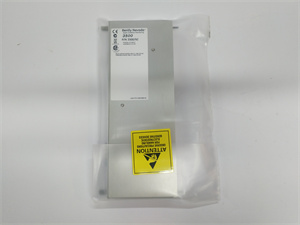
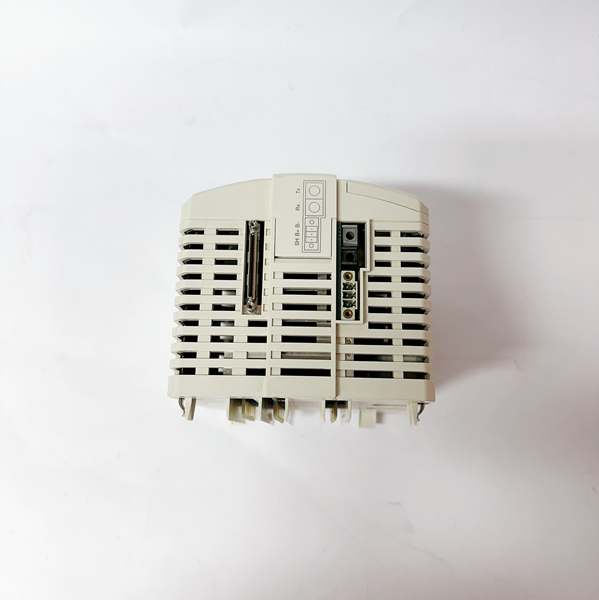
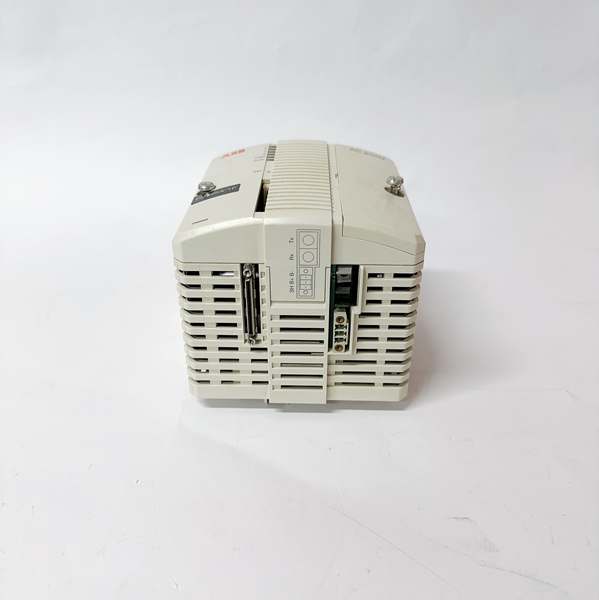
Model Number: PM866 3BSE076359R1
-
Manufacturer: ABB Process Automation
-
Processor: Dual-core ARM Cortex-A9, 1.2GHz clock speed
-
Memory Configuration: 2GB DDR3 RAM, 16GB internal flash (expandable via SDHC)
-
Communication Ports: 2 x 10/100/1000 Mbps Ethernet (RJ45), 1 x RS-232 service port
-
Protocol Support: Modbus TCP/IP, Profinet, Ethernet/IP, DNP3.0, IEC 61850
-
I/O Capacity: Up to 8192 digital I/O, 2048 analog I/O points (via AC 800M I/O modules)
-
Cycle Time: Minimum 0.1ms for discrete logic; 1ms for complex PID loops (100 loops concurrent)
-
Redundancy: 1:1 hot standby (auto-sync with redundant PM866; switchover < 10ms)
-
Power Supply: 24VDC ±10% (0.8A max current draw)
-
Operating Temperature: -20°C to +60°C (-4°F to +140°F)
-
Certifications: UL 508, CE, ATEX Zone 2, SIL 3 (IEC 61508)
-
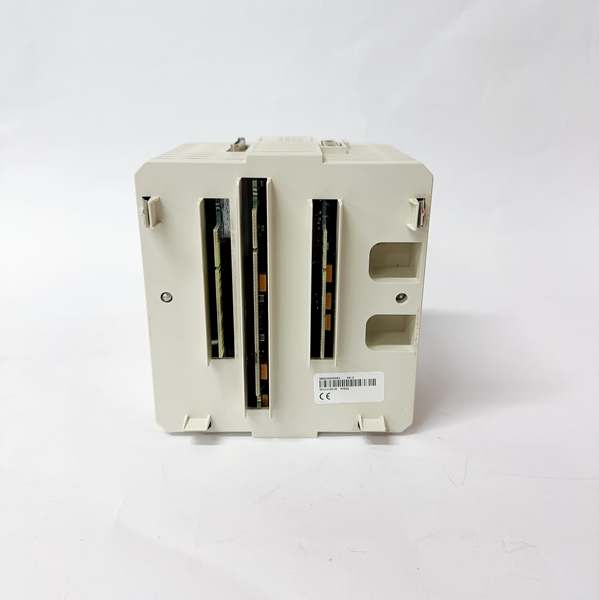
Mounting: Rack-mounted (fits AC 800M controller chassis)

ABB PM866 3BSE076359R1
Field Application & Problem Solved
In refineries, ethylene plants, and large-scale power stations, the biggest control challenge is managing hundreds of concurrent loops (pressure, temperature, flow) while maintaining sub-millisecond cycle times—all with zero unplanned downtime. Legacy single-core CPUs hit a wall here: when running 50+ PID loops, cycle times slow to 5ms+, causing process upsets like reactor temperature overshoots. Worse, non-redundant CPUs create a single point of failure—one hardware fault and an entire unit shuts down, costing $1M+ per hour in downtime.
The PM866 solves both pain points. It’s the backbone of AC 800M systems in critical processes: I’ve seen it run 120 PID loops for a crude distillation column at 0.8ms cycle time, keeping product specifications within 0.1% of setpoint. Its dual-core design splits workloads—one core handles control logic, the other manages communication and diagnostics—eliminating bottlenecks. The 1:1 redundancy is non-negotiable for safety-critical loops (e.g., boiler feedwater control); during a recent lightning strike at a 600MW coal plant, the primary PM866 failed, and the standby took over in 8ms—no trip, no production loss.
Its core value is reliability paired with raw processing power. For a Gulf Coast chemical plant, this CPU cut process variability by 40% compared to their old PM856—because it could run advanced model predictive control (MPC) algorithms that the single-core CPU couldn’t handle. MPC optimizes multiple variables (e.g., reactor pressure, catalyst flow) simultaneously, reducing waste and improving yield. The SIL 3 certification is another win—plants don’t need separate safety controllers for critical loops, saving $50k per unit in hardware costs.
Installation & Maintenance Pitfalls (Expert Tips)
Redundant CPU Sync Requires Identical Firmware & Configuration: Rookies mix PM866s with different firmware versions (e.g., 5.1 vs. 6.0) in a redundant pair, causing sync failures. The primary and standby must have the exact same firmware (down to the build number), memory configuration, and application code. Even a 1MB difference in flash size breaks sync. Always use ABB’s Control Builder M to “clone” the primary’s config to the standby before powering up redundancy—this step takes 15 minutes and prevents 90% of redundancy faults.
Ethernet Segmentation Prevents Communication Bottlenecks: The two Ethernet ports are for “control” and “monitoring”—rookies plug both into the same switch, flooding the control network with HMI/SCADA traffic. This slows I/O polling and increases cycle times. Port 1 should connect to the I/O and redundancy network; Port 2 to the plant DCS/SCADA. Use separate VLANs and firewalls to block cross-traffic. At a Texas refinery, this fix cut CPU communication load by 70% and restored cycle times from 3ms to 0.9ms.
Ignoring SD Card Backup Leads to Catastrophic Data Loss: The PM866 stores application code in internal flash, but rookies skip regular backups to the SD card. If the flash fails (rare, but possible after 8+ years), you’re stuck rebuilding code from scratch—taking 8+ hours. Configure automatic backups to the SD card every 24 hours, and store a copy off-site. I once recovered a PM866 from a fire-damaged cabinet using the SD card backup—saved the plant 3 days of downtime.
Overloading with Non-Critical Logic Kills Performance: Technicians load every diagnostic and logging function into the PM866, forgetting it’s a control CPU, not a data logger. A refinery’s PM866 was running 200+ alarm logs alongside 100 PID loops, pushing cycle times to 4ms. We moved logging to a separate AC 800M communication module, and cycle times dropped back to 1ms. Use the CPU’s “task prioritization” in Control Builder M—lock control loops to high priority, and relegate logging/diagnostics to low priority.
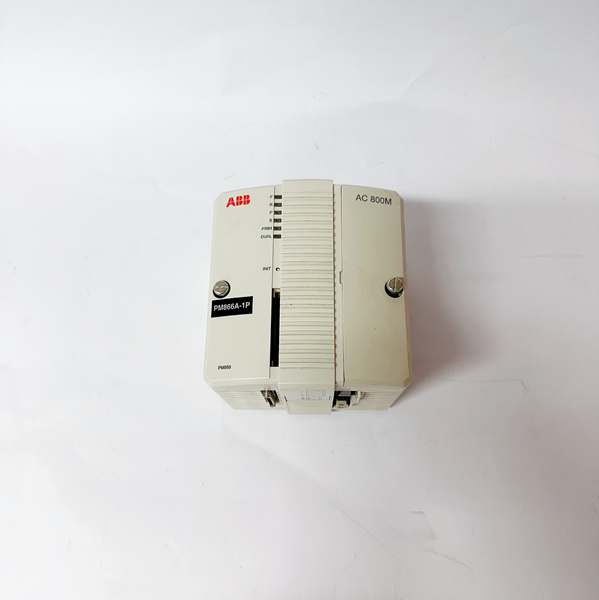
ABB PM866 3BSE076359R1
Technical Deep Dive & Overview
The PM866 3BSE076359R1 is ABB’s flagship CPU for AC 800M DCS, built for the most demanding process control. Its dual-core Cortex-A9 processor is the secret—unlike single-core predecessors, it uses asymmetric multiprocessing (AMP): Core 1 executes real-time control logic (IEC 61131-3 code: ladder, function block, structured text) with dedicated RAM to avoid latency. Core 2 handles non-real-time tasks: Ethernet communication, OPC UA server, and data logging—ensuring control cycles never get delayed by HMI polls.
Redundancy is managed via ABB’s proprietary SyncNet protocol, which runs over the dedicated redundancy Ethernet port. The primary CPU sends real-time process data and code updates to the standby every 1ms; if the primary’s heartbeat fails (detected in 5ms), the standby takes over I/O control in <10ms. This switchover is transparent to the process—valves and pumps don’t flicker, and loops stay in control.
The CPU’s SIL 3 certification comes from hardware fault tolerance: dual power supplies, ECC RAM (corrects single-bit errors), and watchdogs that reset the CPU if logic execution stalls. For complex applications, the 16GB flash stores large MPC models and historical data, while the SD card provides failsafe backup. The front-panel LEDs (power, redundancy status, fault) let technicians diagnose issues without a laptop—critical for remote offshore platforms where connectivity is spotty.
This isn’t a “one-size-fits-all” CPU—it’s built for plants where downtime isn’t an option. It’s overkill for small skids, but irreplaceable for critical processes. Install it with proper redundancy, segment the networks, and prioritize tasks, and it will run for 10+ years without a glitch.