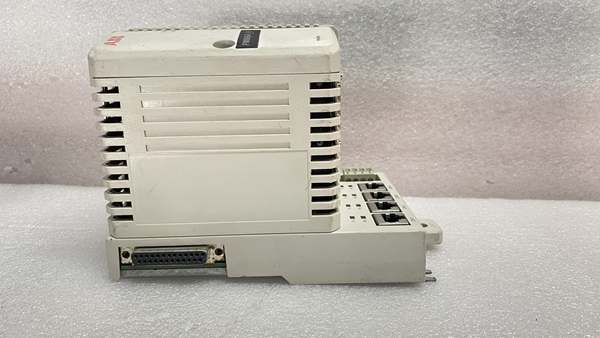
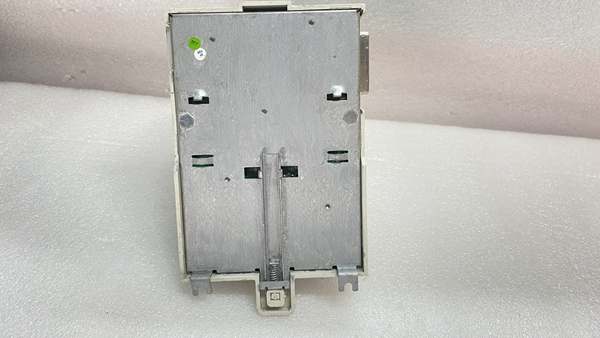
Description
Hard-Numbers: Technical Specifications
- Protocol Support: Ethernet (IEEE 802.3) with MMS/IAC, RS-232C, PROFIBUS DP (via CEX modules), RNRP redundancy protocol
- Port Count: 2x Ethernet RJ45 (CN1, CN2), 2x RS-232C RJ45 (COM3, COM4)
- Baud/Data Rate: 10 Mbit/s Ethernet, 75-19,200 baud (COM3), 9,600 baud (COM4)
- Operating Temperature: 0°C to +55°C
- Isolation Rating: 500 V AC (rated isolation voltage)
- Power Draw: 24V DC (19.2-30V), 210mA typical / 360mA maximum
- Memory: 32MB RAM total, 23.521 MB available for applications, 4MB Flash PROM for firmware
- Processing Speed: 0.18 ms per 1000 boolean operations
- Switchover Time: Maximum 10ms (redundant configuration)
- I/O Capacity: Up to 96 modules (single CPU) or 84 modules (redundant CPU)
- Clock Frequency: 67 MHz (MPC866 processor)
- Dimensions: 119mm width x 186mm height x 135mm depth
- Weight: 2.04 kg
- CEX Bus Supply Current: Max 2.4A @24V
- Electrical Modulebus Supply: Max 1.0A @24V, max 1.5A @5V
- Real-Time Clock Stability: 100 ppm (approx. 1 hour/year drift)

The Real-World Problem It Solves
Process plants can’t afford downtime when a single CPU fails in a critical control loop. This controller delivers hot-standby redundancy that keeps your process running even if the primary CPU crashes, eliminating single-point failures in refinery units, power plant boilers, and chemical reactors where every minute offline costs thousands in lost production.
Where you’ll typically find it:
- Power plant boiler control systems with turbine coordination
- Refinery distillation column control requiring continuous operation
- Chemical reactor temperature and pressure control loops
- Pulp and paper mill digester control systems
Bottom-line: It’s your insurance policy against CPU hardware failures, delivering bumpless switchover that keeps the plant alive when silicon goes south.
Hardware Architecture & Under-the-Hood Logic
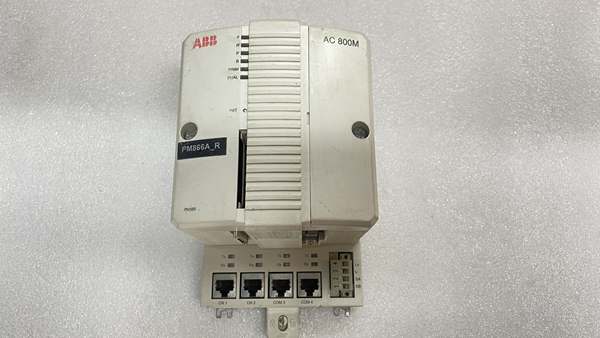
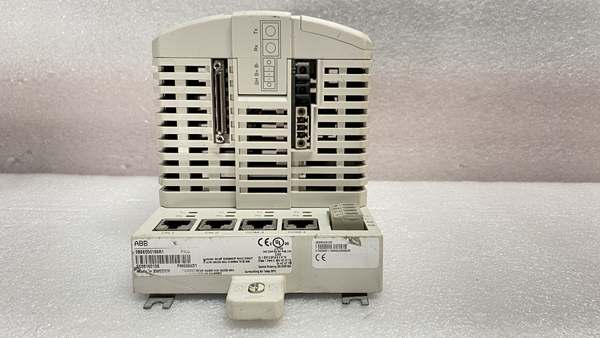
The PM862K02 consists of two identical PM862 CPU boards mounted on TP830 baseplates, operating in primary/backup hot-standby configuration. Each CPU board contains an MPC866 32-bit RISC processor running at 67MHz, with 32MB RAM split between system memory and application workspace. The dual CPUs communicate via RCU-Link cable (TK851) and synchronize continuously to maintain identical application state.
- Program Execution: The primary CPU fetches and executes control logic from application memory (23.5 MB available space), processing boolean operations at 0.18ms per 1000 instructions cycle time.
- State Synchronization: The backup CPU receives real-time state updates from the primary via RCU-Link, maintaining identical variable values and logic execution status without interruption.
- Communication Handling: Both CPUs share dual redundant Ethernet ports (CN1/CN2) for MMS/IAC protocol traffic to the Control Network, supporting RNRP (Redundant Network Routing Protocol) for path failover.
- CEX Bus Expansion: Up to 12 communication modules connect via CEX-bus (max 2.4A supply), supporting PROFIBUS DP, Modbus, and other fieldbus protocols through add-on communication cards.
- I/O Scanning: Modulebus handles S800 I/O connections with optical cluster support (7 optical clusters in redundant mode), scanning I/O modules at configurable 0-100ms rates.
- Fault Detection & Switchover: Hardware health monitoring and heartbeat checks between CPUs trigger automatic switchover within 10ms when primary failure detected, with LED status indicators (RUN, FAULT, INIT, BATTERY) providing local diagnostics.
Field Service Pitfalls: What Rookies Get Wrong
Mixing Up RCU-Link and CEX-Bus Cables
Technicians plug the TK851 RCU-Link cable into the CEX-bus connector instead of the dedicated RCU port, or reverse the direction between primary and backup CPUs. This prevents proper CPU state synchronization, causing the backup CPU to stay in initialization mode and fail to take over when the primary crashes.
Field Rule: The RCU-Link cable (TK851) connects only the two RCU ports on the CPU modules, not the CEX-bus. Verify cable orientation—arrow markers point from primary to backup CPU. The CEX-bus expansion cable (TK850) is separate and connects to the CEX-bus connector on the baseplate for communication module expansion.
Ignoring Battery Replacement in Redundant Pairs
Replacing only the failed CPU’s battery while leaving the old battery in the healthy unit causes mismatched memory retention. If the primary CPU loses power and both batteries aren’t fresh, you risk losing application data during switchover or unexpected power loss events.
Quick Fix: Replace both backup batteries (part number 4943013-6) simultaneously in redundant pairs. These are 3.6V lithium batteries—check the BATTERY LED status on both CPUs before and after replacement. Never mix old and new batteries in the same redundant controller set.
Missing ModuleBus Terminators When Adding I/O
Rookies expand S800 I/O clusters by adding more modules without installing TB807 terminators on the Modulebus ends. This causes signal reflections, leading to intermittent I/O communication failures and random process trips that look like field device problems but are actually bus physics issues.
Field Rule: Every Modulebus cluster requires TB807 terminators at both ends—one on the CPU Modulebus connector and one on the last I/O cluster. With redundant CPUs, both primary and backup Modulebus ports need termination. Running a bus without terminators guarantees data corruption; install them before powering up new I/O expansion.
Forgetting Ethernet Address Duplication Check
After replacing a failed PM862 CPU board, technicians load the old application without verifying the Ethernet MAC address matches the new hardware. ABB assigns unique MAC addresses to each baseplate, and mismatched addresses cause communication conflicts or prevent the new CPU from joining the Control Network.
Field Rule: Always check the Ethernet address label on the TP830 baseplate before downloading application code. If replacing hardware, update the MAC address in Compact Control Builder hardware configuration to match the physical label. Wrong MAC = offline controller, no matter how good your code is.
Commercial Availability & Pricing Note
Please note: The listed price is for reference only and is not binding. Final pricing and terms are subject to negotiation based on current market conditions and availability.