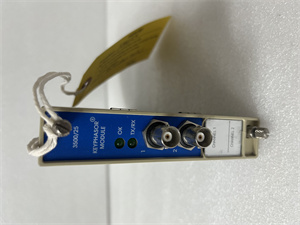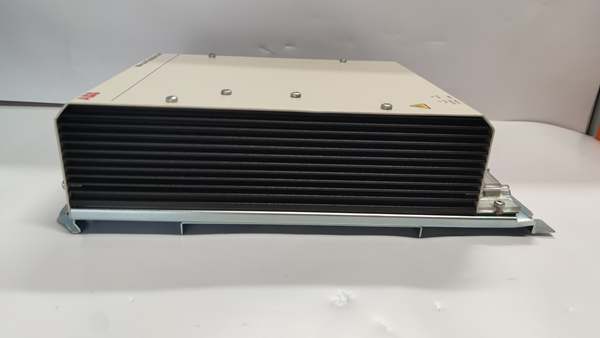
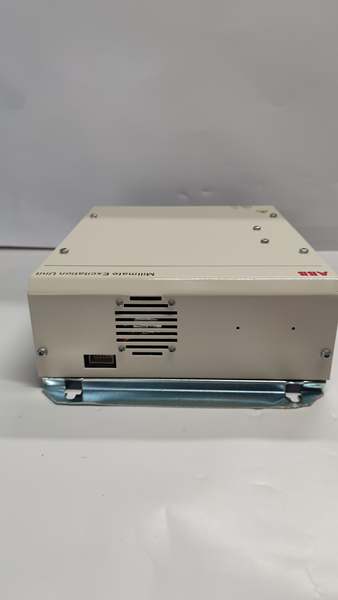
Description
Key Technical Specifications
- Model Number: PFVI401 3BSE018732R1
- Manufacturer: ABB Process Automation
- Input Channels: 4 independent, galvanically isolated vibration input channels
- Input Signal Types: Proximity probe (eddy current) signals, accelerometer signals (IEPE compatible), 0–10V DC vibration transmitter outputs
- ADC Resolution: 24-bit (high-precision signal conversion for low-amplitude vibration detection)
- Sampling Rate: 100 samples per second (SPS) per channel
- Input Range: 0–10V DC (configurable per channel for different vibration sensor types)
- Isolation Rating: 500V AC (channel-to-channel; channel-to-backplane)
- Backplane Compatibility: System 800xA CI867 communication rack backplane
- Power Supply: 24VDC ±10% (from rack power supply; 0.4A max current draw)
- Operating Temperature: -20°C to +60°C (-4°F to +140°F)
- Storage Temperature: -40°C to +85°C (-40°F to +185°F)
- Protection Rating: IP20 (rack-mounted; indoor control cabinet use only)
- Certifications: UL 508, CE, ATEX Zone 2, IEC 61010-1

ABB PFVI401 3BSE018732R1
Field Application & Problem Solved
In process plants, the biggest risk to rotating equipment uptime is undetected vibration anomalies that lead to catastrophic failures. Legacy vibration monitoring systems use standalone devices that don’t integrate with the plant’s DCS, forcing technicians to monitor multiple systems and increasing the chance of missing critical alerts. A Gulf Coast refinery once lost a $2M compressor when a standalone vibration monitor failed to trigger an alarm—vibration levels spiked overnight, causing bearing damage and a 72-hour production outage.
The PFVI401 solves this by integrating high-precision vibration monitoring directly into the System 800xA DCS, eliminating siloed data and enabling centralized machinery health oversight. You’ll find it in power plant turbine halls monitoring shaft vibration, in refinery pump skids tracking bearing wear, and in chemical plant compressor stations detecting impeller imbalance. Its core value is 24-bit ADC resolution—this lets it detect sub-millivolt vibration changes that legacy 16-bit modules miss, enabling predictive maintenance before small anomalies turn into costly failures. At the refinery, retrofitting compressors with PFVI401 modules cut unplanned rotating equipment downtime by 60%—technicians now receive DCS alerts for vibration trends, not just threshold breaches.
Another critical value is multi-sensor compatibility. The module works with both proximity probes (for shaft vibration) and accelerometers (for housing vibration), eliminating the need for separate modules for different sensor types. This reduces rack space requirements by 50% and simplifies spare parts inventory.
Installation & Maintenance Pitfalls (Expert Tips)
Sensor Calibration Must Match Channel Configuration: Rookies connect accelerometers to channels configured for proximity probes, resulting in “signal out of range” faults and inaccurate vibration readings. The PFVI401’s channels are configurable per sensor type in System 800xA—select proximity probe, IEPE accelerometer, or voltage transmitter before wiring. A power plant’s turbine vibration readings were 50% off until channels were reconfigured to match the installed proximity probes; this 10-minute fix restored accurate monitoring.
IEPE Sensor Powering Is Non-Negotiable: The PFVI401 provides 24VDC excitation for IEPE accelerometers—rookies disable this feature in software, leaving sensors unpowered and the module with no input signal. Enable IEPE power for accelerometer channels in the DCS configuration; leave it disabled for proximity probes or voltage transmitters. A chemical plant’s compressor vibration monitoring system was dead on arrival because IEPE power was disabled for all channels—enabling it brought the system online instantly.
Terminal Torque = 0.3–0.4 N·m (Critical for Low-Voltage Signals): Vibration signals are low-amplitude, so loose terminals cause signal drift and noise. Use a calibrated torque screwdriver for 0.25mm² to 0.5mm² sensor wires—0.3 N·m is the sweet spot to avoid signal loss. Recheck torque every 3 months in high-vibration environments (e.g., near turbine casings); this fixed a refinery’s “fluctuating vibration readings” issue caused by loose proximity probe terminals.
Ground Loop Elimination Requires Single-Point Shield Grounding: Sensor cable shields grounded at both the sensor and module ends create ground loops, introducing noise into vibration signals. Ground the shield only at the PFVI401 module end—leave the sensor end ungrounded. Use twisted-pair shielded cable for sensor runs longer than 10 meters, and avoid routing cables parallel to motor power leads. A pulp mill’s pump vibration readings had constant noise until shield grounding was corrected; post-fix, signals were clean enough for trend analysis.

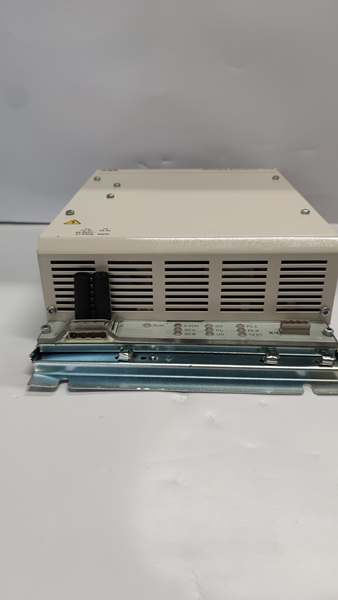
ABB PFVI401 3BSE018732R1
Technical Deep Dive & Overview
The ABB PFVI401 3BSE018732R1 is a microprocessor-driven vibration monitoring module engineered for System 800xA DCS, designed to deliver high-precision data for rotating equipment protection and predictive maintenance. At its core, a 24-bit sigma-delta ADC samples each channel at 100 SPS, converting low-amplitude vibration signals into digital values with unmatched resolution. This high resolution is critical for detecting early-stage bearing wear or impeller imbalance—changes that are invisible to 16-bit modules.
Each channel features 500V AC galvanic isolation, blocking ground loops and EMI that corrupt low-voltage vibration signals. The module’s IEPE excitation circuit provides regulated 24VDC power to accelerometers, eliminating the need for external power supplies and reducing field wiring complexity. For proximity probes, the module accepts raw eddy current signals and converts them to vibration displacement values (μm or mils) for the DCS—no external signal conditioners required.
The PFVI401 communicates with System 800xA via the CI867 backplane, transmitting both real-time vibration values and trend data to the DCS. Front-panel LEDs provide per-channel status (normal, fault, over-range), letting technicians diagnose sensor or wiring issues without opening the DCS interface. Built with conformal-coated circuit boards to resist dust and moisture in turbine halls, the module is rated for 15+ years of operation in harsh industrial environments—making it a workhorse for machinery health monitoring in process plants.