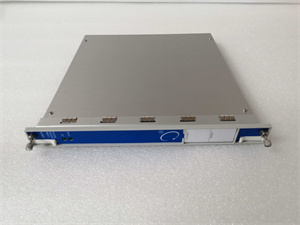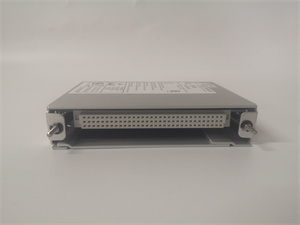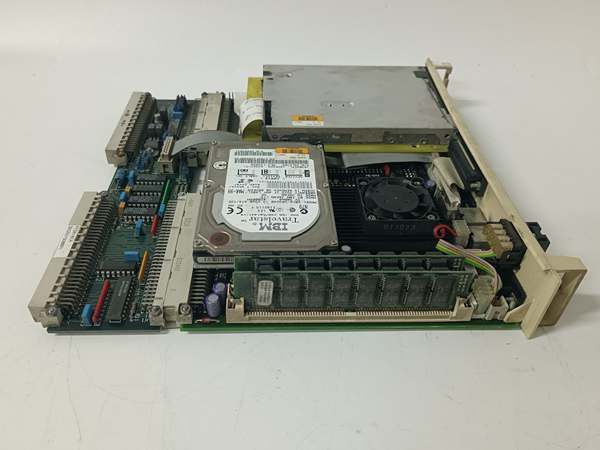
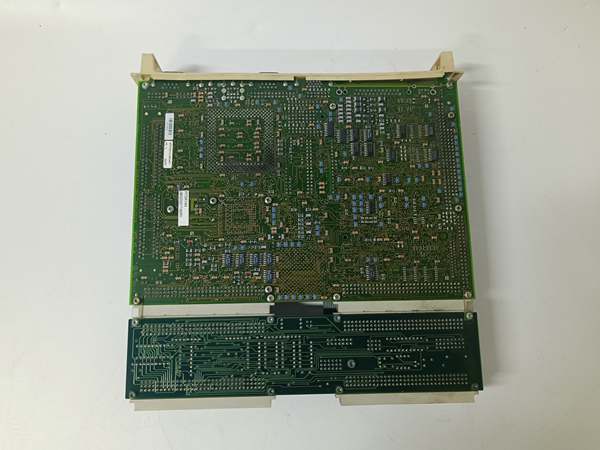
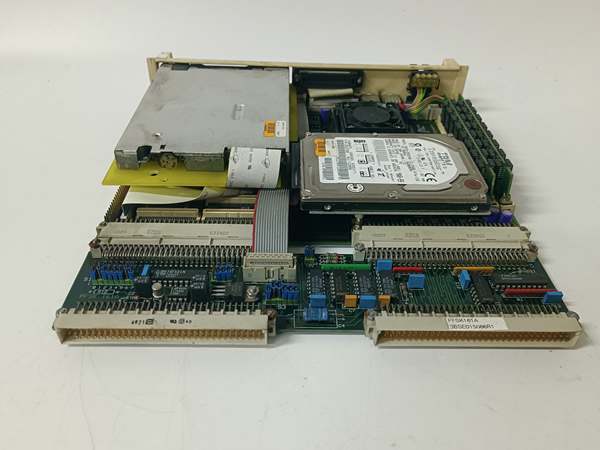
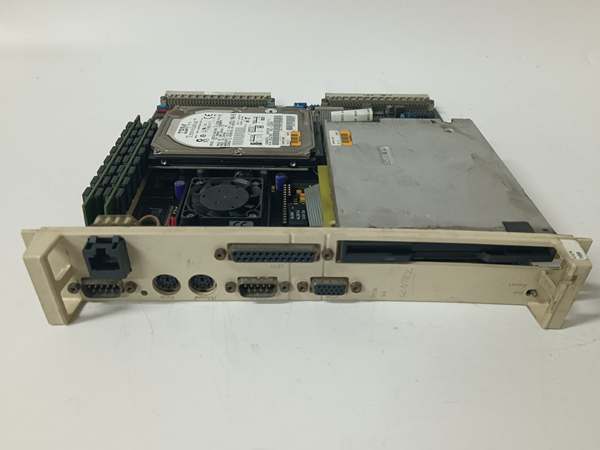
Description
Key Technical Specifications
- Model Number: PFSK164 (3BSE021180R1)
- Manufacturer: ABB Process Automation Division (S800 I/O Product Line)
- Digital Input Channels: 16 independent, galvanically isolated channels
- Input Signal Type: 24VDC (configurable per channel: PNP sourcing / NPN sinking)
- Input Current: 3mA (PNP), 5mA (NPN) typical; 10mA max per channel
- Isolation Rating: 2500VAC (channel-to-channel, channel-to-backplane, channel-to-power)
- Response Time: ≤1ms (signal detection, configurable 0.1-32ms)
- Power Supply: 24VDC ±10% (0.9W typical, 1.5W max current draw)
- Operating Temperature: -20°C to +60°C (ambient, derate above 55°C)
- Mounting Type: S800 I/O MTU (Module Termination Unit), 35mm DIN rail compatible
- Diagnostic Features: Channel-level short-circuit detection, open-wire monitoring, module health status, backplane communication fault alerts, LED status indicators (power, communication, channel activity)
- Protection Class: IP20 (module), IP65 (with sealed MTU)
- Weight: 0.42kg
- Compatible Controllers: ABB AC800M, Advant OCS, Symphony Plus DCS
- Certifications: CE, UL, ATEX, IEC 61131-2, IEC 61010-1 compliant

ABB PFSK164 3BSE021180R1
Field Application & Problem Solved
In process industries—refineries, power plants, chemical facilities—the biggest headache with digital inputs is reliable status sensing amid electrical noise and harsh conditions. Legacy DI modules lack robust isolation and granular diagnostics, leading to false alarms, missed fault detections, and costly downtime. At a Gulf Coast refinery, non-isolated modules caused 5 unplanned pump shutdowns in 8 months due to ground loop interference, costing $400k in lost production.
This module fixes those pain points. You’ll find it monitoring pump run/stop status in distillation units, valve position switches in boiler systems, and safety gate interlocks in batch processing. It’s the workhorse for S800-based DCS where high channel density and noise immunity are critical—its 16 isolated channels replace two 8-channel legacy modules, cutting cabinet space by 50% and reducing wiring complexity. In a Midwest coal-fired power plant, retrofitting with PFSK164 eliminated 92% of false input alarms and reduced troubleshooting time for sensor issues from 2+ hours to 15 minutes.
Its core value is rugged isolation and actionable diagnostics. The 2500VAC galvanic isolation breaks ground loops and blocks EMI from motors, VFDs, and high-voltage equipment—common in industrial settings. Channel-level diagnostics pinpoint exact issues (e.g., shorted proximity sensor on channel 9) instead of vague “module fault” alerts, eliminating guesswork. For field teams, this means fewer unnecessary field visits, faster fault resolution, and confidence that equipment status data is accurate—critical for safe, efficient process operation.
Installation & Maintenance Pitfalls (Expert Tips)
- PNP/NPN Configuration Must Match Sensors: Rookies often wire PNP sensors to NPN-configured channels (or vice versa) without adjusting settings, leading to non-responsive inputs. I saw this at a paper mill where web break detectors failed to trigger—wiring was correct, but channels were set to the wrong type. Use ABB Control Builder M to configure each channel, and verify with a multimeter: PNP channels should read 24VDC when active; NPN channels should read 0VDC.
- Shield Grounding Is Non-Negotiable: Improper shield grounding introduces EMI, causing erratic input signals. Run sensor cable shields to a single point at the MTU (not at the sensor), and connect to the MTU’s dedicated ground terminal. At a Texas refinery, re-routing 16 sensor cables away from 480V motor lines eliminated false pump status alarms that were causing unplanned shutdowns.
- Don’t Overload Input Channels: Each channel is rated for max 10mA—connecting high-current devices (e.g., 24VDC relays) burns out the module’s opto-isolators. A technician at a chemical plant made this mistake, ruining 4 channels in one shift. Stick to low-power sensors (proximity switches, limit switches) that draw ≤5mA, or use signal converters for high-current devices.
- Follow Hot-Swap Protocol to Avoid Bus Crashes: The module is hot-swappable, but pulling it mid-backplane scan corrupts the S800 I/O bus. At a power plant, a rushed swap during a process upset crashed the entire I/O rack, tripping a turbine. Always: 1) Disable the module in Control Builder M, 2) Wait for the “safe to remove” LED (green steady), 3) Confirm bus stability via system diagnostics before pulling the module.
- Terminal Torque Matters: Loose terminals in vibrating environments (e.g., pump skids) cause intermittent connections. Use a torque wrench to tighten MTU terminal screws to 0.8–1.0 Nm (7–9 lb-in) per ABB specs. In a Pennsylvania chemical plant, this simple step reduced intermittent input faults by 88% on a batch reactor’s safety interlocks.
- Enable Channel Filtering for Noisy Environments: Skipping input filtering in high-EMI areas (e.g., near generators) causes false triggers. Configure a 2–5ms filter via Control Builder M for noisy sensors—this smooths out electrical noise without delaying critical signals. A Louisiana refinery used this fix to stop false “high pressure” interlocks on a distillation column.
ABB PFSK164 3BSE021180R1
Technical Deep Dive & Overview
The PFSK164 3BSE021180R1 is a 16-channel digital input module designed for ABB’s S800 I/O system, the backbone of AC800M and 800xA DCS architectures. It acts as the interface between discrete field sensors and the DCS, converting on/off status signals into digital data while providing robust noise immunity and diagnostics.
Internally, each channel uses a high-speed opto-isolator rated for 2500VAC—critical for blocking ground loops and EMI that plague non-isolated modules. The opto-isolators trigger within ≤1ms, ensuring fast detection of critical signals like emergency stop or safety gate interlocks. A dedicated microcontroller manages channel status, diagnostics, and communication with the S800 backplane, processing data in real time without lag.
The module stores configuration (PNP/NPN, input filters) in non-volatile EEPROM, so settings survive power cycles and module replacement. The diagnostics engine monitors each channel for short circuits, open wires, and overcurrent, while also checking module power and backplane communication. Faults are transmitted to the DCS via the I/O bus, with channel-specific alerts that eliminate the need to manually test 16 separate sensors.
What makes it field-tough is its industrial-grade design: conformal-coated PCB to resist humidity, dust, and chemical vapors; wide operating temperature range (-20°C to +60°C); and vibration tolerance up to 5g. It’s built to withstand the abuse of refinery pump rooms, power plant boiler houses, and chemical processing areas—where lesser modules fail within months. Unlike generic digital input modules, it’s engineered for seamless integration with ABB’s DCS software, with zero configuration conflicts and native support for control logic functions like interlock programming.