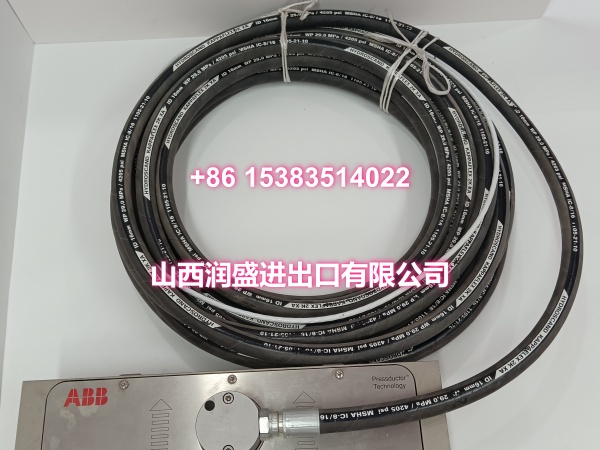
Description
Product Core Brief
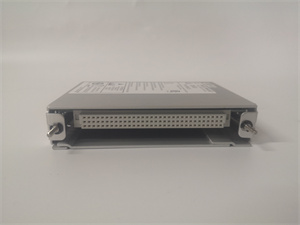
- Model: PFCL201C-10KN
- Order Code: 3BSE027070R10
- Brand: ABB
- Series: PFCL 201 Pressductor Pillow Block Load Cell
- Core Function: Vertical force / strip tension measurement using Pressductor® magnetoelastic technology
- Product Type: Vertical Pillow Block Load Cell (Tension Sensor)
- Key Specs: 10 kN rated load | ±0.5% accuracy class | <10 ms response | IP65/67 | overload capacity up to 10× nominal
- Condition: New Original / New Surplus (verify per listing)
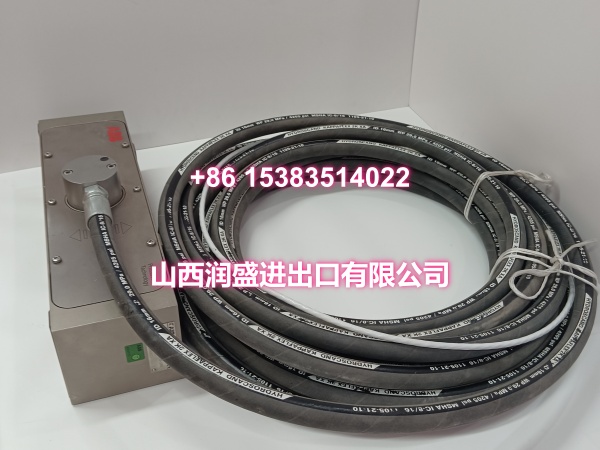
Key Technical Specifications
| Parameter | Specification |
|---|---|
| Product Model | -10KN |
| Order Code | 3BSE027070R10 |
| Measurement Direction | Vertical |
| Rated Load | 10 kN (10,000 N) |
| Technology | Pressductor® magnetoelastic (no strain gauges) |
| Accuracy Class | ±0.5% |
| Repeatability Error | < ±0.05% |
| Overload Capacity (measuring direction) | Up to 100 kN (10× nominal) |
| Deflection at Nominal Load | 0.02 mm |
| Spring Constant | 500 kN/mm |
| Connection Type | Circular plug connector (C version) |
| Typical Companion Controllers | ABB PFEA111, PFEA112, PFEA113 |
Note: Exact cable length, connector type, temperature compensation range, and IP rating depend on the sub-version (C / CD / CE) and production revision. Always confirm against the nameplate and ABB datasheet.
Product Introduction
The ABB PFCL201C-10KN is a vertical pillow block load cell built on ABB’s Pressductor® magnetoelastic measurement principle. Instead of relying on strain gauges that fatigue over time, it uses a single-piece stainless steel body with orthogonally wound coils. When vertical force is applied, the magnetic permeability of the steel changes, inducing a voltage proportional to the load—no physical deformation of a sensing element is required.
This makes the PFCL201C exceptionally resistant to overload, shock, and long-term drift. The 10 kN version is commonly used in strip tension measurement for rolling mills, paper machines, film converting lines, and foil processing, where it measures the vertical force component from a measuring roll and feeds the signal to a PFEA-series tension controller for closed-loop regulation.
For MRO buyers, this is a direct OEM replacement when a load cell has been damaged by impact, moisture ingress, or cable failure. The C-type connector version allows field cable replacement without opening the sensor body, which is a practical advantage over fixed-cable variants.
QA & Testing SOP
- Label & authenticity check — Verify ABB branding, model PFCL201C, order code 3BSE027070R10, and rated load marking on the nameplate.
- Visual inspection — Check the stainless steel body for corrosion, impact damage, or deformation of the mounting surfaces. Inspect the circular connector for bent pins or damaged threads.
- Insulation resistance test — Measure insulation between signal conductors and the sensor body at 500 V DC; should meet OEM specification.
- Excitation & signal check — Apply the correct AC excitation from a compatible PFEA controller or test fixture; verify that the output signal responds linearly to applied load.
- Zero balance & sensitivity check — Confirm zero output at no load and proportional signal increase under known test load.
- Connector continuity test — Verify pin-to-pin continuity and absence of shorts in the mating cable assembly.
All units ship in protective packaging with foam support. A test report is available on request.
Installation Pitfalls & Guide
Confirm the sub-version. PFCL201C uses a circular plug connector; CD has an acid-resistant cable gland with PTFE cable; CE has a fixed armored cable. Make sure the replacement matches your existing cable configuration.
Load direction must be strictly vertical. The PFCL201C is designed to measure force in one direction only. Side loading or eccentric loading introduces measurement error and can damage the sensor over time.
Mounting surface must be flat and clean. Dirt, scale, or uneven mounting surfaces cause uneven load distribution and inaccurate readings. Clean all contact surfaces before installation.
Cable routing matters. Keep the sensor cable away from VFD output cables, motor leads, and high-current power lines. Use shielded cable and ground the shield properly at the controller end.
Pair with the correct controller. The PFCL201C is designed to work with ABB PFEA-series tension controllers (PFEA111, PFEA112, PFEA113). It is not a standalone 4–20 mA transmitter—the signal conditioning happens in the controller.
Replacement steps:
- De-energize the system and relieve mechanical load from the measuring roll.
- Photograph the existing cable routing and connector orientation.
- Unbolt the bearing block from the top of the load cell, then unbolt the load cell from the base.
- Install the replacement, ensuring clean and flat contact surfaces. Torque bolts to OEM specification.
- Reconnect the cable, verify shielding, and perform zero calibration through the PFEA controller.
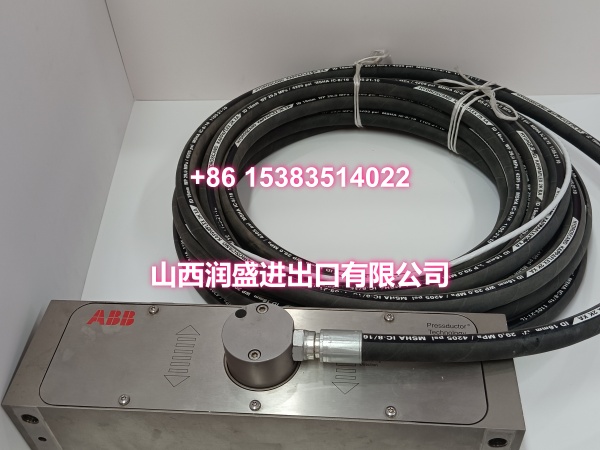
Technical FAQ
Is this a standalone sensor or does it need a controller? It needs a compatible ABB PFEA-series controller (PFEA111/112/113) for excitation and signal processing. The load cell itself outputs a low-level AC signal that the controller converts to a usable tension value.
What’s the difference between PFCL201C, CD, and CE? C = circular plug connector for field-replaceable cable; CD = acid-resistant cable gland with PTFE insulated cable for corrosive environments; CE = fixed cable with protective hose for high-vibration applications.
Can this handle shock loads? Yes. Pressductor technology gives it an overload capacity of up to 10× the nominal load in the measuring direction (100 kN for the 10 kN version), making it far more robust than strain-gauge load cells.
What causes these sensors to fail? Most failures are mechanical—impact damage, corrosion of the connector, or cable damage—rather than sensor element failure. The Pressductor element itself rarely fails because it has no strain gauges to fatigue.
Can I use a non-ABB controller with this? Not recommended. The PFCL201C uses a specific AC excitation and signal format that is designed for ABB PFEA controllers. Using a third-party controller would require custom signal conditioning and calibration.
Do you stock single units? Yes. Single units are available for MRO replacement; project quantities can be quoted on request.