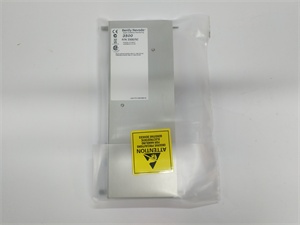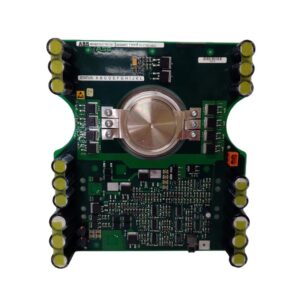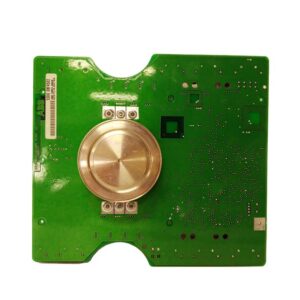
Description
Product Core Brief
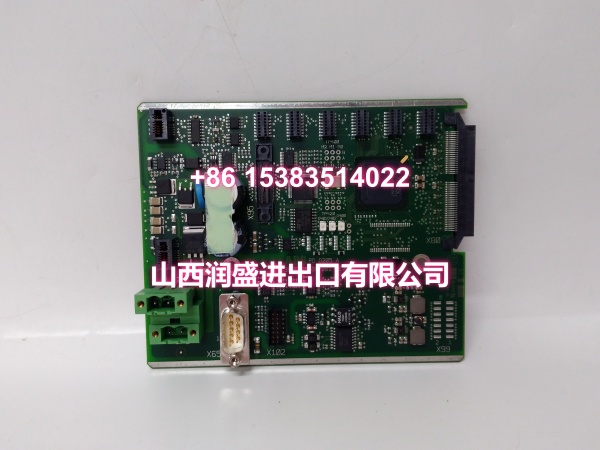
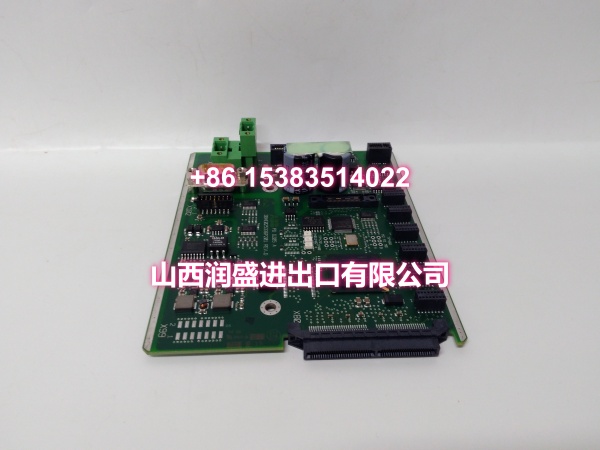
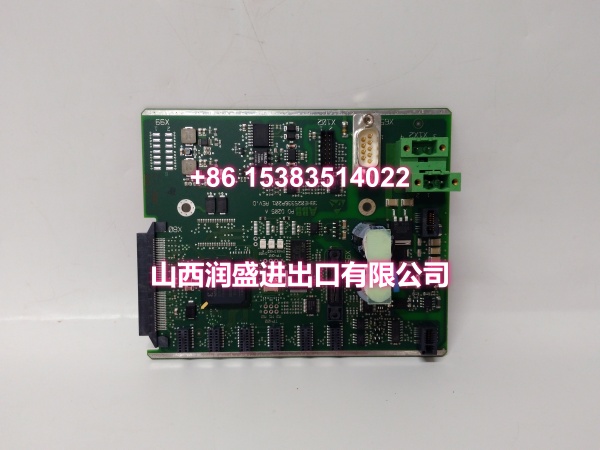
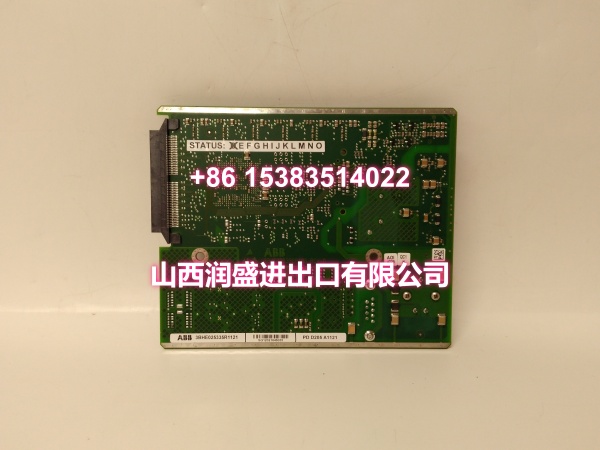
- Model: PDD205A1121
- Part Number: 3BHE025335R1121
- Brand: ABB
- Core Function: Gate/power driver board for ABB AC drive power stages, providing isolated gate drive, desaturation/overcurrent protection, and status feedback to the main controller.
- Product Type: IGBT Gate Driver Board / Power Stage Driver Module
- Key Specs: 24 V DC logic supply | Galvanic isolation | Desaturation protection | Fault/status feedback
- Condition: New Original / New Surplus (verify per listing)
Key Technical Specifications
| Parameter | Specification |
|---|---|
| Part Number | 3BHE025335R1121 |
| Product Model | |
| Function | Gate/power driver board for ABB AC drive power stages |
| Power Supply | 24 V DC nominal (low-power logic consumption) |
| Operating Temperature | 0 to +55 °C (typical in-cabinet environment) |
| Signal I/O | Isolated control inputs, gate drive outputs, fault/status outputs, temperature/NTC sense (varies by stack) |
| Protection Logic | Desaturation/overcurrent protection for IGBT/IGCT devices |
| Communication | Board-edge connectors; optical or isolated signaling to control unit |
| Mounting | Internal drive cabinet mounting on standoffs; plug-in harness/backplane connections |
| Typical Applications | ACS-series drives for pumps, fans, compressors, conveyors, rolling mills, mixers |
Note: Exact connector pinout, gate drive voltage, and protection thresholds depend on the target drive model (ACS880, ACS800, ACS580, etc.). Always cross-check against your existing nameplate and drive documentation.
Product Introduction (No Fluff)
The PDD205A1121 (3BHE025335R1121) is a gate/power driver board used inside ABB AC drive systems. It sits between the drive’s main control unit and the power stage, translating low-voltage switching commands into the high-current gate signals that fire IGBT or IGCT devices.
What matters in the field is reliability under fault conditions. This board integrates desaturation detection and overcurrent protection logic, so when a power device starts to fail, the gate driver can pull the device off within microseconds—before a catastrophic short takes out the entire stack. Galvanic isolation on the control channels keeps noise from the power stage from coupling back into the control logic.
For MRO buyers and drive technicians, this is a direct OEM replacement for a failed driver board in an ACS-series drive. A clean swap typically gets the drive back online in under two hours with no parameter drama—just match the part number and connector layout.
QA & Testing SOP (Dynamic & Transparent)
Every board goes through this bench routine before dispatch:
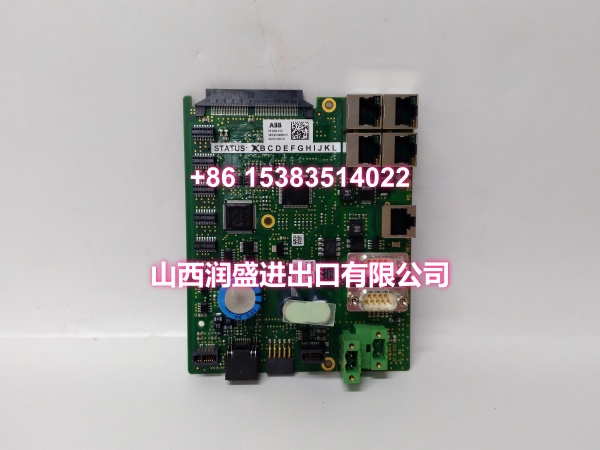
- Visual & authenticity inspection — PCB revision, ABB label, serial number, and board-edge connectors checked under magnification. Re-labeled or counterfeit driver boards are a known surplus risk.
- Cold-boot & self-test — 24 V DC applied; LED indicators and internal self-diagnostics verified.
- Gate drive output check — Gate signal outputs probed with an oscilloscope where test fixtures allow; waveform shape, amplitude, and rise/fall time confirmed against expected profile.
- Protection logic verification — Desaturation/overcurrent detection simulated; fault output response confirmed within expected timing window.
- Isolation test — Galvanic isolation between control-side and power-side circuits spot-checked with an insulation tester.
All units ship in anti-static bags with foam support. A printed test log is available on request.
Installation Pitfalls & Guide (Engineer to Engineer)
❗ Match the drive model. The PDD205A1121 is used across multiple ACS drive families, but connector pinout and gate drive parameters can vary by stack size and drive model. Verify compatibility against your drive’s spare parts list before ordering.
❗ Don’t skip the gate resistor check. When replacing a driver board after a power stage failure, always check the gate resistors and snubber components on the power stack. A shorted IGBT can damage the gate resistors, and a bad resistor will kill the new driver board on first power-up.
❗ Thermal paste and mounting pressure matter. If the driver board interfaces with temperature sensors on the power stack, poor thermal contact gives false overtemperature trips. Reapply thermal compound if the board was removed.
❗ Fiber/optical links are polarity-sensitive. If your drive uses optical signaling between the control unit and the driver board, verify TX→RX routing. A reversed pair gives a “fiber fault” or “control unit missing” alarm.
❗ Always download the fault log before removing the board. The drive’s event log tells you whether the driver failed on its own or was collateral damage from a power stage short. That diagnosis determines whether you also need to replace IGBTs, gate resistors, or the DC link capacitor.
Replacement steps:
- Pre-install — Download the drive fault log and parameter set. Photograph all connector positions and cable labels.
- Removal — Fully de-energize the drive and wait for the DC link to discharge (verify with a multimeter). Disconnect all harnesses and release mounting hardware.
- Install — Seat the new board on the standoffs. Reconnect all harnesses per label. Verify board-edge connectors are fully seated.
- Commissioning — Power up, confirm no immediate faults, run a low-speed motor test, then return to full load.
Technical FAQ
Can I buy a single unit for an emergency replacement? Yes. Single units are available for MRO replacements. Project quantities can be quoted with lead-time options. Send us your required quantity and urgency.
What warranty do surplus parts carry? Standard surplus stock carries a 30–90 day functional warranty depending on condition grade. New original units follow OEM terms. We state this upfront—no surprises after installation.
Is this a direct drop-in replacement? Hardware-wise, yes—if the part number 3BHE025335R1121 matches your existing board. But verify the drive model compatibility and check for any board revision suffix on your original unit.
Which ABB drives use this board? The PDD205A1121 is found in various ACS-series drives. The exact drive model depends on your installation—check your drive’s nameplate and spare parts list to confirm.
Can I reuse this board if I’m upgrading the drive firmware? Yes. The driver board is a hardware component independent of the control unit’s firmware. A firmware update on the main controller does not affect the driver board.
What causes these boards to fail? Most failures come from power stage shorts (blowing gate resistors and driver outputs), moisture/condensation in the cabinet, or age-related capacitor degradation on the board itself. If the failure was caused by a power stack short, inspect the IGBTs and gate resistors before installing the replacement.