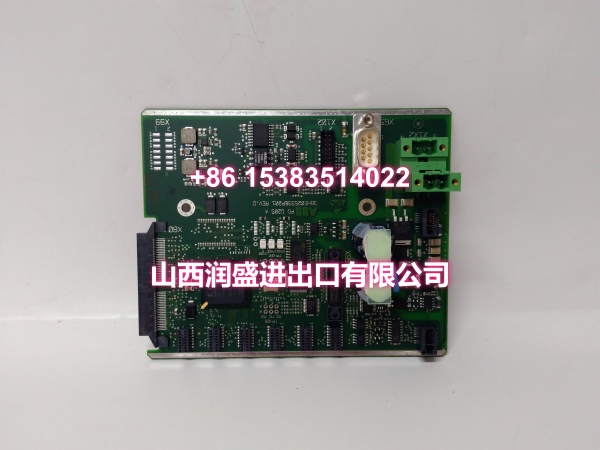
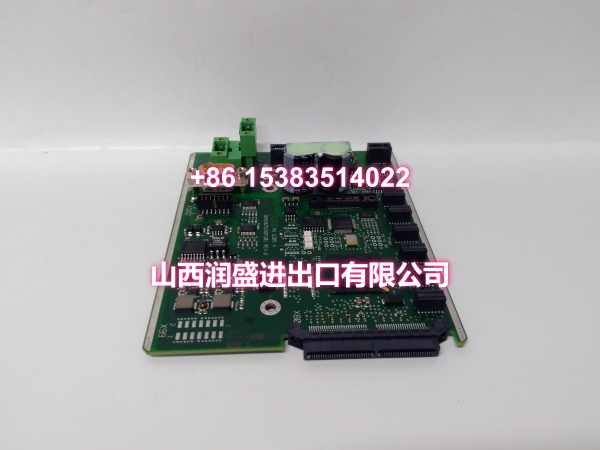
Description
Product Core Brief
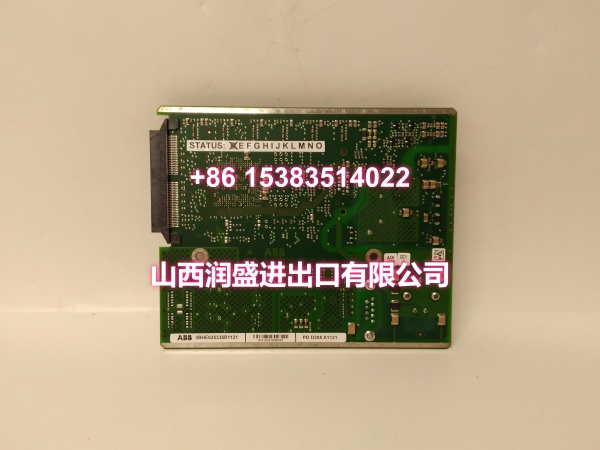
- Model: PDD205A0121
- Brand: ABB
- Series: PDD205 dual-loop process controller
- Core Function: Dual-loop PID process controller for temperature, pressure, flow, and level regulation.
- Product Type: Dual-Loop Digital Process Controller
- Key Specs: Two independent PID loops | TC/RTD/4–20mA/0–10V input | Relay & analog output
- Condition: New Original / New Surplus (verify per listing)
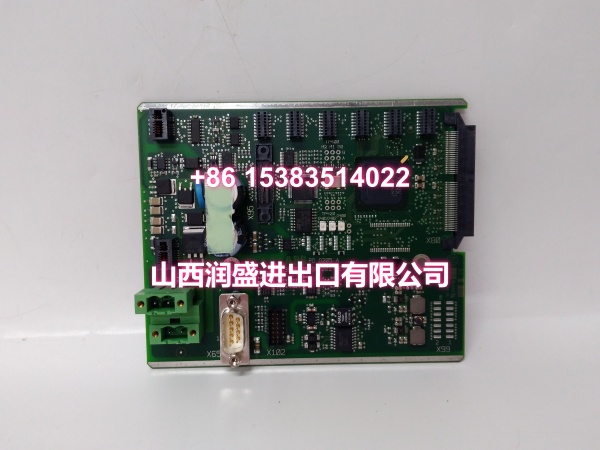
Key Technical Specifications
| Parameter | Specification |
|---|---|
| Product Model | |
| Controller Type | Dual-loop PID process controller |
| Control Loops | 2 independent PID loops |
| Input Types | Thermocouple, RTD, 4–20 mA, 0–10 V |
| Output Types | Relay output, analog output |
| Control Function | PID auto-tuning, alarm, sensor break detection |
| Communication | Modbus (optional, model-dependent) |
| Mounting | Panel-mount / cabinet-mount |
| Typical Applications | Industrial furnace, reactor temperature, pressure/flow/level control |
Note: Exact input/output count, communication options, and alarm configuration depend on the specific sub-model. Always cross-check against your existing nameplate and project documentation.
Product Introduction (No Fluff)
The ABB PDD205A0121 is a dual-loop digital process controller designed for continuous industrial processes where two variables need independent closed-loop regulation—typically temperature/pressure, temperature/flow, or level/flow pairs. Each loop runs its own PID algorithm, so one controller can replace two single-loop instruments and save panel space.
It accepts standard industrial inputs—thermocouples, RTDs, 4–20 mA, and 0–10 V signals—and provides relay and analog outputs to drive heaters, control valves, VFDs, or intermediate relays. Built-in alarm logic, sensor break detection, and output limiting make it suitable for chemical, power, metallurgy, HVAC, and water treatment applications where process stability matters. For MRO buyers, it’s a straightforward panel-mount replacement that restores dual-loop control without re-wiring the entire cabinet.
QA & Testing SOP (Dynamic & Transparent)
Every unit goes through this bench routine before dispatch:
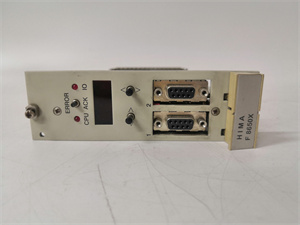
- Visual & authenticity inspection — Front bezel, terminal block, ABB label, and model code checked. Counterfeit or mislabeled process controllers are a known surplus risk.
- Power-on & self-test — Auxiliary power applied; display boot, LED status, and internal self-diagnostics verified.
- Input channel verification — Standard signals (4–20 mA, 0–10 V, and a known TC/RTD simulator value) injected per loop; displayed PV (process value) cross-checked against reference.
- Output response test — Relay output energization confirmed; analog output measured with a calibrated multimeter across the configured range.
- Alarm & protection check — Upper/lower limit and sensor break alarms simulated; alarm relay and display indication verified.
All units ship in anti-static bags with foam support. A printed test log is available on request.
Installation Pitfalls & Guide (Engineer to Engineer)
❗ Confirm the sub-model suffix. The PDD205 family has multiple configurations—input type, output type, and communication options vary by suffix. A0121 may differ from A1121 or other variants in available I/O. Match the nameplate exactly.
❗ TC and RTD wiring must be isolated. Thermocouple extension wire polarity matters, and RTD lead resistance affects accuracy. Keep sensor wiring away from relay and power cables to avoid noise-induced PV jumps.
❗ Relay outputs driving inductive loads need suppression. Contactors, solenoid valves, and relay coils generate voltage spikes. Add flyback diodes or RC snubbers to protect the controller’s output relays.
❗ PID tuning is loop-specific. Each of the two loops has independent PID parameters. Don’t assume factory defaults will work—run auto-tune or manual tuning per loop after installation.
Replacement steps:
- Pre-install — Photograph existing wiring, note loop assignments, input types, and alarm setpoints.
- Removal — De-energize the control circuit. Label each terminal before disconnecting.
- Install — Mount in the panel cutout, reconnect wiring per label, and verify terminal torque.
- Commissioning — Power on, confirm PV display matches the sensor, run auto-tune on each loop, verify alarm behavior, then return to service.
Technical FAQ
Can I buy a single unit for an emergency replacement? Yes. Single units are available for MRO replacements. Project quantities can be quoted with lead-time options. Send us your required quantity and urgency.
What warranty do surplus parts carry? Standard surplus stock carries a 30–90 day functional warranty depending on condition grade. New original units follow OEM terms. We state this upfront—no surprises after installation.
Is this a direct drop-in replacement? Mechanically and electrically, yes—if the sub-model matches. But verify input type, output configuration, and communication option against your existing unit. A mismatched suffix can mean missing features or incompatible wiring.
Can this controller communicate with a DCS or PLC? Models equipped with Modbus can integrate with a DCS, PLC, or SCADA system for remote setpoint adjustment and PV monitoring. Check whether your specific unit includes the communication option before ordering.
What applications is this best suited for? Industrial furnaces, ovens, and reactor temperature control; pipeline pressure and flow regulation; tank level control; and compact skid-mounted equipment where two independent loops are needed in one instrument.