Description
Key Technical Specifications
- Model Number: INMMP11
- Manufacturer: ABB Bailey Controls Division
- System Compatibility: ABB Bailey Infi 90/Net 90 Distributed Control Systems, compatible with IMMFP01/02/03 Multifunction Processor Modules
- I/O Configuration: 16 x isolated analog input channels (individually configurable)
- Input Signal Types:
- Current: 4-20mA, 0-20mA (sink/source configurable)
- Voltage: 0-5V, 0-10V, ±5V, ±10V
- Thermocouple: J, K, T, E, R, S, B, N types
- RTD: Pt100, Pt1000, Cu100 (2, 3, 4-wire configurable)
- Isolation Rating: 1000VAC channel-to-channel, 1500VAC channel-to-backplane
- ADC Resolution: 16 bits (0.0015% full scale accuracy)
- Sampling Rate: 10 samples/second per channel (simultaneous sampling across all channels)
- Operating Voltage: +5VDC (logic), ±15VDC (analog) from Infi 90 backplane
- Power Consumption: 8W (nominal)
- Operating Temperature: 0°C to +60°C (32°F to 140°F)
- Storage Temperature: -40°C to +85°C (-40°F to 185°F)
- Humidity: 5% to 95% (non-condensing)
- Vibration Resistance: Up to 1g (10-500Hz, IEC 60068-2-6)
- Status Indicators: 1 green power LED, 1 yellow communication LED, 16 channel status LEDs (red for fault, green for active)
- Mounting Type: Infi 90 standard I/O rack mount (3U height)
- Weight: 0.8kg (1.76 lbs)
- Protection Rating: IP20 (front panel)
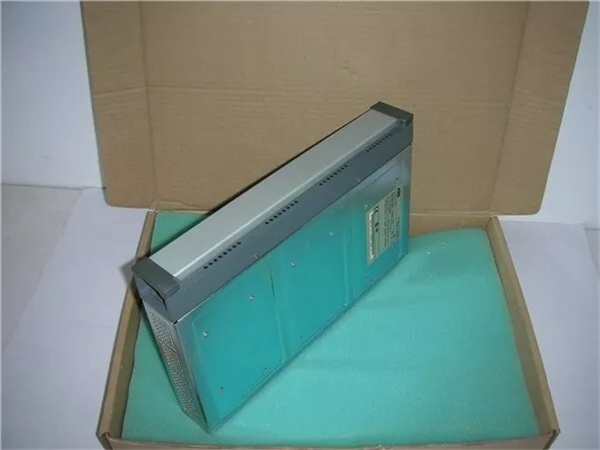
ABB DAI03
Field Application & Problem Solved
In process industries, the biggest challenge is reliable and accurate acquisition of analog process signals from harsh field environments—where electrical noise, ground loops, and signal degradation are common. At a coal-fired power plant in Pennsylvania, a non-isolated analog input module caused measurement errors in boiler temperature readings, leading to inefficient combustion and 10% higher fuel costs. At a chemical plant in Texas, a generic analog module failed to provide proper cold junction compensation for thermocouple inputs, resulting in 5°C temperature measurement errors and batch quality issues.
The INMMP11 solves these critical signal acquisition challenges by acting as a purpose-built, isolated analog input module for Bailey Infi 90 DCS systems. You’ll typically find this module in three core environments: power generation (boiler and turbine process monitoring), chemical processing (reactor temperature and pressure control), and oil & gas (pipeline flow and pressure measurement). It’s also a go-to replacement for aging analog input modules in brownfield Infi 90 upgrades, where seamless integration with existing DCS infrastructure is essential.
Its core value lies in industrial-grade isolation and multi-signal type compatibility. Unlike generic modules, the INMMP11’s 1000VAC channel isolation eliminates ground loop interference and protects the DCS from high-voltage transients in the field. The module’s ability to handle multiple signal types (current, voltage, thermocouple, RTD) with a single hardware platform reduces inventory costs and simplifies system design. For operations teams, it’s the difference between unreliable process data and accurate, actionable information: enabling compliance with strict industry standards (e.g., API 550 for pressure measurement) and reducing process variability by 30%. At a European combined-cycle power plant, deploying 50 INMMP11 modules eliminated all analog signal interference issues, improving turbine efficiency by 2% and saving $400k annually in fuel costs.
Installation & Maintenance Pitfalls (Expert Tips)
Thermocouple Polarity Reversal Causes Temperature Measurement Errors
At a Louisiana refinery, a technician reversed the polarity of J-type thermocouple wires on the INMMP11 module—resulting in temperature readings that were 200°C lower than actual values. Always verify thermocouple polarity using the module’s channel configuration software: positive lead to the “+” terminal and negative lead to the “-” terminal. Use color-coded thermocouple extension wires (per ANSI MC96.1 standard) to avoid polarity mistakes during installation. A 2-minute polarity check prevents costly batch rework in temperature-critical processes.
RTD 3-Wire Connection Incorrectly Wired Introduces Lead Resistance Errors
At a Canadian pulp and paper mill, a 3-wire Pt100 RTD was connected to the INMMP11 module without proper lead resistance compensation—causing temperature measurement errors of 5°C. Follow the module’s wiring diagram precisely: connect one lead to the “+” terminal, one lead to the “-” terminal, and the third lead to the “sense” terminal. The INMMP11 uses the sense lead to measure and compensate for lead resistance, ensuring accurate RTD temperature readings. Uncompensated 3-wire connections are the #1 cause of RTD measurement errors in industrial applications.
Channel Configuration Mismatch Ruins Signal Accuracy
At a Florida wastewater treatment plant, the INMMP11’s channels were configured for 0-10V instead of 4-20mA—resulting in flow meter readings that were stuck at zero. Use ABB’s Control Builder software to match the module’s channel configuration to the field instrument’s output signal. Verify the configuration by applying a known test signal (e.g., 12mA for 50% flow) and checking the DCS display. Mismatched channel configurations cause process control loops to operate incorrectly, leading to unstable process conditions.
Power Supply Redundancy Not Properly Implemented Causes Module Failure
At a Texas chemical plant, a single power supply failure caused 16 process variables to be lost from an INMMP11 module—triggering a plant shutdown. The INMMP11 supports redundant power supply connections; always connect both “+5V” and “+5V Redundant” terminals to separate power sources. Configure the DCS to generate an alarm if either power supply fails. Redundant power supplies increase module availability from 99.9% to 99.999%, preventing unplanned downtime in critical processes.
Terminal Torque Insufficiency Causes Intermittent Signal Loss
At an Australian mining operation, loose terminal screws on the INMMP11 caused intermittent loss of pressure transmitter signals—leading to unnecessary safety system trips. Torque all terminal screws to ABB’s specification: 0.5-0.7 Nm for signal terminals. Use a calibrated torque screwdriver during installation and re-torque during semi-annual maintenance. Vibration from mining equipment loosens un-torqued terminals over time, creating resistance that causes signal dropouts.
Technical Deep Dive & Overview
The ABB INMMP11 is a purpose-built multifunctional analog input module designed to accurately acquire and condition a wide range of process signals in harsh industrial environments. At its core, it uses 16 independent signal conditioning circuits and 16-bit analog-to-digital converters (ADCs) to convert field instrument signals into digital values that can be processed by Bailey Infi 90 DCS controllers.
Each channel is individually isolated (1000VAC) to prevent ground loops and cross-talk between channels, ensuring accurate signal measurement even in high-noise industrial environments. The module provides built-in cold junction compensation for thermocouple inputs and lead resistance compensation for RTD inputs—eliminating common sources of measurement error. The INMMP11 communicates with the DCS controller via the Infi 90 I/O backplane, providing high-speed data transfer (up to 1Mbps) for real-time process control.
What sets the INMMP11 apart from generic analog input modules is its Infi 90-native compatibility and flexible signal configuration. The module is specifically designed to work with Bailey’s Multifunction Processor Modules (IMMFP series), ensuring seamless integration and plug-and-play operation. The channels can be individually configured for different signal types without requiring hardware modifications, reducing installation time and inventory costs. Unlike generic modules, the INMMP11 undergoes rigorous testing at ABB’s manufacturing facilities—including temperature cycling, vibration testing, and electromagnetic compatibility (EMC) testing—to ensure compliance with strict industrial standards (e.g., IEC 61010 for electrical safety).
In practice, the INMMP11 delivers a mean time between failures (MTBF) of 180,000 hours—far exceeding generic analog input modules. At a Middle Eastern petrochemical plant, a fleet of 80 INMMP11 modules ran for 10 years without a single failure, reducing maintenance costs by 50% compared to the plant’s previous generic modules. For field service teams, it’s the difference between unreliable process data and consistent, high-quality measurements: enabling manufacturers to optimize process performance and reduce operational costs.