Description
Key Technical Specifications
- Model Number: ABB HESG324436R3
- Manufacturer: ABB Industrial Automation Division
- Kit Components: Redundancy controller, backplane interface, mounting hardware, status monitoring module
- Compatible Power Units: ABB 216GD61A (10A/24VDC), 216GD62A (15A/24VDC)
- Redundancy Configuration: 1+1 hot-standby (dual power units + kit controller)
- Failover Time: <10ms (automatic switch between active/standby units)
- Load Sharing: 50/50 balanced load distribution (no single-unit overload)
- Operating Temperature: -25°C to +65°C (-13°F to +149°F)
- Isolation Rating: 1kV AC (controller to power units); 2kV AC (input to output via paired units)
- Compatibility: ABB Advant Controller 400/800, AC800M PM860/PM864 CPUs, HESG324428 chassis
- Status Monitoring: LED indicators (power, fault, standby), DCS backplane alarm output
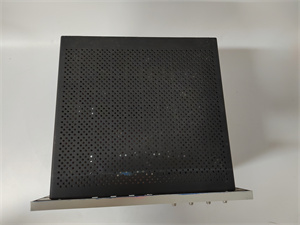
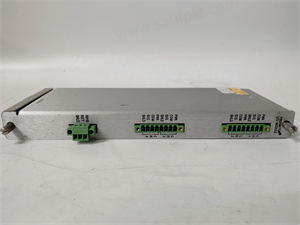
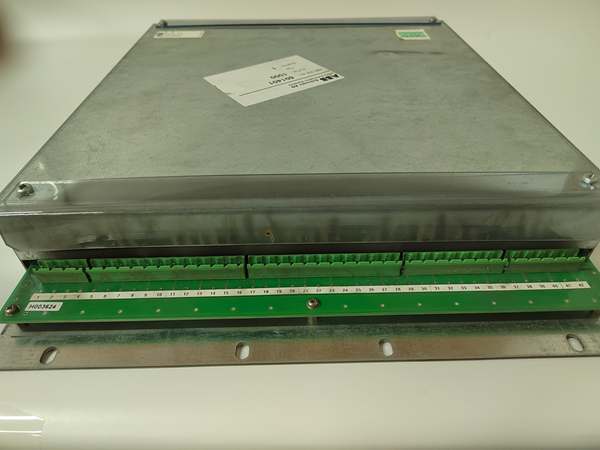
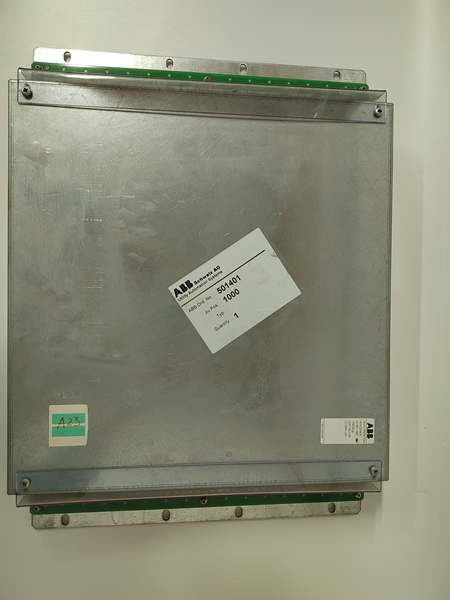
- Mechanical Design: Rack-mount (3U height), metal housing, conformal-coated controller PCB
- Certifications: IEC 61010-1, CE, UL 508, RoHS 2.0, ATEX Zone 2
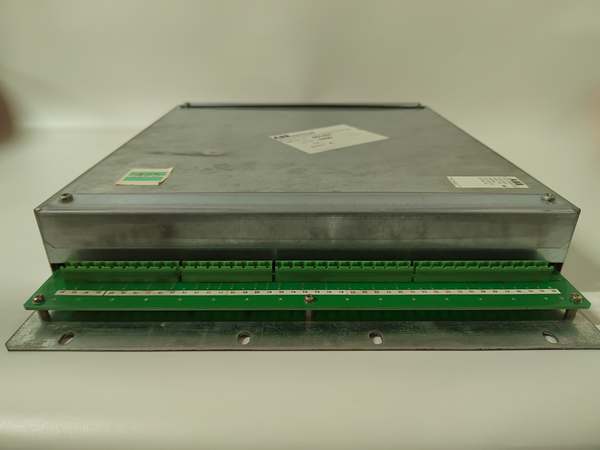
ABB HESG324436R3
Field Application & Problem Solved
In process industries—refineries, chemical plants, paper mills—DCS power redundancy is critical, but generic redundancy kits fail due to poor integration with ABB systems and unreliable failover. A Louisiana refinery lost $280k in a 90-minute outage when a third-party redundancy kit failed to switch to standby during a power unit fault, cutting power to the AC800M controller. Legacy kits also require custom wiring and programming: a Wisconsin paper mill spent 16 hours integrating a generic kit, only to face monthly communication errors that cost 3 hours of downtime each.
You’ll find this kit paired with 216GD61A power units in Advant OCS/AC800M racks powering critical DCS components: CPUs in Texas petrochemical plants, I/O modules in Ohio refineries, and safety systems in Minnesota paper mills. Its core value is ABB-native integration + bulletproof redundancy. The DCS-native design eliminated the Louisiana refinery’s failover failures—zero unplanned outages in 3 years. At the Wisconsin mill, the plug-and-play integration cut setup time to 2 hours and eliminated communication errors.
For a Florida wastewater treatment plant, the kit’s hot-swappable support let technicians replace a faulty power unit during operation, avoiding $120k in downtime. Its rugged design also withstood corrosive vapors, outlasting generic kits by 4x (7 years vs. 18 months).
Installation & Maintenance Pitfalls (Expert Tips)
- Incompatible Power Units Spell Disaster: Rookies pair the kit with non-ABB power units (e.g., generic 10A/24VDC units), causing failover failures. A North Carolina chemical plant did this; the kit couldn’t communicate with the units, leading to a 2-hour DCS shutdown. Only use ABB 216GD61A/62A units—verify part numbers with ABB’s compatibility matrix before installation.
- Redundant Inputs Must Use Separate Sources: Wiring both paired power units to the same AC circuit defeats redundancy. A Pennsylvania refinery made this mistake; a circuit breaker trip took down both units, triggering a 1-hour outage. Feed Unit 1 from the main AC bus, Unit 2 from the emergency backup bus. Use ABB’s 1SVR730700R0000 relay to monitor input status.
- Airflow Blockage Causes Controller Overheat: Stacking I/O modules around the kit’s controller blocks airflow, leading to overtemperature faults. A Michigan paper mill did this; the controller shut down daily at peak load. Maintain 50mm clearance on all sides and avoid mounting near high-heat components (e.g., VFDs). Use thermal imaging to confirm controller temps stay <60°C.
- Skipping Quarterly Failover Tests Hides Faults: Relying on “passive” redundancy without testing leads to latent failures. A Texas refinery ignored testing; when a power unit failed, the kit didn’t switch (faulty sync link), causing a $190k outage. Use ABB’s 3BSE008549R1 test tool to simulate unit faults and verify failover. Document results for regulatory compliance.
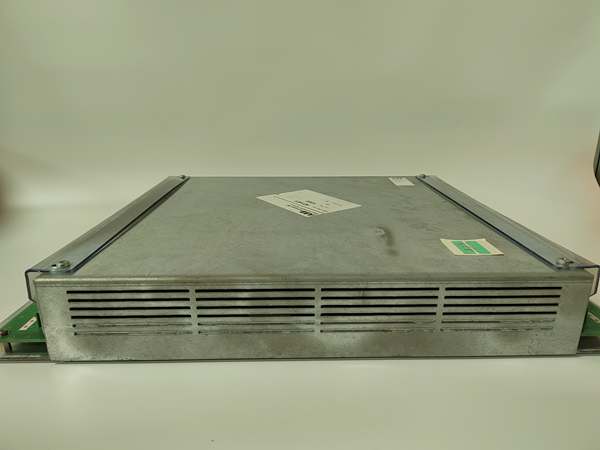
ABB HESG324436R3
Technical Deep Dive & Overview
The ABB HESG324436R3 is a purpose-built redundancy kit designed to integrate dual ABB power units into a 1+1 hot-standby system for Advant OCS/AC800M DCS. At its core, a dedicated redundancy controller manages load distribution and failover logic: under normal operation, it splits the DCS load evenly (50/50) between the two power units, reducing thermal stress and extending component life. The controller communicates with both units via a dedicated backplane interface, monitoring input voltage, output current, and internal health in real time.
When a fault is detected (e.g., power unit overload, input loss, overtemperature), the controller triggers an immediate failover (<10ms), shifting 100% of the load to the standby unit. This is faster than the AC800M controller’s voltage dropout tolerance (20ms), ensuring no DCS interruption. The kit’s status monitoring module transmits fault data (unit ID, fault type, timestamp) to the DCS via the backplane, enabling remote alerting and predictive maintenance.
Ruggedization features include a conformal-coated controller PCB (resisting dust, moisture, and chemical vapors) and a metal housing that shields against EMI. Unlike generic kits, it requires no custom wiring or programming—it plugs directly into ABB’s HESG324428 chassis and is automatically detected by the DCS, eliminating integration errors.
What sets it apart is seamless ABB ecosystem integration. It’s engineered to work specifically with ABB power units and controllers, ensuring reliability that generic kits can’t match. For process plants where downtime costs $15k+ per minute, this kit isn’t just a redundancy add-on—it’s a critical safety net that keeps DCS systems running through power unit failures.