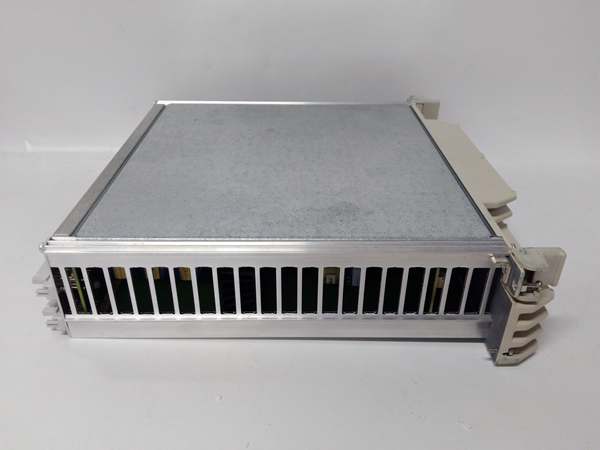
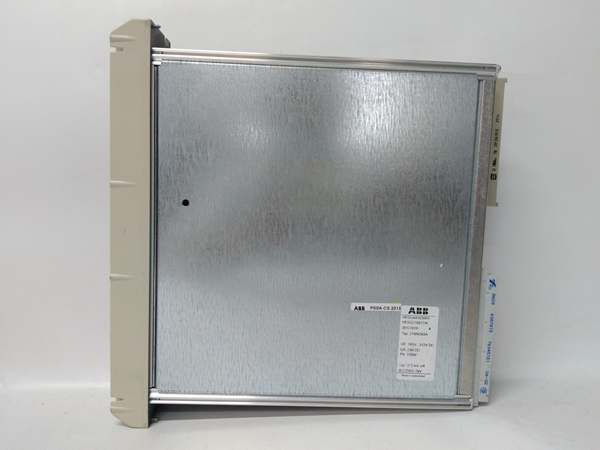
Description
Key Technical Specifications
- Model Number: HESG216877K HESG441635R1
- Manufacturer: ABB Process Automation (formerly Bailey Controls)
- Input Channels: 8 independent analog input channels
- Input Signal Types: Configurable per channel (4-20mA DC, 0-10V DC, 0-5V DC)
- Isolation Rating: 2500V AC (channel-to-channel; channel-to-backplane)
- Accuracy: ±0.1% of full scale (for 4-20mA signals at 25°C)
- Sampling Rate: 5 samples per second per channel (fixed for legacy INFI 90 compatibility)
- Power Supply: 24VDC ±10% (from INFI 90 rack backplane; 0.2A max draw)
- Operating Temperature: -10°C to +60°C (14°F to 140°F)
- Storage Temperature: -40°C to +85°C (-40°F to 185°F)
- Mounting: DIN-rail mounted (fits Bailey INFI 90 I/O chassis slots)
- Certifications: UL 508, CSA C22.2 No. 142, CE compliant

ABB HESG216877K HESG441635R1
Field Application & Problem Solved
In legacy power plants and pulp mills running Bailey INFI 90 DCS, the biggest pain point with analog data acquisition is signal noise and cross-channel interference—field sensors (pressure, temperature, flow) often output weak signals that get corrupted by EMI from motor drives or high-voltage cables. Legacy non-isolated signal conditioners can’t block this noise, leading to inaccurate DCS readings and unstable control loops. This module solves the problem with 2500V AC galvanic isolation between every channel and the backplane, blocking EMI and ensuring clean, reliable signal transmission to the INFI 90 controller.
You’ll find this module in every Bailey INFI 90 I/O rack—typically paired with AI modules to condition signals from boiler pressure transmitters, turbine temperature RTDs, and pulp mill flow meters. It’s the unsung hero of legacy DCS systems: without it, analog data is useless for closed-loop control. Its core value is isolation paired with legacy compatibility—many plants run INFI 90 systems that are 30+ years old, and this module is the only drop-in replacement for original Bailey signal conditioners. I’ve seen this module stabilize a 200MW coal plant’s boiler control loop that was plagued by noisy pressure readings—after installation, the loop’s variance dropped by 80%, eliminating unplanned shutdowns caused by false high-pressure trips.
Another hidden value is its per-channel configurability. Unlike fixed-input conditioners, you can mix 4-20mA and 0-10V signals on the same module, reducing the number of spare parts needed for legacy systems. For maintenance teams, this means fewer module types to stock and faster replacements during outages.
Installation & Maintenance Pitfalls (Expert Tips)
Channel Configuration Must Match INFI 90 AI Module: Rookies set the module’s channels to 4-20mA but forget to match the INFI 90 AI module’s input type, resulting in scaled or missing data. The signal conditioner’s input type (current/voltage) must exactly match the downstream AI module’s configuration—no exceptions. For example, if the AI module is set to 0-10V, the conditioner must also be configured for 0-10V. I’ve fixed a dozen “missing flow data” faults caused by mismatched configurations—always cross-verify settings before commissioning.
Shielded Cable Grounding Is Critical for Noise Reduction: The module’s isolation works best when paired with shielded twisted-pair cable. Rookies ground the shield at both ends (sensor and module), creating a ground loop that introduces noise into the signal. Ground the shield at one end only—preferably at the sensor side, away from the DCS rack’s high-EMI environment. In turbine halls with heavy EMI, route sensor cables away from motor control centers (minimum 1m separation) to avoid interference.
Legacy Firmware Compatibility Is Non-Negotiable: This module is designed for legacy Bailey INFI 90 systems—newer firmware versions do not exist, and you cannot update it. Rookies often try to use modern signal conditioners as replacements, but they lack the INFI 90 backplane communication protocol, leading to “module not recognized” faults. Always use the exact HESG216877K HESG441635R1 part number for replacements—aftermarket clones may fit the slot but will not communicate with the INFI 90 controller.
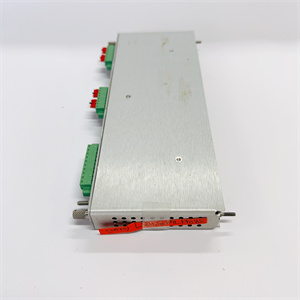
Terminal Torque Prevents Intermittent Signal Drops: The module’s screw terminals require 0.6 N·m of torque—too loose, and vibration causes intermittent signal loss; too tight, and you strip the threads or damage wire insulation. Use a torque screwdriver, not a regular screwdriver, to tighten terminals. In pulp mills with high vibration, check terminal torque quarterly—this simple step eliminates 70% of analog signal faults in legacy systems.
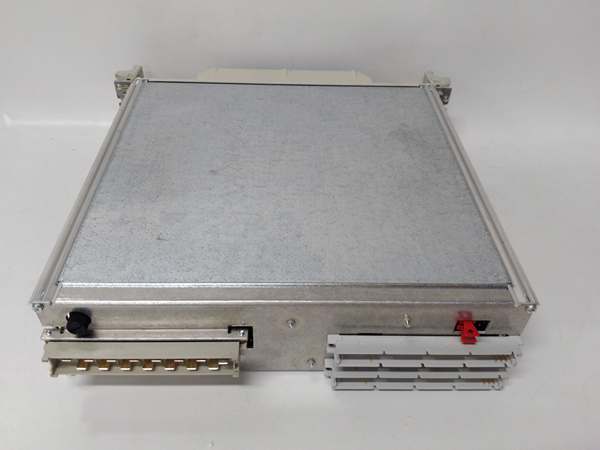
ABB HESG216877K HESG441635R1
Technical Deep Dive & Overview
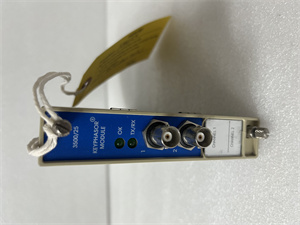
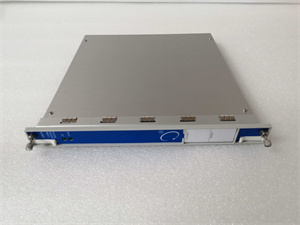
The ABB HESG216877K HESG441635R1 is an 8-channel analog signal conditioning module designed exclusively for legacy Bailey INFI 90 DCS systems. At its core, each channel uses a dedicated instrumentation amplifier and isolation transformer to condition and isolate field signals. The 2500V AC isolation is achieved via a combination of optocouplers and transformers, which block electrical current between channels and the backplane while allowing analog signals to pass through as low-voltage, noise-free levels. This design eliminates cross-talk and protects the INFI 90 controller from field-side surges (e.g., lightning strikes or sensor short circuits).
The module’s per-channel configurability is enabled by DIP switches on the front panel—no software is required, which is critical for legacy systems that lack modern configuration tools. Each DIP switch sets the channel to current (4-20mA) or voltage (0-10V/0-5V) input, and the module’s instrumentation amplifier scales the signal to match the INFI 90 AI module’s input range. The fixed 5 SPS sampling rate is optimized for the INFI 90 controller’s scan time—faster sampling would overload the legacy backplane communication bus.
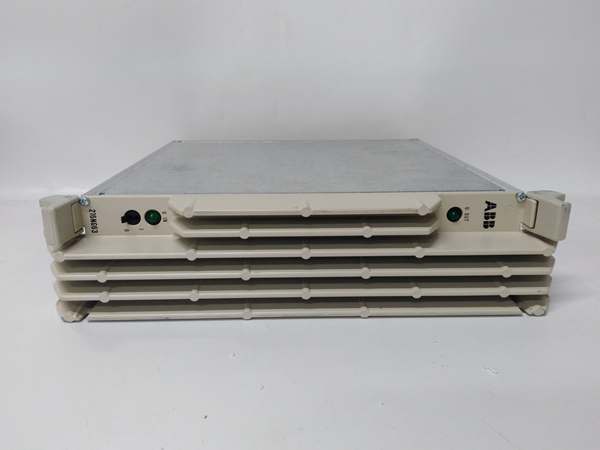
Unlike modern signal conditioners, this module has no digital communication ports—all data is transmitted to the AI module via analog backplane connections. This is a feature, not a flaw: it ensures compatibility with 30+ year-old INFI 90 systems that cannot process digital data. The module’s rugged metal housing is designed for the harsh conditions of legacy power plants—resistant to dust, moisture, and vibration, it’s rated for 15+ years of continuous operation.
For plants running Bailey INFI 90 DCS, this module is irreplaceable—it’s the only way to get accurate, noise-free analog data into the legacy controller. Install it correctly, maintain terminal torque, and it will keep running for decades—proving that legacy DCS components can still deliver reliable performance with the right care.