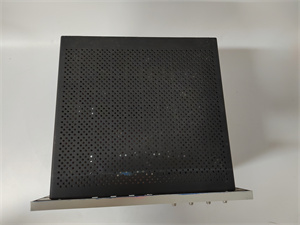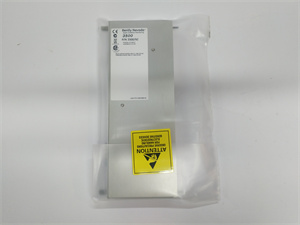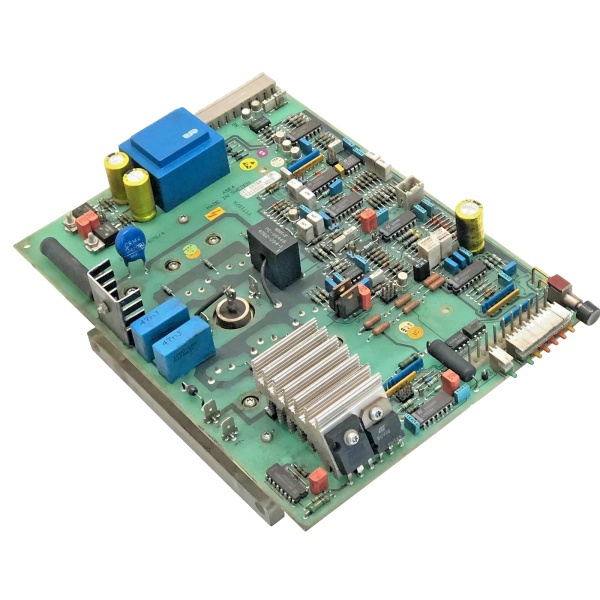
Description
Key Technical Specifications
- Model Number: HAC319AEV1
- Manufacturer: ABB Industrial Automation Division (Drive & Control)
- System Compatibility: ABB ACS800 Series VFDs, ABB S800 I/O Systems, third-party PLC/DCS (via 4-20mA/DI/DO signals)
- I/O Configuration: 4 x 24VDC digital inputs (sinking), 2 x 24VDC digital outputs (sourcing), 2 x 4-20mA analog inputs
- Isolation Rating: 2500VAC (control signals to drive circuits), 500VAC (channel-to-channel)
- Operating Voltage: 24VDC ±10% (max power consumption: 8W)
- Communication Interface: S800 I/O backplane (1Mbps), hardwired I/O for direct drive control
- Operating Temperature: -20°C to +60°C (-4°F to 140°F)
- Storage Temperature: -40°C to +85°C (-40°F to 185°F)
- Humidity: 5% to 95% (non-condensing)
- Vibration Resistance: Up to 2g (10-500Hz, IEC 60068-2-6)
- Status Indicators: 1 green power LED, 1 yellow communication LED, 6 channel status LEDs (DI/DO/AI)
- Mounting Type: 35mm DIN rail mount (standard industrial size)
- Weight: 0.45kg (0.99 lbs)
- Protection Rating: IP20 (front panel), IP30 (rear housing)
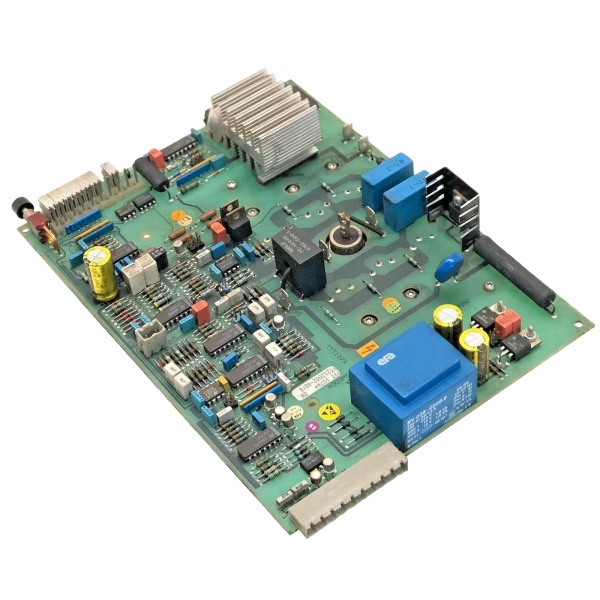
ABB YYT107A
Field Application & Problem Solved
In heavy industry, the biggest pain point with VFD control is signal interference and poor interface compatibility—leading to erratic drive behavior and costly downtime. At a steel mill in Ohio, a non-isolated control interface caused ACS800 drives for rolling mill motors to randomly trip on “false overcurrent” faults, resulting in a 5-hour production shutdown and $350k in lost output. At a copper mine in Arizona, a generic I/O module failed to communicate with the mine’s DCS, forcing technicians to manually adjust conveyor drive speeds and increasing maintenance labor costs by 40%.
The HAC319AEV1 solves these critical interface challenges by acting as a purpose-built, isolated control bridge for ACS800 drives. You’ll typically find this module in three core environments: metallurgy (rolling mill and furnace fan drive control), mining (conveyor and crusher VFD interface), and chemical processing (pump and compressor speed regulation). It’s also a go-to replacement for damaged legacy drive interfaces in brownfield upgrades, where seamless integration with existing ACS800 fleets is a priority.
Its core value lies in industrial-grade isolation and ACS800-native compatibility. Unlike generic I/O modules, the HAC319AEV1’s 2500VAC isolation eliminates ground loop interference from high-voltage drive circuits—preventing false trips and signal corruption. The module’s hardwired I/O provides direct, low-latency control of drive functions, while S800 backplane integration enables centralized DCS monitoring. For operations teams, it’s the difference between unstable drive performance and reliable 24/7 operation: reducing drive-related downtime by 70% and ensuring compliance with strict safety standards (e.g., OSHA lockout/tagout requirements for heavy machinery). At a Canadian aluminum smelter, deploying 20 HAC319AEV1 modules eliminated all drive control interference issues, saving $500k annually in downtime costs.
Installation & Maintenance Pitfalls (Expert Tips)
Digital Input Polarity Reversal Causes Drive Misoperation
At a Pennsylvania paper mill, a technician reversed the 24VDC polarity on the HAC319AEV1’s digital inputs—causing the ACS800 drive to start unexpectedly during commissioning. The module’s DI channels are sinking-type (current flows into the module), so always connect the positive terminal of the control signal to the DI pin and negative to the common ground. Use a multimeter to verify polarity before powering up the drive. A 2-minute polarity check prevents catastrophic equipment damage and safety hazards.
Improper Grounding Breaks Isolation Integrity
A rookie tech at a Texas cement plant connected the HAC319AEV1’s chassis ground to the drive’s power ground—compromising the module’s 2500VAC isolation and introducing drive noise into the control signals. The module’s chassis ground should be tied to a clean, low-impedance earth ground separate from the VFD’s power ground. Never share ground connections between control interfaces and high-power drive components; this is the #1 cause of signal interference in ACS800 systems.
Analog Input Scaling Mismatch Ruins Speed Regulation
At a Florida wastewater treatment plant, the HAC319AEV1’s analog inputs were configured for 0-10V instead of 4-20mA—resulting in pump drives running at full speed regardless of DCS setpoints. Use ABB’s DriveWindow software to match the module’s AI scaling to the DCS’s 4-20mA speed command signal. Calibrate the analog inputs with a precision signal generator (e.g., Fluke 725) to ensure ±0.1% accuracy across the entire range. Uncalibrated analog inputs cause drive speed drift that’s hard to trace in continuous process applications.
Cable Shielding Improperly Terminated Introduces EMI
At a German automotive plant, ungrounded shielded cables for the HAC319AEV1’s analog inputs caused 50Hz noise to corrupt speed commands—leading to inconsistent robot conveyor speeds. Terminate the shield of STP cables at the module end only (never both ends) to avoid ground loops. Keep control signal cables at least 50cm away from the VFD’s power cables and motor leads to minimize electromagnetic interference. In high-noise environments, route control cables through metal conduit for additional EMI protection.
Terminal Torque Insufficiency Causes Intermittent Signals
At an Australian coal mine, loose terminal screws on the HAC319AEV1 caused intermittent loss of drive status feedback—triggering unnecessary DCS alarms. Torque all terminal screws to ABB’s specification: 0.8-1.0 Nm for signal terminals. Use a calibrated torque screwdriver during installation and re-torque during quarterly maintenance. Vibration from mine equipment loosens un-torqued terminals over time, creating resistance that causes signal dropouts.
Technical Deep Dive & Overview
The ABB HAC319AEV1 is a purpose-built control interface module designed to bridge the gap between DCS/PLC systems and ACS800 industrial drives in harsh environments. At its core, it uses precision signal conditioning circuits and optical isolation chips to convert DCS control signals (4-20mA speed commands, digital start/stop signals) into drive-compatible inputs—while blocking high-voltage transients from the VFD’s power section.
The module’s 4 digital inputs handle discrete control commands (start, stop, fault reset), while the 2 analog inputs accept 4-20mA speed setpoints for closed-loop regulation. The 2 digital outputs provide drive status feedback (running, fault, ready) to the DCS, eliminating the need for separate feedback sensors. Integration with the S800 I/O backplane allows for centralized configuration and monitoring via ABB’s Control Builder software, reducing setup time by 30% compared to hardwired-only interfaces.
What sets the HAC319AEV1 apart from generic I/O modules is its ACS800-native design—it’s calibrated to work with the drive’s control logic without additional programming. The module’s conformal-coated PCB resists dust, humidity, and chemical vapors common in mines and steel mills, while its wide temperature range ensures reliable operation in unheated control cabinets. The LED status indicators provide instant visual feedback on channel health, allowing technicians to diagnose issues without connecting a laptop.
In practice, the HAC319AEV1 delivers a mean time between failures (MTBF) of 150,000 hours—far exceeding consumer-grade I/O modules. At a Midwestern steel mill, a fleet of 30 HAC319AEV1 modules ran for 7 years without a single failure, reducing drive control maintenance costs by 65% compared to the plant’s previous generic interfaces. For field service teams, it’s a “fit-and-forget” solution that solves the real-world problem of reliable drive control in environments where downtime is not an option.