Description
Key Technical Specifications
- Model Number: DSTA 001B (3BSE018316R1)
- Manufacturer: ABB
- Compatibility: ABB DSAX 110A analog input/output board, Advant OCS controller racks
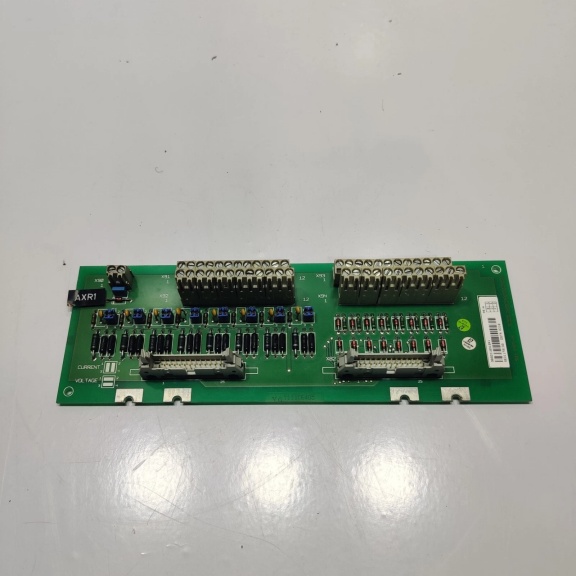
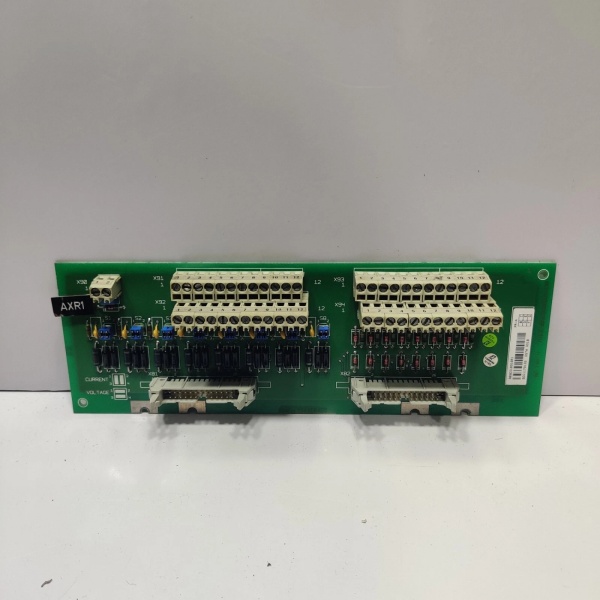
- Field Wiring Terminals: 16 screw terminals (8 input, 8 output) for analog signals
- Signal Types Supported: 4-20mA, 0-10V, thermocouples, RTDs (via DSAX 110A configuration)
- Isolation Rating: 2500V AC (field-to-backplane, channel-to-channel)
- Operating Temperature Range: -40°C to +70°C (industrial grade)
- Storage Temperature: -55°C to +85°C
- Power Consumption: <1.5W typical
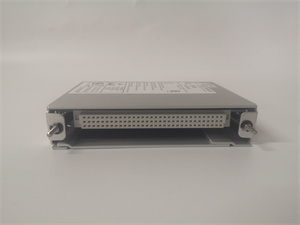
- Backplane Interface: Advant OCS S100 bus
- Dimensions: 160mm x 100mm x 30mm (standard Advant OCS I/O module size)
- Mounting: Rack-mounted (3U height, compatible with Advant OCS I/O racks)
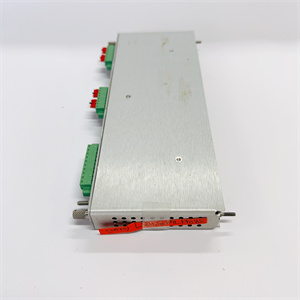
- Status Indicators: Power LED, Communication LED, Channel Fault LEDs
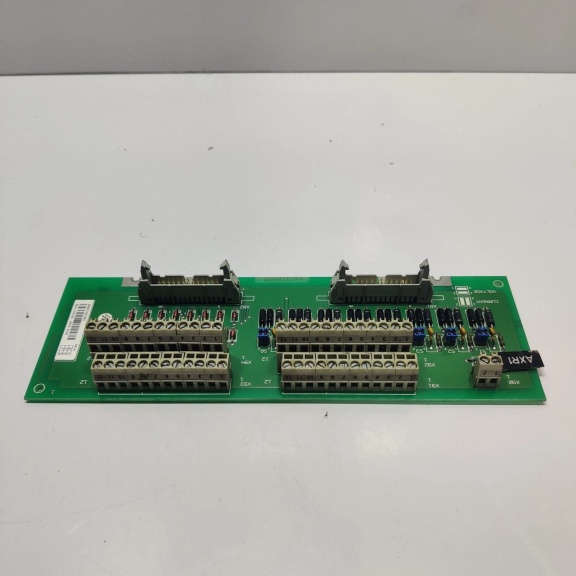
ABB DSTA 001B
Field Application & Problem Solved
In heavy industrial environments like refineries, chemical plants, and power generation facilities, connecting field analog devices to DCS systems presents two major challenges: signal noise interference and wiring complexity. Raw analog signals from sensors (temperature, pressure, flow) are vulnerable to electromagnetic interference (EMI) from nearby motors, transformers, and power lines—causing measurement inaccuracies and control system instability. Additionally, the sheer number of field wires in large plants creates wiring nightmares during installation and troubleshooting.
The DSTA 001B solves these problems by serving as a dedicated interface between field wiring and the DSAX 110A analog I/O board. You’ll find this module in Advant OCS systems controlling critical processes like reactor temperature control, distillation column pressure regulation, and turbine speed monitoring. Its core value lies in centralized signal termination—consolidating field wiring into a single module that provides isolation, noise filtering, and clear channel identification.
For maintenance teams, the DSTA 001B reduces troubleshooting time by 50% compared to direct wiring to the analog board. The channel fault LEDs pinpoint problematic signals at a glance, while the modular design allows for quick replacement during scheduled outages without rewiring the entire field connection—minimizing downtime and reducing human error.
Installation & Maintenance Pitfalls (Expert Tips)
Terminal Tightening Torque is Critical
Rookies often over-tighten or under-tighten the screw terminals. Over-tightening strips the threads or damages the conductor, while under-tightening causes intermittent connections that lead to “drifting” analog readings. My rule: Use a torque screwdriver set to 0.8-1.0 Nm for copper conductors (1.5-2.5 mm²) and 1.2-1.5 Nm for aluminum conductors. Always perform a pull test after tightening to ensure the wire doesn’t come loose.
Improper Shield Grounding Causes Signal Noise
Analog signals are highly sensitive to ground loops. A common mistake is grounding the shield at both ends of the cable—creating current loops that introduce noise into the measurement. The fix: Ground the shield only at the DSTA 001B end (single-point grounding) and insulate the other end. For long cable runs (>100m), use a shielded twisted-pair cable with a minimum 90% coverage to reduce EMI pickup.
Module Mismatch Ruins Communication
The DSTA 001B is specifically designed for the DSAX 110A analog board. Installing it with incompatible analog boards (like DSAI 130A or DSAO 140A) causes “bus communication errors” and prevents the system from recognizing the I/O module. Always verify the analog board model before installation—don’t assume “all Advant OCS modules are compatible.”
Ignoring Surge Protection Risks Equipment Damage
In industrial environments prone to voltage spikes (lightning-prone areas, plants with large motor loads), the DSTA 001B’s built-in protection isn’t enough. Rookies often skip installing external surge protectors, leading to module failure during storms or motor startup. My recommendation: Install ABB’s recommended surge protection devices (SPDs) on all field analog inputs, rated for 10kA surge current—this adds a critical layer of protection for both the DSTA 001B and DSAX 110A.

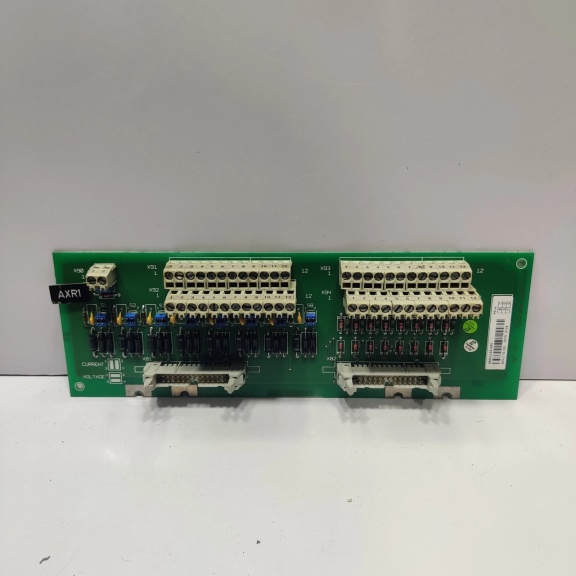
ABB DSTA 001B
Technical Deep Dive & Overview
The DSTA 001B is a field-proven interface module designed to bridge the gap between field analog devices and the ABB Advant OCS DCS. It connects to the DSAX 110A analog I/O board via a dedicated backplane connector and provides 16 screw terminals for field wiring (8 inputs, 8 outputs). The module incorporates passive signal conditioning—including RC filters to reduce high-frequency noise and transient voltage suppressors to protect against voltage spikes.
Internally, the DSTA 001B routes signals through isolated channels (2500V AC isolation) to prevent ground loops and cross-talk between channels. The backplane interface communicates with the DSAX 110A via the Advant OCS S100 bus, transmitting digitalized analog data to the controller. The status LEDs provide real-time feedback: a green power LED confirms module power, a yellow communication LED indicates active backplane communication, and red channel fault LEDs highlight specific channels with signal issues (overrange, undervoltage, or wiring faults).
In the field, the DSTA 001B acts as a buffer zone between the harsh industrial environment and the sensitive DSAX 110A analog board. By consolidating field wiring into a replaceable module, it simplifies maintenance—technicians can swap out a faulty DSTA 001B in minutes without disturbing field connections or reconfiguring the analog board. This modular approach extends the lifespan of the more expensive DSAX 110A and reduces overall system downtime in critical process applications.