Description
Key Technical Specifications
- Model Number: DSQC609
- Manufacturer: ABB
- Device Type: Industrial Robot Digital I/O Module
- Compatible Controllers: ABB IRC5 Standard, Compact, and Panel-Mount Controllers
- Input Configuration: 16 digital inputs (24V DC, sinking/sourcing configurable)
- Output Configuration: 16 digital outputs (24V DC, 0.5A per channel, short-circuit protected)
- Input Response Time: <1ms (typical)
- Output Switching Time: <1ms (typical)
- Operating Temperature: 0°C to +45°C (32°F to +113°F)
- Storage Temperature: -25°C to +65°C (-13°F to +149°F)
- Isolation: 2kV AC (I/O channels to backplane, channel-to-channel)
- Power Supply: Derived from IRC5 controller backplane (no external power required)
- Dimensions (W x H x D): 140mm x 210mm x 90mm
- Weight: Approx. 2.1kg
- Compliance: IEC 61131-2, EN 61010-1, CE, UL
- Status Indicators: Power (PWR), Input Activity (1–16), Output Activity (1–16), Fault (RED)
- Mounting: Rack-mount (IRC5 controller chassis-compatible, tool-less installation)
- Connection Type: 2 x 24-pin terminal blocks (removable for wiring)
- Protection Features: ESD protection (±15kV), short-circuit protection on outputs, over-voltage protection
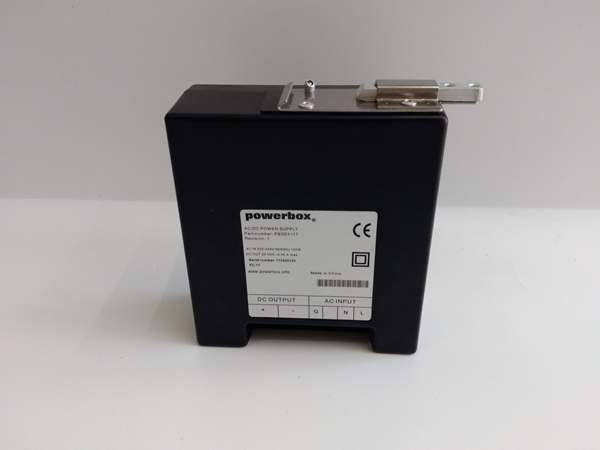
ABB DSQC609
Field Application & Problem Solved
In industrial robotics—automotive assembly, electronics manufacturing, and packaging lines—the biggest challenge is reliably connecting robots to external devices (sensors, grippers, conveyors) while maintaining seamless control and visibility. Legacy I/O solutions often require complex wiring, lack integration with robot controllers, or provide vague fault feedback, leading to miscommunication between the robot and peripherals, unplanned downtime, and production delays. The DSQC609 solves this by offering plug-and-play integration with IRC5 controllers, abundant configurable I/O channels, and real-time diagnostics—eliminating wiring complexity and troubleshooting guesswork.
You’ll typically find this module in ABB robots like the IRB 120, IRB 2600, and IRB 4600, powering critical peripheral interactions. In automotive plants, it connects weld guns, part presence sensors, and fixture clamps to robot controllers. In electronics factories, it links pick-and-place grippers, vision system triggers, and conveyor stop/start signals. It’s also a staple in packaging automation, where it coordinates robot arm movements with labelers, sealers, and product detectors. For retrofits, it’s a drop-in replacement for older DSQC I/O modules, upgrading connectivity without requiring controller software overhauls.
Its core value is simplicity and reliability. The IRC5 backplane integration eliminates external power and communication wiring, reducing installation time and failure points. The configurable input/output channels adapt to almost any peripheral (sinking or sourcing sensors, low-power actuators), avoiding the need for adapter modules. For technicians, the per-channel activity LEDs and fault diagnostics let them quickly identify issues (e.g., a shorted output or unresponsive sensor) without complex tools. For plant operators, this translates to fewer robot-peripheral communication failures, faster troubleshooting, and consistent production flow—critical in high-volume environments where even minor delays cost thousands per hour.
Installation & Maintenance Pitfalls (Expert Tips)
Terminal Block Wiring: Torque Matters
Rookies often hand-tighten the removable terminal blocks, leading to loose connections that cause intermittent I/O faults. Vibration in manufacturing environments (e.g., welding cells, stamping lines) worsens this, resulting in false input triggers or failed outputs. Use a torque screwdriver set to ABB’s spec (0.5–0.8Nm) for all wiring connections. Recheck torque after the first week of operation—thermal cycling can loosen terminals, especially in high-load applications.
Input/Output Configuration Mismatch
The module’s inputs/outputs are configurable for sinking or sourcing, but technicians frequently skip matching the configuration to the connected device. A sourcing sensor connected to a sinking input won’t trigger, while a sinking actuator on a sourcing output won’t operate. Use the IRC5 controller’s HMI or RobotStudio software to set each channel’s type (input: sinking/sourcing; output: PNP/NPN). Test each channel with a multimeter after configuration—this catches mismatches before they cause production delays.
Backplane Installation: Avoid Partial Seating
Forcing the module into the IRC5 chassis or stopping short of full backplane engagement causes communication failures or erratic I/O behavior. Slide the module along the chassis guide rails until it aligns with the backplane connector, then push firmly until you hear a distinct “click.” Never use tools to pry or secure the module—damaged backplane pins are expensive to repair and can disable the entire controller slot.
Overlooking Output Load Limits
Each digital output is rated for 0.5A, but rookies often daisy-chain multiple devices (e.g., relays, indicators) onto a single channel. Overloading causes the output’s internal fuse to blow or permanent damage to the output circuit. Calculate the total current draw of connected devices and never exceed 0.5A per channel. For higher loads, use external relays or power amplifiers—this is far cheaper than replacing the entire module.
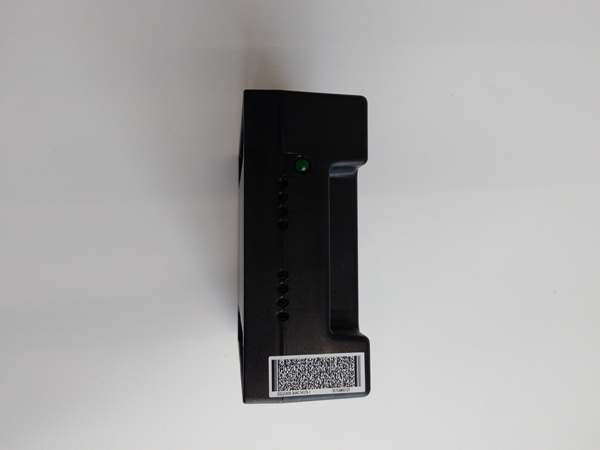
ABB DSQC609
Technical Deep Dive & Overview
The ABB DSQC609 is a dedicated digital I/O module engineered to extend the connectivity of ABB’s IRC5 robot controllers, serving as the interface between the robot’s control logic and external industrial devices. It’s part of ABB’s trusted DSQC series, designed for the rigors of manufacturing environments where reliability and ease of integration are non-negotiable.
At its core, the module acts as a bridge between the IRC5 controller’s backplane and external peripherals. It draws power directly from the controller’s backplane, eliminating the need for external power supplies and simplifying installation. The 16 digital inputs and 16 digital outputs are individually configurable via software, allowing compatibility with both sinking (NPN) and sourcing (PNP) devices—a key advantage in mixed-peripheral environments.
The module communicates with the IRC5 controller via the high-speed backplane bus, ensuring near-instantaneous data transfer (response time <1ms) between the robot and I/O channels. This low latency is critical for time-sensitive tasks, such as triggering a gripper to close the moment a part is detected or stopping a conveyor when a robot is ready to load. Internal protection circuits guard against ESD, short-circuits, and over-voltage, preventing damage from common industrial electrical hazards.
Ruggedness is built into the design: the module’s enclosure resists dust and minor moisture, while the 0°C to +45°C operating range handles the heat generated by nearby robot drives or enclosed controller cabinets. The removable terminal blocks simplify wiring and maintenance—technicians can disconnect the module without rewiring peripherals, reducing downtime during replacements. The front-panel LEDs provide at-a-glance status: input/output activity LEDs confirm signal flow, while the fault LED alerts to short-circuits or configuration errors.
Overall, the DSQC609 is a workhorse I/O solution for industrial robotics. It delivers flexible, reliable connectivity between ABB robots and external devices, simplifying installation, configuration, and troubleshooting. Its tight integration with the IRC5 controller eliminates compatibility issues, making it a staple in manufacturing facilities worldwide where seamless robot-peripheral communication is critical to production success.