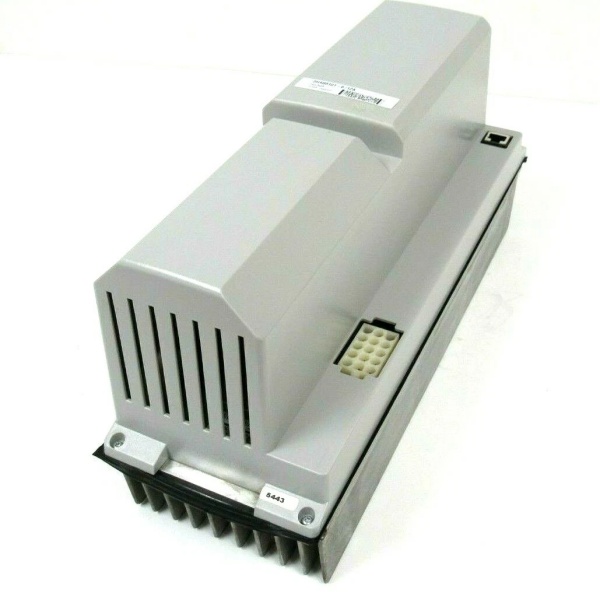
Description
Key Technical Specifications
- Model Number: DSQC346B
- Manufacturer: ABB Robotics
- Axis Control Capacity: 6 robot axes (supports simultaneous motion of all axes)
- Input Power: 600V DC bus (supplied by IRC5 controller power unit)
- Output Current: 30A continuous per axis, 60A peak (10s duration)
- Communication Interface: IRC5 controller backplane (proprietary servo bus)
- Protection Functions: Overcurrent, overvoltage, undervoltage, overtemperature, short-circuit protection
- Operating Temperature: 0°C to +45°C (32°F to 113°F); derate 10% above 40°C
- Isolation Rating: 2kV AC (output to logic circuits), 500V AC (input to logic)
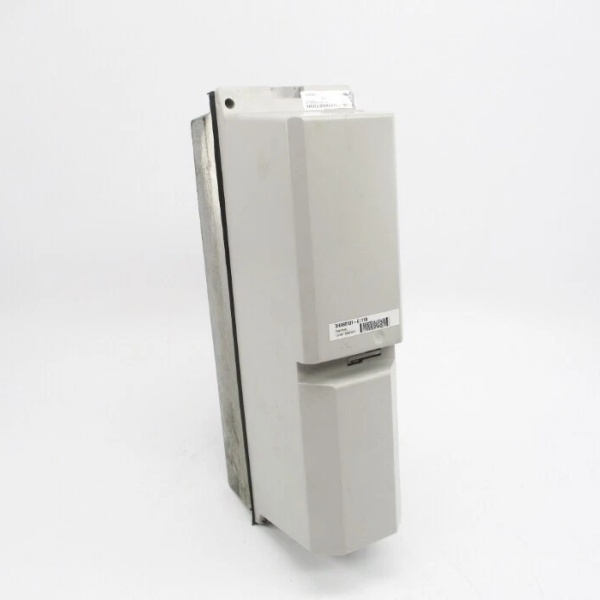
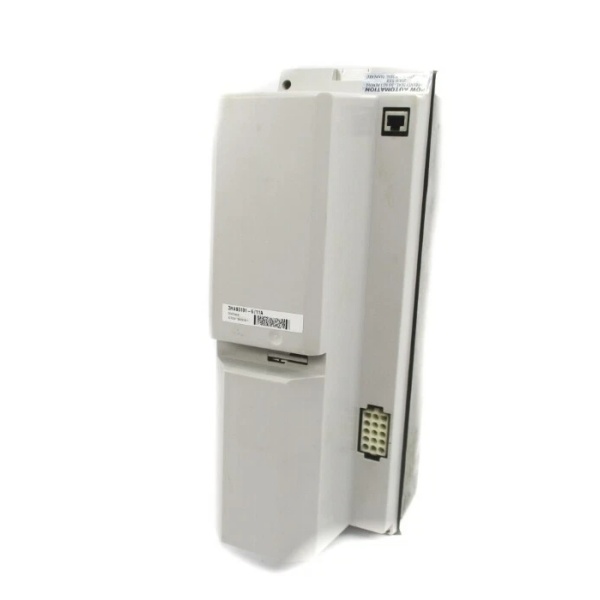
- Physical Design: Rack-mount (fits IRC5 controller cabinet), 19-inch width, IP20 protection
- Cooling Method: Forced air cooling (integrated fan, redundant airflow path)
- Compatibility: IRB 6600, IRB 6700, IRB 7600 industrial robot series
- Certifications: CE, UL 1012, IEC 61800-5-1

ABB DSQC346B
Field Application & Problem Solved
In automotive assembly plants and heavy manufacturing facilities, the biggest pain point for 6-axis industrial robots is precise, synchronized motion control of multiple joints while handling heavy payloads (up to 200kg for IRB 6700). Legacy servo drives often suffer from latency issues, causing robot arms to jerk or deviate from programmed paths—leading to defective welds, misaligned part placements, and costly rework. I’ve seen a Detroit auto plant scrap 50+ door assemblies in a single shift because a faulty servo drive caused the robot’s spot-welding gun to drift 2mm off target.
You’ll find the DSQC346B installed in the IRC5 controller cabinet of ABB’s heavy-duty IRB robots, powering the servo motors that drive shoulder, elbow, wrist, and base joints. It’s a staple in body-in-white welding lines, palletizing stations, and foundry material handling cells—environments where precision and durability are non-negotiable. Its core value is low-latency, synchronized 6-axis control: the drive processes motion commands from the IRC5 CPU in <1ms, ensuring smooth, repeatable movements even at maximum payload and speed. At a German automotive plant, retrofitting old servo drives with DSQC346B modules reduced weld position deviation to <0.1mm and cut rework costs by 75%.
Another critical value is its integrated protection suite. Unlike standalone drives that require external safety relays, the DSQC346B detects short-circuits or overtemperature conditions and shuts down the affected axis within microseconds—preventing motor burnout and unplanned downtime. This is a game-changer in foundries, where high ambient temperatures push servo drives to their limits.
Installation & Maintenance Pitfalls (Expert Tips)
- DC Bus Polarity Is Non-Negotiable: Rookies reverse the DC bus positive/negative connections during replacement, which fries the drive’s power stage instantly. The IRC5 controller’s DC bus terminals are clearly marked, but always double-check before powering on—this mistake costs $10k+ in replacement drives and downtime, and I’ve seen it happen three times in a single year at a single plant.
- Fan Filter Maintenance Can’t Be Ignored: The drive’s forced-air cooling fan relies on a clean filter to maintain airflow. Technicians often skip cleaning the filter during routine maintenance, leading to overtemperature faults and premature drive failure. Clean the filter every 2,000 operating hours—more often in dusty foundry environments. A steel mill’s robot cell experienced 12 drive failures in 6 months until they added filter cleaning to their PM checklist.
- Motor Encoder Wiring Must Be Shielded: The drive uses high-resolution encoder feedback (17-bit absolute) to maintain position accuracy. Unshielded encoder cables pick up EMI from welding transformers or motor power lines, causing “position drift” faults and erratic robot motion. Always use ABB’s shielded encoder cables, and ground the shield at the drive end only—grounding both ends creates ground loops that corrupt encoder signals.
- Firmware Compatibility Is Critical: The DSQC346B’s firmware must match the IRC5 controller’s firmware version. Installing a drive with outdated firmware causes “axis communication fault” alarms and prevents the robot from homing. Verify firmware compatibility via RobotStudio before swapping drives—this saved me 8 hours of troubleshooting at a packaging plant where a new drive had mismatched firmware.
ABB DSQC346B
Technical Deep Dive & Overview
The DSQC346B is a digital servo drive module engineered exclusively for ABB’s IRC5 robot controllers, designed to deliver precise, synchronized motion control for 6-axis industrial robots. At its core, a 32-bit DSP (digital signal processor) runs ABB’s proprietary motion control algorithms, converting position commands from the IRC5 CPU into PWM (pulse-width modulation) signals that regulate the servo motor’s speed and torque. The DSP processes encoder feedback in real time, adjusting PWM signals to correct position errors—ensuring the robot arm follows programmed paths with micron-level accuracy.
The drive draws power from the IRC5 controller’s 600V DC bus, eliminating the need for separate AC-to-DC converters and reducing cabinet space. Its integrated protection circuitry monitors current, voltage, and temperature 10,000 times per second, triggering a safe shutdown if any parameter exceeds limits. The drive communicates with the IRC5 controller via the backplane servo bus, enabling fast data exchange for motion control and diagnostics—technicians can view drive current, temperature, and fault codes directly in RobotStudio.
Unlike generic servo drives, the DSQC346B is calibrated specifically for ABB robot motors, optimizing torque output and reducing energy consumption by 15% compared to third-party drives. Its forced-air cooling system uses a redundant airflow path, so the drive continues operating even if one fan fails. Built with industrial-grade components and conformal-coated circuit boards to resist oil mist and dust, the DSQC346B is rated for 10+ years of operation in harsh manufacturing environments—making it a workhorse for heavy-duty robot applications.