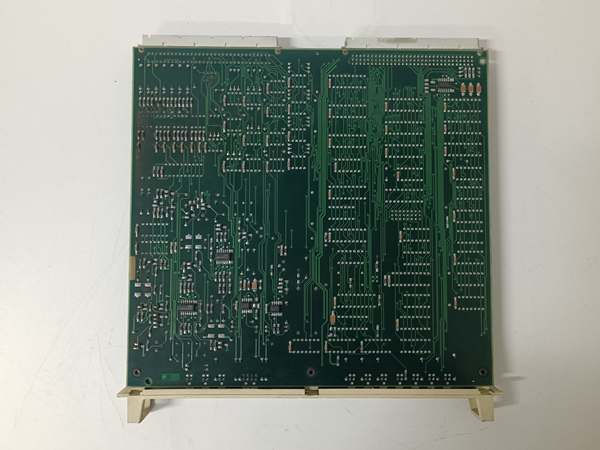
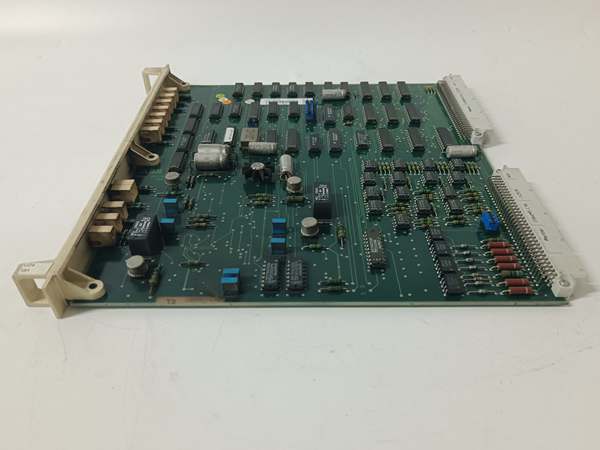
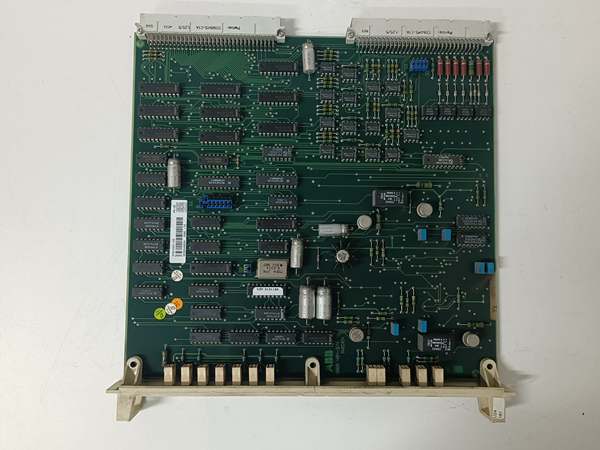
Description
Key Technical Specifications
- Model Number: ABB DSBC172 57310001-KD
- Manufacturer: ABB
- Fieldbus Protocol: Profibus DP V0/V1 (compliant with EN 50170)
- Operating Modes: Profibus DP Master, Profibus DP Slave (software-configurable)
- Baud Rate Range: 9.6 kbps to 12 Mbps (manual/configurable)
- Max Connected Devices: 124 slaves (as master), 1 master (as slave)
- Operating Temperature: -25°C to 70°C (-13°F to 158°F)
- Storage Temperature: -40°C to 85°C (-40°F to 185°F)
- Isolation: 1kV AC (bus interface to backplane, 1-minute withstand)
- Transmission Distance: Up to 1000m (9.6 kbps), 100m (12 Mbps)
- Power Supply: 24V DC ±10% (21.6V DC to 26.4V DC), from AC 800M backplane
- Power Consumption: 1.4W (standby), 2.6W (full load)
- Mounting: AC 800M I/O rack (compatible with PM850/PM860/PM861/PM865 CPUs)
- Connector Type: 9-pin D-sub (female) + spring-cage terminal block (A/B/GND)
- Protection Features: ESD protection (±15kV air), surge protection (±2kV), short-circuit protection
- Compatibility: ABB AC 800M controllers (firmware ≥3.2)

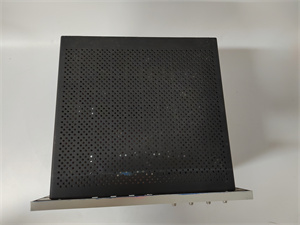
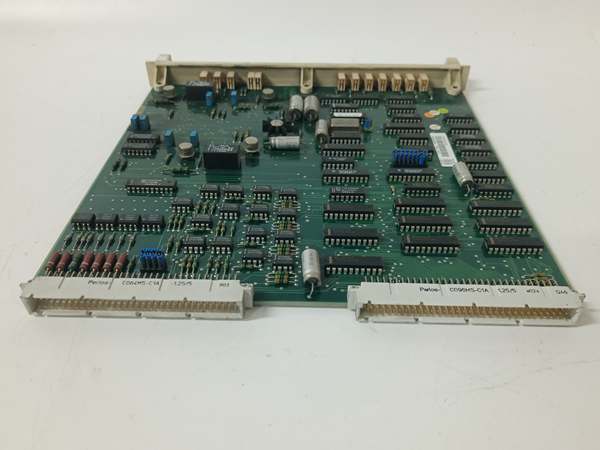
ABB DSBC172 57310001-KD
Field Application & Problem Solved
In industrial automation—manufacturing plants, refineries, and process facilities—Profibus DP remains a dominant fieldbus for connecting distributed devices, but integrating it with modern AC 800M PLCs presents unique challenges. Legacy communication modules often lack full Profibus DP V1 support, limiting access to diagnostic data from intelligent devices (e.g., variable-speed drives). Non-isolated modules suffer from noise-induced communication drops in harsh electromagnetic environments, while third-party options struggle with AC 800M backplane synchronization—leading to latency and data inconsistency. Many single-mode modules force users to choose between master or slave, restricting flexibility in mixed-network setups. The ABB DSBC172 solves these pain points with dual master/slave capability, full Profibus DP compliance, and robust isolation.
You’ll typically find this module in applications like linking Profibus DP distributed I/O racks to AC 800M controllers in automotive assembly lines, integrating Profibus-enabled pumps and valves in water treatment plants, or connecting process transmitters to PLCs in chemical reactors. It’s a workhorse in brownfield upgrades, where it preserves existing Profibus infrastructure instead of requiring costly device replacements. In large-scale facilities (e.g., pulp mills), it acts as a Profibus master to coordinate dozens of slave devices across long distances, leveraging its 12Mbps max baud rate for high-speed data transfer. It also excels in multi-network setups, where it functions as a slave to feed AC 800M data into a central Profibus system.
Its core value is flexibility and reliability in Profibus integration. Dual master/slave modes adapt to diverse network architectures, while Profibus DP V1 support unlocks critical device diagnostics. Galvanic isolation blocks noise and voltage transients, ensuring stable communication in harsh environments. For operators, this means extended life for legacy equipment, reduced downtime, and seamless integration with modern control systems—critical in industries where fieldbus replacement is disruptive and expensive.
Installation & Maintenance Pitfalls (Expert Tips)
- Bus Topology Violations (Star Wiring = Signal Reflections): Rookies often use star topology (all devices connected directly to the module) instead of the required linear bus. This creates impedance mismatches, leading to signal reflections and communication timeouts. Install a strict daisy-chain: connect the first slave to the module, the second to the first, and so on. Use a Profibus coupler if branches are necessary—never splice wires to create T-junctions.
- Incorrect Termination (Missing/Extra Resistors = Data Corruption): Profibus DP requires 120Ω termination resistors only at the two ends of the bus, but rookies often omit them or install them on every device. Missing resistors cause signal reflections; extra ones overload the bus. Install a resistor at the module’s Profibus port and the last slave in the chain. Verify with a multimeter—measure between A and B lines; a properly terminated bus reads ~120Ω.
- Baud Rate/Address Conflicts (Mismatched Settings = No Communication): All devices on the Profibus bus must share the same baud rate, and each slave needs a unique address. Rookies often mix baud rates (e.g., module at 38.4 kbps, slave at 1.5 Mbps) or duplicate addresses. Document all slave settings first, then configure the module via Control Builder M to match. Use a Profibus scanner tool to detect address conflicts or baud rate mismatches.
- Poor Grounding (Shared Ground = Noise Invasion): Galvanic isolation protects the module, but rookies often connect the Profibus bus ground to different points than the AC 800M system. This creates ground loops, introducing noise that corrupts data. Connect the module’s GND terminal to the AC 800M controller’s system ground. Use shielded twisted-pair (STP) cable, and ground the shield at the module end only—never ground both ends, as this creates additional loops.
ABB DSBC172 57310001-KD
Technical Deep Dive & Overview
The ABB DSBC172 57310001-KD is a Profibus DP communication module designed to bridge Profibus DP field networks with ABB’s AC 800M control systems. Its core design centers on a dedicated Profibus DP V0/V1 protocol processor that handles frame encoding, decoding, and bus management—offloading these tasks from the AC 800M CPU to optimize control logic performance. The module’s dual master/slave capability allows it to either control Profibus slave devices (master mode) or share AC 800M data with an external Profibus master (slave mode), adapting to diverse network architectures.
Galvanic isolation (1kV AC) between the Profibus bus interface and the AC 800M backplane is a critical design feature. This isolation is achieved via optocouplers and isolated power supplies, blocking electromagnetic interference (EMI) from motors, transformers, and high-voltage equipment. Surge (±2kV) and ESD (±15kV) protection shield the module from voltage transients and static damage during installation or maintenance.
Communication with the AC 800M CPU occurs via the rack’s high-speed backplane bus (100Mbps), enabling real-time transfer of process data objects (PDOs) and service data objects (SDOs). The module’s internal memory caches bus data, updating the CPU at intervals aligned with bus traffic to minimize latency. Baud rates (9.6 kbps to 12 Mbps) are configurable via Control Builder M, with support for Profibus DP V1 diagnostic messaging to access device health data.
Built for industrial ruggedness, the DSBC172 withstands vibration (up to 5g at 10-2000Hz) and temperature extremes (-25°C to 70°C). The 9-pin D-sub and spring-cage terminals simplify bus wiring, while the module’s compact 1-slot design maximizes I/O density in AC 800M racks. Compliance with EN 50170 ensures compatibility with thousands of Profibus DP devices, from basic I/O modules to intelligent drives and transmitters.
As an OEM module, it integrates seamlessly with ABB’s Control Builder M software, supporting drag-and-drop configuration of master/slave parameters, slave device mapping, and diagnostic monitoring. Its focus on Profibus compliance, flexibility, and durability makes it a reliable solution for preserving legacy fieldbus infrastructure while enabling modern control system integration.