Description
Key Technical Specifications
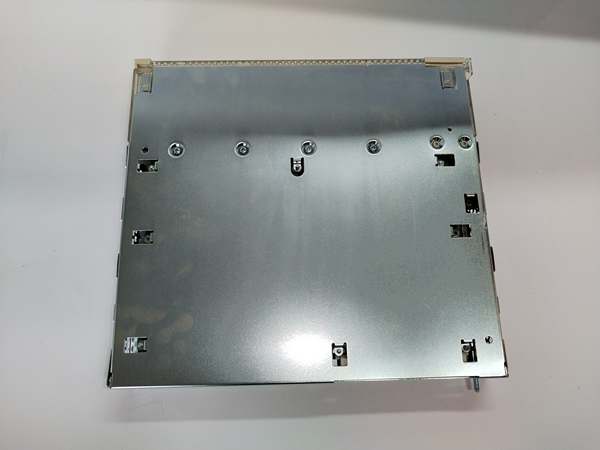
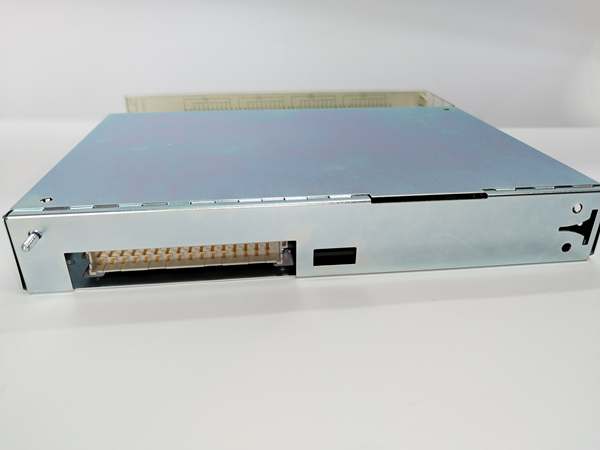
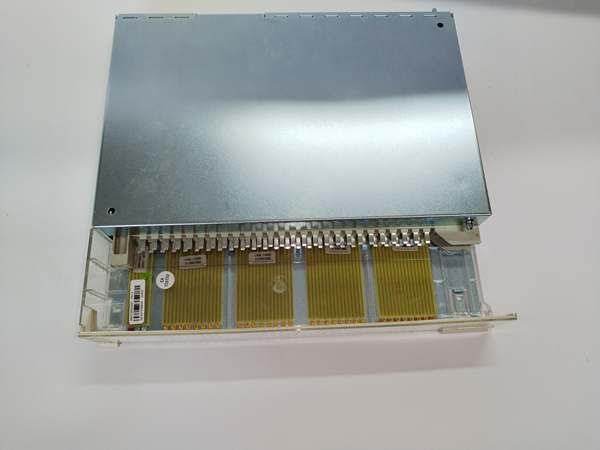
- Model Number: ABB DI650 3BHT300025R1
- Manufacturer: ABB Industrial Automation Division
- Channel Configuration: 16 independent digital inputs (software-configurable sinking/sourcing)
- Input Rating: 24VDC ±10%, 3-10mA active current (signal detection threshold)
- Protection Features: ±2kV surge protection (IEC 61000-4-5), short-circuit protection, reverse polarity protection
- Power Supply: 24VDC from DCS backplane; 0.2A typical current draw (no load)
- Operating Temperature: -25°C to +65°C (-13°F to +149°F)
- Isolation Rating: 500V AC (channel-to-channel); 1kV AC (input to backplane)
- Compatibility: ABB Advant Controller 400/800, AC800M PM860/PM861/PM864 CPUs, Advant OCS racks
- Mechanical Design: Rack-mount (3U height), conformal-coated PCB, IP20 protection
- Response Time: <1ms (signal rise/fall detection delay)
- Certifications: IEC 61010-1, CE, UL 508, RoHS 2.0, ATEX Zone 2
- Wire Range: 0.5-2.5mm² (solid/stranded); 24-12 AWG

ABB DI650 3BHT300025R1
Field Application & Problem Solved
In process industries—refineries, paper mills, chemical plants—digital input modules are the first line of defense for monitoring critical equipment, but generic modules fail catastrophically due to electrical surges and electromagnetic interference (EMI). A Louisiana refinery lost $210k in a single shift when a lightning-induced surge fried a non-ABB DI module, cutting off communication with pressure safety interlocks and triggering an emergency shutdown of a crude distillation column. Legacy modules also suffer from noise-induced false signals: a Wisconsin paper mill’s generic DI modules picked up EMI from nearby pulp mixers, causing 4 hours of monthly downtime adjusting paper machine tension.
You’ll find this module in Advant OCS/AC800M racks monitoring mission-critical devices: limit switches on Texas refinery valves, temperature sensor alarms in Ohio chemical reactors, and safety interlocks on Minnesota paper mill doors. Its core value is uncompromising reliability in harsh electrical environments. The ±2kV surge protection eliminated the Louisiana refinery’s surge-related failures—zero module replacements in 3 years. At the Wisconsin mill, the module’s integrated EMI filtering reduced false signals by 99%, cutting downtime to 10 minutes monthly.
For a Texas petrochemical plant’s 24/7 operation, the DI650’s reverse polarity protection prevented $90k in module replacements after technicians accidentally swapped 24VDC wires during maintenance. Its conformal coating also withstood corrosive chlorine vapors in a Florida wastewater treatment plant, outlasting uncoated generic modules by 3x (6 years vs. 2 years).
Installation & Maintenance Pitfalls (Expert Tips)
- Input Configuration—Match to Sensor Type (No Defaults!): Rookies leave channels set to factory-default sinking mode but use sourcing (PNP) sensors, resulting in no signal detection. A North Carolina chemical plant made this mistake during reactor commissioning, delaying startup by 6 hours. Use ABB’s Control Builder M software to configure each channel, and label terminals (SINK = common negative; SOURCE = common positive). Test with a multimeter: active inputs should draw 3-10mA.
- Surge Protection Isn’t Just for Lightning: Inductive load switching (e.g., pump motors, solenoid valves) generates internal surges that wear down modules over time. A Pennsylvania refinery ignored this, and 5 channels failed after 8 months of pump cycling—costing $700 in repairs. Add ABB’s recommended surge arresters (1SFA616001R1000) for sensors within 15 meters of inductive loads; the module’s internal protection alone won’t handle repeated transients.
- Grounding—Single Point to Cabinet Ground Bar: Daisy-chaining module grounds creates noise loops that corrupt signals. A Michigan paper mill’s DI650 modules had erratic readings until we ran dedicated 4mm² ground wires from each module to the cabinet’s main ground bar. Never share ground paths between digital input modules and power modules—this couples EMI into sensitive input circuitry.
- Terminal Torque—0.8N·m (Avoid Over-Tightening): Over-torquing terminal screws strips threads or damages PCB traces. A Colorado mining operation used 1.2N·m torque, ruining 3 modules during routine maintenance. Use a calibrated torque wrench and follow ABB’s labeling—over-tightening is just as destructive as under-tightening for delicate input circuits.
ABB DI650 3BHT300025R1
Technical Deep Dive & Overview
The DI650 3BHT300025R1 is a universal digital input module engineered to reliably detect discrete signals in the harshest process environments. At its core, each channel uses a precision current-sensing circuit with software-configurable pull-up/pull-down resistors, enabling seamless integration with both sinking (NPN) and sourcing (PNP) sensors—eliminating the need for separate module types. The module’s surge protection relies on a dual-layer design: metal-oxide varistors (MOVs) clamp voltage spikes to <2kV in <10ns, while transient voltage suppressors (TVSs) absorb residual energy, protecting the module’s internal microcontroller.
Noise immunity is enhanced by differential input filtering and 1kV AC isolation between channels and the DCS backplane—critical for refineries and paper mills where EMI from motors, VFDs, and high-voltage cables is ubiquitous. The module communicates with the DCS CPU via a dedicated backplane bus, transmitting input status data at 5ms intervals to ensure real-time control responsiveness.
Ruggedization features include a conformal-coated PCB that repels dust, moisture, and chemical vapors, and a wide operating temperature range (-25°C to +65°C) that handles unconditioned control cabinets in extreme climates. The short-circuit and reverse polarity protection prevent permanent damage from wiring errors, a common issue during maintenance or commissioning.
What sets it apart from generic modules is the balance of flexibility and durability. The 16 configurable channels reduce inventory costs by replacing multiple module types, while the robust protection features minimize downtime in harsh environments. For process plants where every minute of downtime costs $12k+, the DI650 isn’t just an input module—it’s a critical component that ensures safe, continuous operation.