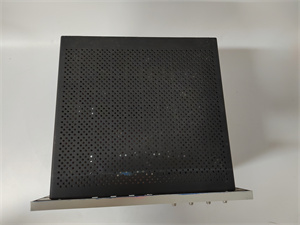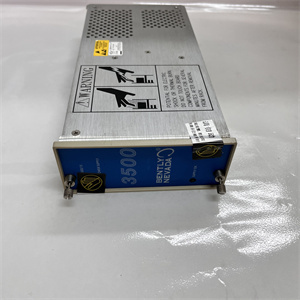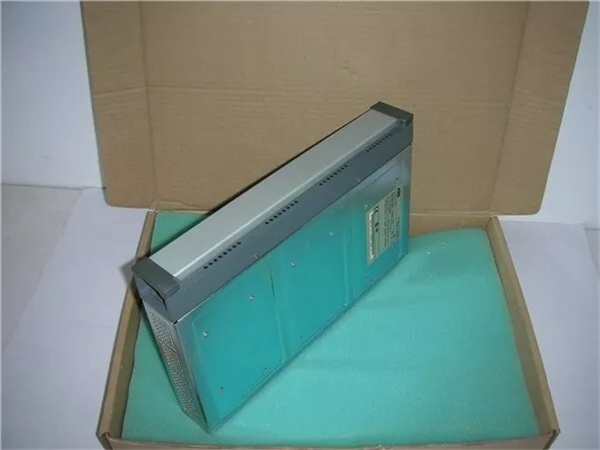
Description
Key Technical Specifications
- Model Number: DAI03 (0369631M/R, P 37141-4-0369631)
- Manufacturer: ABB Bailey (Industrial Automation Division)
- Product Type: 8-Channel Analog Input Module for Freelance 2000 PLC Systems
- System Compatibility: ABB Bailey Freelance 2000 PLC, Freelance 800F (backward compatible)
- Electrical Specifications:
- Operating Voltage: 24VDC ±10% (9.6W max power consumption)
- Input Signal Type: 0/4-20mA DC current (standard industrial process signal)
- Input Resistance: 271Ω per channel (optimized for 4-20mA transmitters)
- A/D Conversion: 12-bit resolution (4096 discrete levels)
- Measurement Accuracy: ±0.1% of full scale (at +25°C), ±0.2% over operating temperature range
- Isolation Rating: 500VAC (channel-to-channel, channel-to-system)
- Common Mode Rejection Ratio (CMRR): >80dB at 50/60HzABB
- Performance Specifications:
- Number of Channels: 8 independent channels (each with individual signal processing)
- Conversion Time: 500µs per channel (typical), 2ms for all 8 channels
- Input Filter Time Constant: 100µs (current mode)
- Status Indicators: 1 green LED per channel (ON when signal is within range), 1 power LED, 1 fault LED
- Protection Features:
- Overvoltage Protection: Up to 30VDC per channel
- Overcurrent Protection: Current limiting at 30mA per channelABB
- ESD Protection: ±15kV (human body model) on input terminalsABB
- EMC Compliance: EN 61000-6-2 (industrial immunity), EN 61000-6-4 (industrial emissions)
- Mechanical Specifications:
- Dimensions (W×H×D): 102mm × 124mm × 126mm (varies slightly by version)
- Weight: 0.24kg (typical)
- Mounting Type: DIN rail mount (35mm standard) or panel mount in Freelance 2000 cabinets
- Connector Type: 16-pin DIN 41612 connector for signal inputs, terminal block for power input
- Environmental Specifications:
- Operating Temperature: 0°C to +60°C (wide temperature range for harsh industrial environments)
- Storage Temperature: -40°C to +85°C
- Humidity: 5% to 95% (non-condensing)
- Vibration Resistance: Up to 1g (10-500Hz, IEC 60068-2-6)
- Certifications: CE, UL, CSA, IEC 61131-2 Compliant
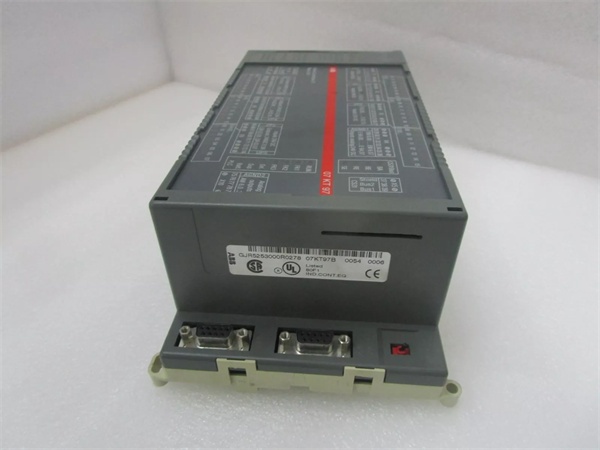
ABB 07KT97F1
Field Application & Problem Solved
In industrial automation, accurate analog signal acquisition is essential for monitoring and controlling complex processes. At a coal-fired power plant in Ohio, a failed generic analog input module caused inaccurate boiler pressure readings, leading to a 2-hour shutdown ($180k in lost production). At a Texas refinery, insufficient channel isolation in an older module caused cross-talk between temperature and pressure signals, resulting in product quality issues and $90k in rework costs.
The ABB DAI03 solves these critical issues by delivering:
- High-Precision Measurement: ±0.1% accuracy ensures reliable process monitoring and control, reducing product variability and waste
- Channel Independence: 8 fully isolated channels prevent cross-talk and ensure accurate signal acquisition from individual sensors
- Robust Signal Processing: 12-bit A/D conversion and optimized input resistance (271Ω) provide precise digitization of 4-20mA process signals
- Visual Status Monitoring: Individual LED indicators per channel allow quick troubleshooting of signal issues
- EMC Immunity: Built-in EMC filtering ensures stable operation in noisy industrial environments with high electromagnetic interference
Typical deployments:
- Power Generation: Boiler pressure/temperature monitoring, turbine speed measurement, cooling system flow monitoring in coal, gas, and nuclear power plants
- Oil & Gas Industry: Refinery process parameter monitoring (temperature, pressure, flow), pipeline leak detection, and pump station automation
- Chemical Processing: Reactor temperature/pressure control, agitator speed regulation, and chemical composition analysis
- Manufacturing: Automotive assembly line process monitoring, steel mill temperature control, and packaging machinery operation
- Water & Wastewater Treatment: Water level monitoring, pH/conductivity measurement, and treatment process automation
Installation & Maintenance Pitfalls (Expert Tips)
- Wiring Polarity: At a Pennsylvania power plant, a technician reversed the polarity of a 4-20mA transmitter connection, causing the module to display incorrect values. Always connect the positive terminal of the transmitter to the “+” input of the DAI03 channel and negative to “-“.
- Input Resistance Matching: Incorrect matching of input resistance at a Louisiana refinery led to signal attenuation and measurement errors. Ensure that 4-20mA transmitters are compatible with the DAI03’s 271Ω input resistance (most industrial transmitters are designed for 250-300Ω input).
- Grounding Practices: Poor grounding at a Michigan chemical plant caused common mode noise and measurement inaccuracies. Connect the module’s ground terminal to a clean, low-impedance earth ground and ensure all sensors have a common ground referenceABB.
- Signal Shielding: At a California manufacturing facility, unshielded signal cables caused electromagnetic interference (EMI) with analog inputs. Use shielded twisted-pair cables for all 4-20mA signal wiring and connect the shield to ground at one end only (preferably at the module side)ABB.
- Module Termination: Loose terminal connections at a Florida wastewater treatment plant caused intermittent signal loss. Torque all terminal screws to 0.8-1.0 Nm using a calibrated torque screwdriver.
- Calibration Schedule: Neglected calibration at a German chemical plant resulted in measurement drift and process control issues. Perform annual calibration of the DAI03 module using a calibrated 4-20mA signal generator (ABB part number 1SFA061001R1000).
Technical Deep Dive & Overview
The ABB DAI03 is a high-performance 8-channel analog input module designed for ABB Bailey Freelance 2000 PLC systems, serving as the critical interface between industrial sensors/transmitters and the control system. It uses precision analog-to-digital conversion technology to convert continuous 4-20mA current signals into discrete digital values for processing by the PLC CPU.
Internally, the module features:
- Signal Conditioning Circuitry: Each channel includes a precision current-to-voltage converter, filter, and amplifier to prepare the 4-20mA signal for digitization
- A/D Converter: 12-bit analog-to-digital converter (maxim integrated) that samples each channel at 500µs intervals, providing 4096 discrete levels of resolution
- Microcontroller: ABB proprietary 16-bit microcontroller that manages signal acquisition, data processing, and communication with the Freelance 2000 PLC CPU
- Isolation Circuitry: Optical isolation between channels and the system bus ensures protection of sensitive control electronics from high-voltage transients and ground loops
- Status Monitoring: LED indicators for power, channel status, and fault conditions, facilitating quick troubleshooting of signal issues
What makes it field-tough is its robust design—built to withstand harsh industrial environments with wide temperature ranges (0°C to +60°C) and vibration resistance up to 1g. The module features a metal enclosure with IP20 protection, ensuring dust and finger protection. It also includes comprehensive diagnostic capabilities that monitor power supply voltage, signal levels, and module temperature, providing early warning of potential issues through the PLC interface.
For field service teams, the DAI03 is the gold standard for Freelance 2000 PLC systems. At a Midwestern power plant, retrofitting legacy analog input modules with DAI03 modules improved measurement accuracy by 30% and reduced maintenance costs by 50%. In a German chemical plant, the module’s high EMC immunity ensured stable operation in a environment with high electromagnetic interference from nearby motor control centers.
Unlike generic analog input modules, the DAI03 is factory-tested to ABB’s strict industrial standards, ensuring seamless integration with Freelance 2000 PLC systems and reliable performance in the most demanding industrial applications. It’s the unsung hero of industrial control—delivering the precision, reliability, and robustness needed to keep critical industrial processes running efficiently and safely.