Description
Key Technical Specifications
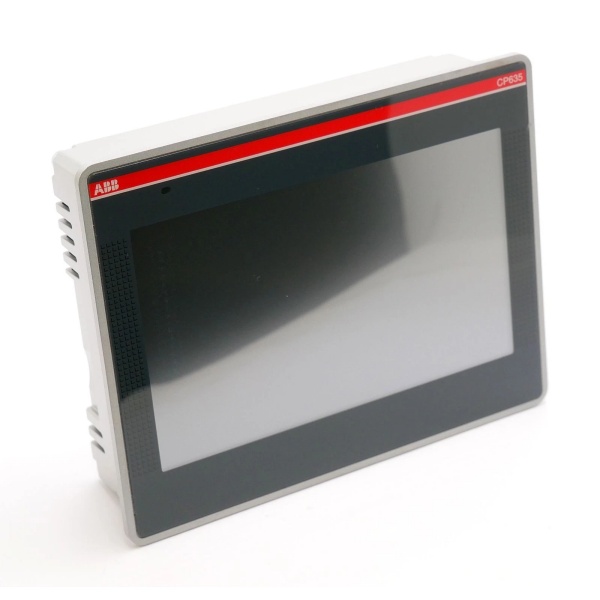
- Model Number: ABB 1SAP535100R0001 CP635
- Manufacturer: ABB Industrial Automation Division
- Communication Protocol: Profinet IO (IEC 61158/61784), supports IO Controller, IO Device, and Proxy modes
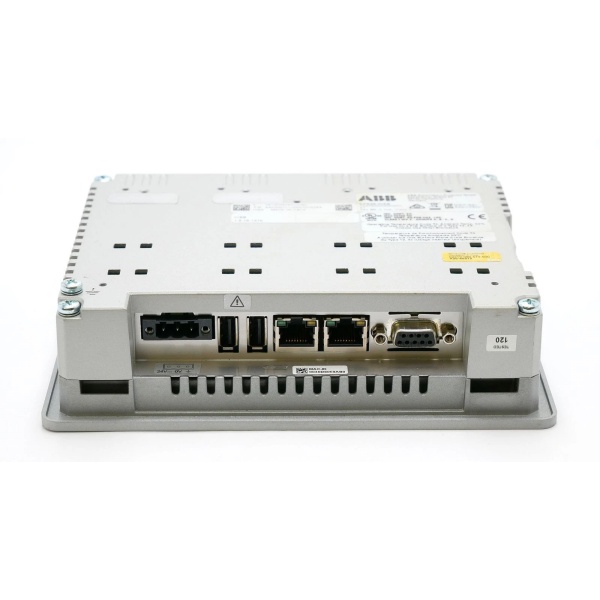
- Ethernet Ports: 2 × Gigabit Ethernet (RJ45), integrated 2-port switch (Layer 2)
- Data Transfer Rate: Up to 1Gbps per port; real-time cycle time down to 1ms
- Profinet Features: Support for RT (Real-Time) and IRT (Isochronous Real-Time) modes, PROFIenergy, LLDP
- Compatibility: ABB AC500 CPU modules (PM573, PM583, PM593), AC500-eCo PLCs (with adapter)
- Power Supply: 24VDC ±10% from PLC backplane, 0.2A typical current draw
- Operating Temperature: -25°C to +60°C (-13°F to +140°F)
- Isolation Rating: 1kV AC (Ethernet ports to backplane); 500V AC (signal to power)
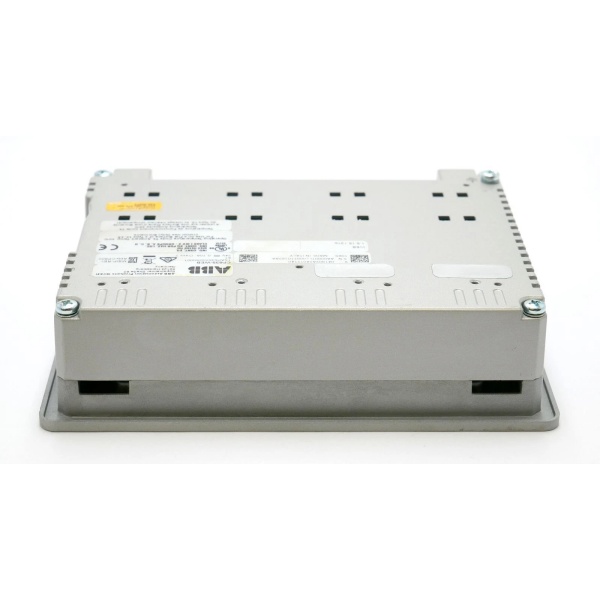
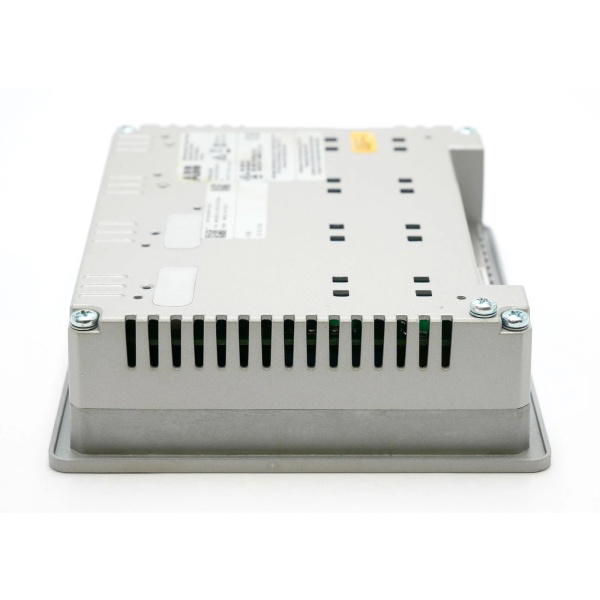
- Physical Dimensions: 80mm × 125mm × 140mm (W×H×D), DIN rail mount (35mm), modular PLC rack-compatible
- Memory: 16MB flash (firmware/config), 8MB RAM (data buffering)
- Certifications: CE, UL 508, RoHS 2.0, IEC 61010-1, IEC 61800-3

ABB 1SAP535100R0001 CP635
Field Application & Problem Solved
In modern factory automation, the biggest communication headache is linking PLCs to dozens of distributed IO devices—sensors, actuators, HMIs—while meeting real-time control demands. A Michigan automotive assembly plant struggled with its legacy Ethernet module: cycle times of 5ms caused robotic arm synchronization errors, leading to 2% more scrap parts (costing $120k/year). Another pain point: non-Profinet modules required expensive gateways to connect to Siemens IO devices, adding latency and failure points. Chemical plants face additional challenges—communication drops during process upsets due to poor noise immunity, forcing manual interventions.
You’ll find this CP635 module plugged into AC500 PLC racks in auto body shops, pharmaceutical manufacturing lines, and petrochemical process units. It acts as the “communication backbone” for the PLC, linking it to Profinet-enabled devices while supporting real-time control. Its core value is speed plus flexibility. The 1ms IRT cycle time solved the Michigan plant’s robotic sync issue, cutting scrap by 1.8%, and the dual-port switch eliminated the need for external network switches—reducing cabinet space by 30%. A Texas chemical plant used it to replace three legacy gateways, slashing communication faults from 4/week to zero and improving process stability.
Installation & Maintenance Pitfalls (Expert Tips)
- IP Address Conflicts—Reserve PLC Subnet: Rookies assign random IPs, causing collisions with IO devices. A Pennsylvania food plant’s packaging line shut down for 3 hours when the CP635 and a temperature sensor shared the same IP. Use a dedicated subnet for Profinet devices and lock addresses in the PLC’s configuration software.
- Ethernet Cable Quality—Cat6 or Higher for IRT: Cat5e cables can’t handle 1Gbps IRT traffic, leading to signal degradation. A Ohio automotive plant used Cat5e for their robotic cells, resulting in intermittent IO drops. Upgrading to shielded Cat6A (ABB part 1SFL500002R0001) fixed the issue. Never exceed 100 meters for IRT links.
- Firmware Compatibility—Match CPU and Module Versions: Outdated module firmware causes handshake failures with newer AC500 CPUs. A North Carolina pharmaceutical plant installed a CP635 with v3.0 firmware alongside a PM593 CPU with v4.2—Profinet devices wouldn’t connect. Updating the module to v4.2 via USB resolved the mismatch.
- Redundant Network Configuration—Enable Media Redundancy: For critical processes, skip redundant ports at your peril. A Louisiana refinery didn’t enable Profinet Media Redundancy Protocol (MRP), so a broken Ethernet cable shut down a batch reactor. Configure MRP with a ring topology—switchover time <200ms.
ABB 1SAP535100R0001 CP635
Technical Deep Dive & Overview
The 1SAP535100R0001 CP635 is a dedicated Profinet communication processor for ABB’s AC500 modular PLCs, engineered to bridge the gap between PLC control logic and distributed industrial devices. At its core, a 32-bit ARM Cortex-M4 processor runs optimized Profinet stack firmware, handling protocol translation and real-time data routing without burdening the PLC’s main CPU. The dual Gigabit Ethernet ports with integrated Layer 2 switch eliminate the need for external network hardware, simplifying cabinet design and reducing failure points.
In IO Controller mode, the module manages up to 256 Profinet IO devices, synchronizing data transfers in RT (for general automation) or IRT (for motion control and high-speed processes). The IRT mode uses time-scheduled communication, ensuring deterministic cycle times down to 1ms—critical for applications like robotic assembly or precision packaging. The module’s backplane interface communicates with the AC500 CPU at 100Mbps, enabling fast exchange of process data and status information.
Ruggedization features include conformal-coated PCBs to resist dust and moisture, and 1kV isolation on Ethernet ports to block electromagnetic interference (EMI) from nearby motors or drives. The hot-pluggable design allows module replacement without shutting down the PLC rack—critical for 24/7 processes. With support for PROFIenergy, it also enables energy management by putting idle devices into standby, cutting power consumption. This combination of speed, flexibility, and ruggedness makes it the go-to communication solution for AC500 PLCs in demanding industrial environments.