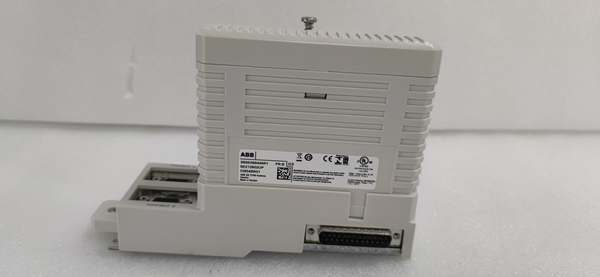
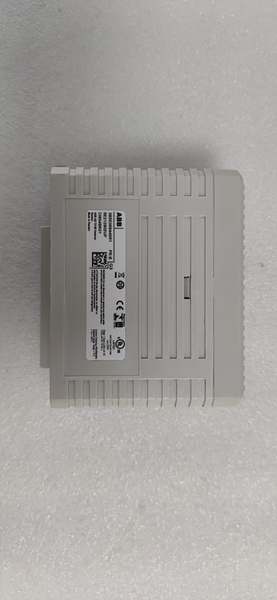
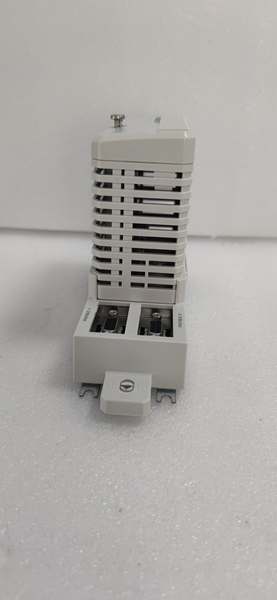
Description
Hard-Numbers: Technical Specifications
- Protocol Support: PROFIBUS DP-V1 (master mode only), PROFIBUS DP via LD800P linking device
- Port Count: 2 independent PROFIBUS ports (DB9 female connectors on TP854 baseplate)
- Baud/Data Rate: 9.6 kbit/s to 12,000 kbit/s (12 Mbit/s selectable)
- Operating Temperature: 0°C to +55°C (+32°F to +131°F)
- Isolation Rating: CEX bus isolation from logic circuitry (500V typical)
- Power Draw: 190 mA typical at 24V DC (4.56W) from backplane
- Max Units on CEX Bus: 12 modules per controller
- Line Redundancy: Yes (dual independent PROFIBUS ports on TP854)
- Module Redundancy: Yes (dual CI854 modules for master redundancy)
- Storage Temperature: -40°C to +70°C (-40°F to +158°F)
- Humidity Range: 5-95% non-condensing
- Protection Class: IP20 (front panel, cabinet-mount required)
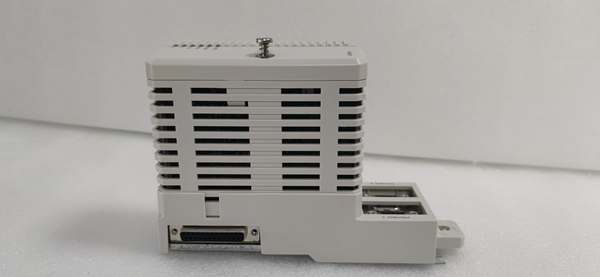
- Dimensions: 59mm × 185mm × 127.5mm (W × H × D)
- Weight: 700g (1.5 lbs) including base
- Connector: DB9 female (9-pin) × 2 on TP854 baseplate
- Max Nodes: 124 nodes total with repeaters (32 per segment)

ABB CI854B
The Real-World Problem It Solves
When you’ve got remote I/O racks scattered across a refinery or 30 VFDs in a motor control center, pulling individual wires back to the main cabinet isn’t just expensive—it’s stupid. The CI854 gives you a single high-speed PROFIBUS trunk that handles up to 124 nodes across the plant floor. The real value here is redundancy: dual lines mean a cut cable or failed connector doesn’t shut down critical process areas, and module redundancy means you can swap a failed CI854 without hitting the emergency 终止 button.
Where you’ll typically find it:
- Remote I/O clusters in hazardous areas where wiring cost and conduit runs are prohibitive
- Drive applications where multiple VFDs need parameter access and cyclical data exchange
- Process industries where DP-V1 acyclic services are required for intelligent field devices
- Redundant process trains where communication failure cannot be tolerated
When you need deterministic, high-speed fieldbus communication with genuine redundancy, this is the module that keeps the plant running when physical layer problems happen.
Hardware Architecture & Under-the-Hood Logic
The CI854 mounts on the TP854 baseplate, which houses the two DB9 female PROFIBUS connectors with switchable termination. Unlike the serial-only CI853, the CI854 has its own onboard CPU kernel and memory dedicated to PROFIBUS protocol handling—it’s not just a dumb interface layer. The module integrates a DC/DC converter that takes 24V from the CEX bus and generates the isolated power required for the PROFIBUS transceivers. The two ports operate independently through a line redundancy unit, enabling automatic switchover if the active line fails.
Internal signal flow:
- CEX Bus Reception: Module receives configuration and cyclic data commands from AC 800M controller via CEX bus
- Local CPU Processing: Onboard CPU kernel executes PROFIBUS DP master protocol stack, handling token passing and slave polling
- Data Buffering: Cyclic process data buffered in local memory for deterministic timing
- Dual-Port Logic: Line redundancy unit monitors both ports (A and B), selects active path based on health
- Signal Conversion: DP transceivers convert logic levels to RS485 differential signals for each port independently
- Physical Transmission: Data transmitted/received via DB9 connectors to PROFIBUS network with 120Ω termination at segment ends
- Diagnostic Feedback: Port status LEDs (RxA, RxB) and module status (RUN, FAULT) provide real-time health indication

CI854B
Field Service Pitfalls: What Rookies Get Wrong
Terminating only one connector on redundant lines
The TP854 baseplate has two DB9 connectors for line redundancy, and both need proper termination if they’re the end of their respective segments. I’ve seen technicians terminate only the active port and leave Line B unterminated, then wonder why redundancy switchover fails when the primary cable gets cut. The termination resistors are inside the connector housing, and they only work if the connector is powered.
- Field Rule: If you’re using line redundancy, configure termination on both connectors appropriately. Use ABB’s specified PROFIBUS connectors with built-in 120Ω termination and ensure both connectors receive 24V power for the termination circuit. Verify by checking the RxA and RxB LEDs—both should show activity if redundancy is configured.
Mixing up CI854A (Classic) and CI854B compatibility
CI854A is the legacy model; CI854B is the current replacement for new installations. They’re functionally similar but have different compatibility constraints—CI854B requires System 800xA 6.0.3.2 or later. I’ve seen engineers order a CI854B to replace a CI854A in a legacy 5.x system, then spend days wondering why the controller won’t recognize the module. Also, CI854B is the only version ABB still sells new—CI854A is obsolete and only available as refurbished.
- Field Rule: Check your System 800xA version before ordering. For systems running 6.0.3.2 or later, use CI854B (3BSE069449R1). For legacy systems, you may be stuck sourcing refurbished CI854A units. Always verify article numbers against the hardware selector for your specific system version.
Assuming module redundancy works without CPU redundancy
You can install two CI854B modules for master redundancy, but if your AC 800M controller isn’t redundant, you’re wasting your money. Module redundancy requires the controller to manage the failover logic between the two CI854 units. I’ve seen plants pair a redundant CPU with a non-redundant CEX bus (missing BC810), which creates a single point of failure that bypasses the entire redundancy investment.
- Field Rule: True PROFIBUS master redundancy requires three layers: redundant CPU (PM86x pair), redundant CEX bus (BC810), and dual CI854 modules. If any one of these is single, you don’t have real redundancy. Always budget for the BC810 CEX bus coupler if you’re serious about high availability.
Commercial Availability & Pricing Note
Please note: The listed price is for reference only and is not binding. Final pricing and terms are subject to negotiation based on current market conditions and availability.