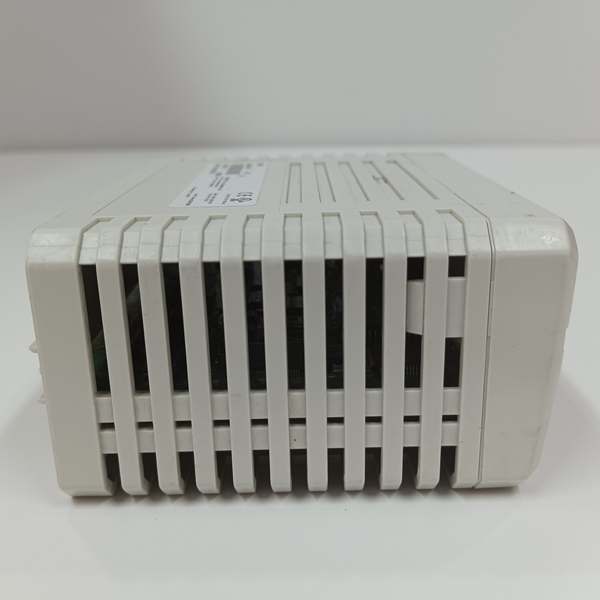
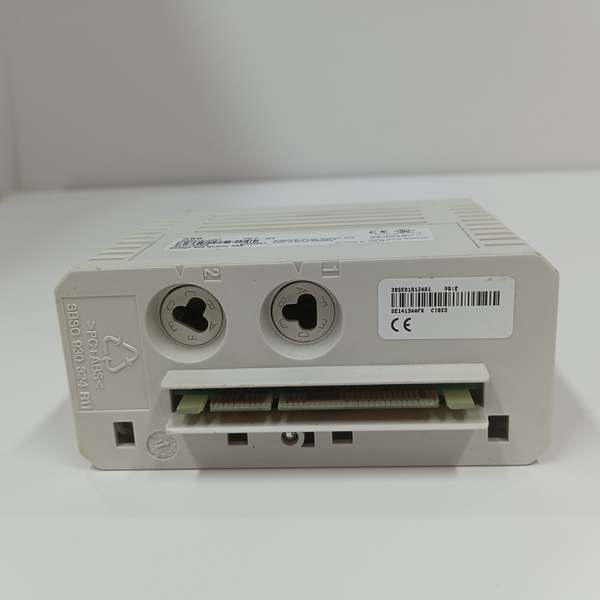
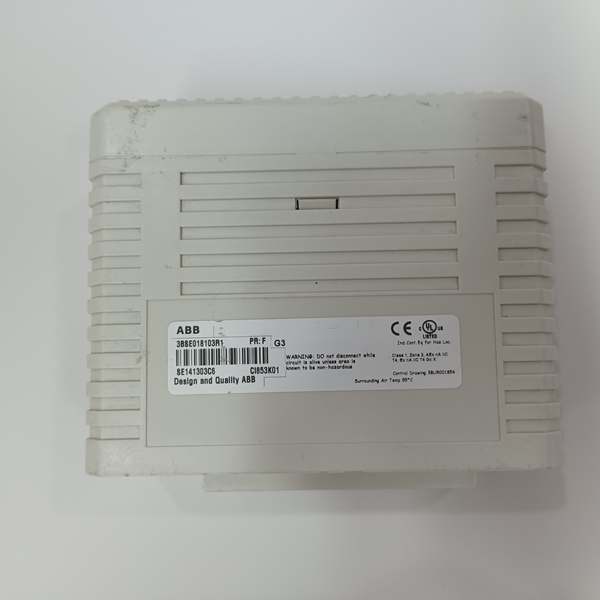
Description
Hard-Numbers: Technical Specifications
- Protocol Support: COMLI (ABB proprietary), Modbus RTU (master mode only), Siemens 3964R, Self-defined serial protocols
- Port Count: 2 independent RS232-C channels (8-pin RJ-45 female connectors)
- Baud/Data Rate: Selectable from 75 to 115,200 b/s (75, 110, 134.5, 150, 300, 600, 1,200, 1,800, 2,000, 2,400, 9,600, 19,200, 38,400, 115,200)
- Operating Temperature: 0°C to +55°C (+32°F to +131°F)
- Isolation Rating: 500V AC (1 minute) between communication interface and logic circuit
- Power Draw: 100 mA typical at 24V DC (2.4W), 150 mA maximum
- Storage Temperature: -40°C to +70°C (-40°F to +158°F)
- Max Units on CEX Bus: 12 modules per controller
- Humidity Range: 5-95% non-condensing
- Protection Class: IP20 (front panel, cabinet-mount required)
- Dimensions: 59mm × 185mm × 127.5mm (W × H × D)
- Weight: 700g (1.5 lbs) including base
- Module Redundancy: Not supported
- Line Redundancy: Not supported

ABB CI853K01
The Real-World Problem It Solves
Legacy equipment integration is still everywhere. That 1990s flowmeter or the drive that only speaks RS232 isn’t going anywhere, but modern DCS systems need the data. The CI853K01 bridges that gap without forcing a costly hardware replacement. It gives AC 800M controllers direct serial access to field devices that speak COMLI or Modbus RTU, keeping old iron online and talking to new systems.
Where you’ll typically find it:
- Upgrading brownfield facilities where existing meters, actuators, or MCCs only offer RS232 serial ports
- Connecting to third-party HMIs, barcode readers, or weight scales in packaging lines
- Remote terminal units (RTUs) and pump stations that use COMLI protocol for dial-up modem communication
When you need serial communication on AC 800M and Ethernet isn’t an option, this is the module that gets it done.
Hardware Architecture & Under-the-Hood Logic
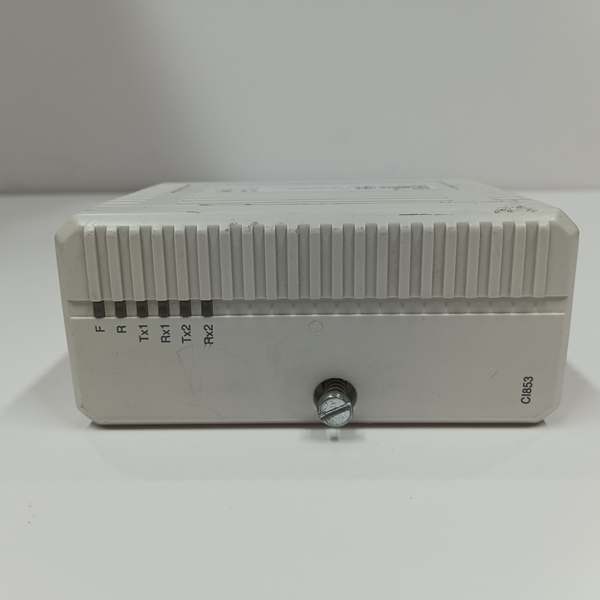
The CI853K01 mounts on the TP853 baseplate and connects to the AC 800M controller via the CEX bus. It doesn’t have its own onboard microprocessor for protocol handling—the main controller does the heavy lifting. The module acts as a physical interface layer, converting CEX bus signals to RS232-C levels and managing signal timing for the two independent ports. Communication ports are optically isolated from the logic circuitry, which prevents ground loops when you’re talking to devices sitting on different power domains.
Internal signal flow:
- CEX Bus Reception: Module receives configuration and data commands from the AC 800M controller over the CEX bus
- Protocol Processing: Controller firmware formats data according to the selected protocol (COMLI, Modbus RTU, 3964R, or custom)
- Signal Conversion: Module translates logic-level signals to RS232-C voltage levels (±12V) for each port independently
- Optical Isolation: Signal path crosses isolation barrier (500V rated) before reaching connector pins
- Physical Transmission: Data transmitted/received via 8-pin RJ-45 connectors to field devices
- Status Feedback: LED indicators and diagnostic data returned to controller via CEX bus for fault detection and link monitoring
ABB CI853K01
Field Service Pitfalls: What Rookies Get Wrong
Mixing up protocols on the same port
Don’t try to run COMLI and Modbus RTU simultaneously on the same channel. The module handles one protocol per port at a time, and switching requires reconfiguration through Control Builder M. I’ve seen engineers chase ghosts for hours because they thought the hardware was bad when they were actually just sending Modbus frames to a COMLI device.
- Field Rule: Verify the exact protocol requirement at the field device before configuring. Use the built-in diagnostic LEDs to confirm the module is transmitting—if the TX LED flickers but the device doesn’t respond, check protocol settings first.
Running RS232 beyond 15 meters without a converter
RS232 voltage levels degrade fast. The spec says 15 meters maximum, but I’ve seen installations fail at 10 meters when cable quality is poor. Don’t expect this module to magically push data across the plant floor through cheap shielded cable.
- Field Rule: If your cable run exceeds 15 meters, use an RS232-to-RS485 converter at the field device end. RS485 can push to 1200 meters with proper termination and shielding, and the CI853K01 supports this via the RJ-45 pins.
Hot-swapping without checking redundancy status
Yes, the CI853K01 supports hot-swap, but that doesn’t mean it’s safe in every situation. If the controller is running in redundant configuration and this module is carrying critical traffic, pulling it mid-operation might trigger a failover that causes a momentary process disturbance. Also, verify the CEX bus can handle the current load before swapping—if you’ve got 12 modules drawing max current, adding a hot-swapped load might brown out the bus.
- Field Rule: Always verify that the communication path isn’t carrying safety-critical data before hot-swapping. If possible, schedule the swap during a controlled process pause. Check the controller’s CEX bus load indicator in Control Builder M before pulling the module.
Commercial Availability & Pricing Note
Please note: The listed price is for reference only and is not binding. Final pricing and terms are subject to negotiation based on current market conditions and availability.