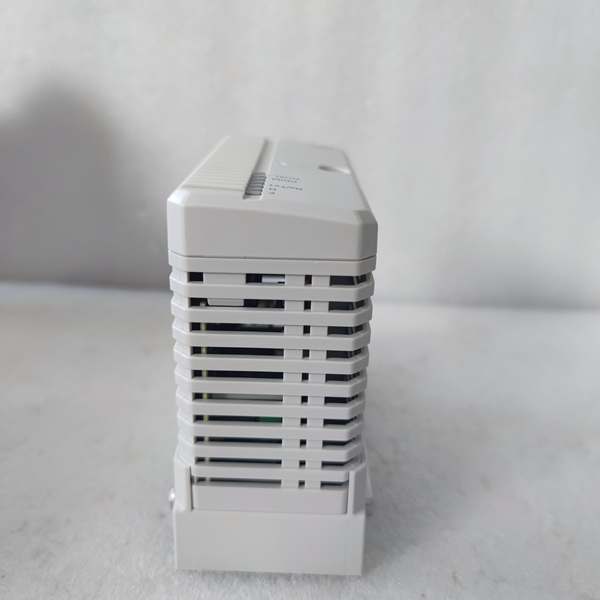
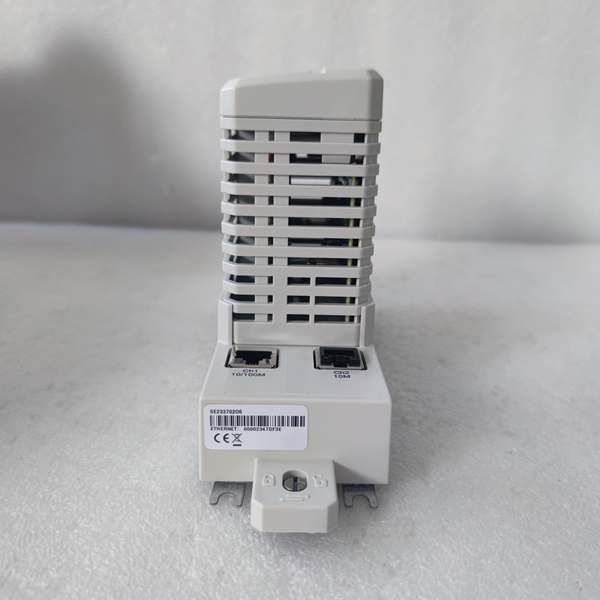
Description
Key Technical Specifications
- Model Number: CI615 3BHT300024R1
- Manufacturer: ABB Industrial Automation Division (Process Control Business Unit)
- Protocol Support: PROFIBUS DP-V0 (cyclic data), DP-V1 (acyclic data), PROFIBUS PA (via external coupler)
- Communication Ports: 1 × 9-pin D-Sub (female) for PROFIBUS DP; 1 × backplane interface for DCS connection
- Data Transfer Rate: 9.6kbps to 12Mbps (auto-negotiation)
- Power Supply: 24VDC ±10% (from DCS rack backplane); 0.1A typical current draw
- Operating Temperature: -10°C to +60°C (14°F to +140°F)
- Isolation Rating: 1kV AC (PROFIBUS port to backplane); 500V AC (port to chassis)
- PROFIBUS Roles: Configurable as DP Master (up to 126 slaves) or DP Slave
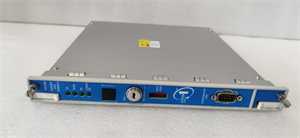
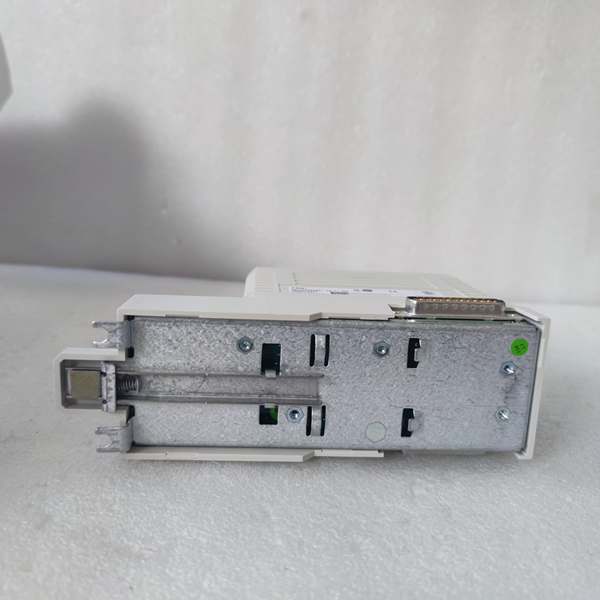
- Mounting Type: Plug-in module (Advant OCS/Symphony Plus rack, 1U height)
- Certifications: CE, UL 508, IEC 61131-2, RoHS 2.0, PROFIBUS Conformance Class B
- Compatibility: ABB Advant OCS controllers, Symphony Plus DCS, third-party PROFIBUS DP devices (Siemens, Endress+Hauser)
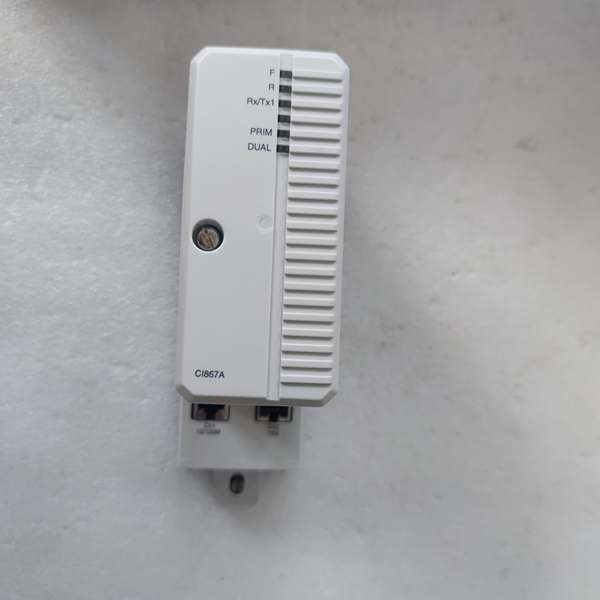
- Diagnostic Capability: LED status indicators (power OK, communication active, fault), fault logging to DCS
- Hot-Swap Support: Yes (module replacement without rack power down)
Field Application & Problem Solved
In legacy Advant OCS and Symphony Plus DCS installations—refineries, coal-fired power plants, chemical processing facilities—the biggest communication challenge is connecting to PROFIBUS DP field devices. Generic PROFIBUS modules fail to integrate with ABB’s proprietary backplane, causing intermittent communication drops, data corruption, and unplanned downtime. A Texas refinery lost $190k in a 4.5-hour outage when a generic module failed to sync the DCS with PROFIBUS-enabled control valves in a hydrocracker unit. Legacy setups also force costly workarounds: a Pennsylvania power plant spent $40k annually on external gateways to bridge PROFIBUS sensors to their Advant OCS system, leading to 2 hours of monthly downtime from translation delays.
This module solves that by providing native integration with ABB’s DCS platforms. You’ll find it in: refinery distillation units (connecting to DP-based flow meters), power plant boiler control racks (linking to combustion analyzer sensors), and chemical reactor I/O cabinets (communicating with smart valves). It’s also standard in retrofits where PROFIBUS device expansion is required without replacing the entire DCS.
Its core value is ABB-native backplane integration + dual master/slave flexibility + rugged industrial design. Unlike generics, it communicates directly with the DCS CPU without custom drivers, eliminating latency. For an Ohio chemical plant, the CI615’s hot-swap capability cut module replacement time from 2 hours to 15 minutes, reducing annual maintenance downtime by 50%.
Installation & Maintenance Pitfalls (Expert Tips)
- PROFIBUS Termination: 120Ω Resistors Are Mandatory: Rookies forget to install termination resistors at the start and end of the DP network, causing signal reflection and communication timeouts. A Louisiana refinery’s valve control loops fluctuated until 120Ω resistors were added to the CI615’s port and the final device. Use ABB’s 1SFL500001R0001 resistor and verify with a multimeter (120Ω between data lines A/B).
- Protocol Role Misconfiguration: Match Master/Slave to System Needs: Setting the module to “Slave” when the DCS requires a “Master” (or vice versa) breaks communication. A Michigan paper mill’s PROFIBUS sensors went offline until the role was corrected via the DCS configuration tool. Always confirm the DCS’s required role—most process control applications use “Master” for DCS-to-device communication.
- Firmware Mismatch with DCS: Outdated CI615 firmware (pre-v5.0) causes backplane communication failures with Symphony Plus v8.0+. A North Carolina refinery’s technicians spent 7 hours troubleshooting until the module was updated via ABB’s Control Builder. Check ABB’s compatibility matrix—firmware must align with the DCS’s version.
- Grounding: Isolate PROFIBUS Cable Shields: Sharing shield grounds with power circuits introduces noise, leading to DP frame loss. A Florida food processing plant’s DCS lost communication with drives hourly until shields were grounded at the CI615 end only. Use shielded PROFIBUS cable (IEC 61158-2) and avoid daisy-chaining grounds.
- Overloading the DP Bus: Stay Below 126 Slaves: Rookies connect more than 126 devices to a single CI615 (Master mode), causing bus congestion. An Indiana steel mill’s SCADA readings were delayed until they split devices across two modules. Respect the 126-slave limit and use repeaters for long-distance networks (exceeding 100m at 12Mbps).

Technical Deep Dive & Overview
The ABB CI615 3BHT300024R1 is a dedicated PROFIBUS DP communication module engineered to bridge ABB’s Advant OCS/Symphony Plus DCS with industrial field devices. At its core, a dedicated PROFIBUS protocol processor handles data framing, error checking, and bus arbitration, offloading these tasks from the DCS’s main CPU to avoid scan time overruns—critical for time-sensitive processes like reactor temperature control.
Unlike generic modules, the CI615 features ABB’s proprietary backplane interface, ensuring seamless integration with Advant OCS/Symphony Plus racks without custom wiring or adapters. The module’s configurable master/slave role provides flexibility: as a master, it controls up to 126 DP slaves; as a slave, it enables the DCS to act as a subordinate device for higher-level control systems. The 1kV AC isolation between the PROFIBUS port and backplane blocks electrical interference from industrial equipment, a common issue in refineries and power plants.
What sets it apart is its rugged design and hot-swap capability. The conformal-coated PCB resists dust and humidity, while hot-swap allows module replacement without powering down the rack—essential for 24/7 operations. The diagnostic LED indicators and fault logging provide real-time visibility into network health, enabling quick troubleshooting of communication issues. For facilities relying on Advant OCS/Symphony Plus DCS, this module isn’t just a communication interface—it’s a reliable, low-maintenance solution that keeps process control systems connected to the field, minimizing downtime and ensuring operational efficiency.