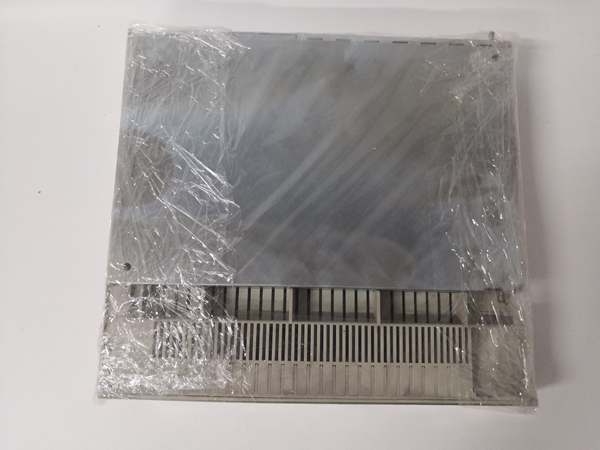
Description
Key Technical Specifications
- Model Number: ABB AI635 3BHT300032R1
- Manufacturer: ABB Power Automation Division
- Channel Configuration: 8 independent channels (software-configurable per channel)
- Input Compatibility: 4-20mA (2/4-wire), RTD (PT100/PT1000), thermocouple (J/K/T/R/S)
- Measurement Accuracy: ±0.1% of full scale (4-20mA); ±0.2°C (PT100 RTD)
- ADC Resolution: 24-bit sigma-delta (1μV sensitivity for 4-20mA)
- Isolation Rating: 500V AC (channel-to-channel); 1kV AC (inputs to backplane)
- Power Supply: 24VDC from DCS backplane; 0.2A typical current draw
- Operating Temperature: -25°C to +65°C (-13°F to +149°F)
- Response Time: <250ms (90% of step change for 4-20mA)
- Certifications: IEC 61010-1, CE, UL 508, ATEX Zone 2, RoHS 2.0
- Compatibility: ABB Symphony Plus DCS, 3BHE series controllers, Control Builder M software
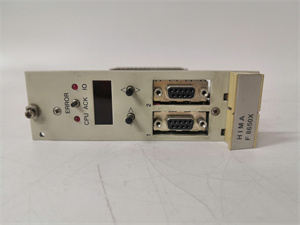
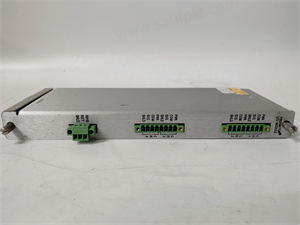
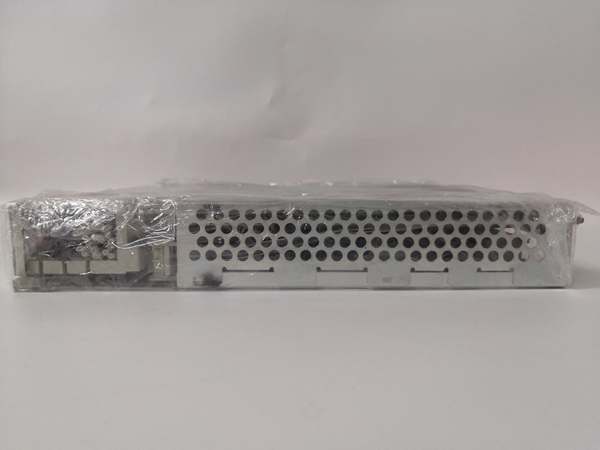
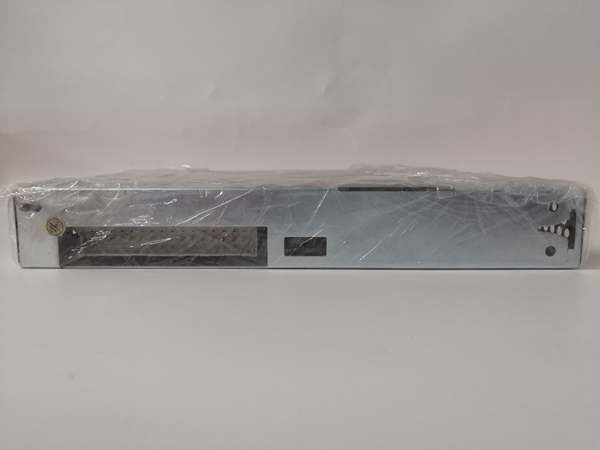
- Mechanical Design: Rack-mount (3U height), conformal-coated PCB, metal housing (IP20)

ABB AI635
Field Application & Problem Solved
In process industries—refineries, coal-fired power plants, chemical batch facilities—analog input modules are the lifeline for critical process data, but generic modules fail due to poor precision and incompatible integration. A Texas refinery lost $150k in off-spec gasoline when a generic module’s 0.8% drift caused incorrect reactor temperature readings, leading to overcooking. Legacy modules also lack channel isolation: a Pennsylvania power plant’s boiler pressure readings fluctuated by 10% due to cross-talk between channels, forcing manual monitoring and 2 hours of monthly downtime.
You’ll find this module in Symphony Plus DCS racks monitoring critical variables: distillation column pressure in Louisiana refineries, boiler steam temperature in Ohio power plants, and reactor level in Minnesota chemical facilities. Its core value is lab-grade precision + ABB-native reliability. The ±0.1% accuracy eliminated the Texas refinery’s drift issues, cutting off-spec product by 92%. At the power plant, channel-to-channel isolation eliminated cross-talk, stabilizing pressure readings to ±0.5% and removing the need for manual oversight.
For a Florida wastewater treatment plant, the universal input support simplified a sensor upgrade—replacing three specialized modules (for 4-20mA pressure, PT100 temp, and type K thermocouple) with one AI635, reducing spare parts costs by $14k. Its conformal coating also withstood corrosive hydrogen sulfide vapors, outlasting uncoated generic modules by 3x (6 years vs. 2 years).
Installation & Maintenance Pitfalls (Expert Tips)
- Input Type Configuration: Match to Sensor Wiring: Rookies leave channels set to 4-20mA but connect RTDs, causing no readings or erratic values. A North Carolina chemical plant delayed reactor startup by 6 hours due to this mistake. Use Control Builder M to configure each channel’s input type (4-20mA/RTD/thermocouple), and verify with a calibrator: apply a known signal (e.g., 12mA for 4-20mA, 100°C for PT100) and confirm the module reads within ±0.1%.
- Shielded Cable Is Mandatory for Long Runs: Unshielded cable picks up EMI from motors/VFDs, causing signal fluctuations. A Michigan paper mill’s 30m flow sensor run had 5% reading drift until we replaced unshielded wire with ABB’s 1SFL500002R0001 shielded cable. Ground the shield at the module end only (single-point grounding) to avoid noise loops.
- Overloading 2-Wire Transmitters: Daisy-chaining multiple 2-wire sensors on one channel exceeds the module’s 24V/20mA power limit. A Colorado refinery did this with three pressure transmitters, causing all to fail. Each channel supports one 2-wire transmitter (max 20mA); use a signal splitter for multiple devices or assign separate channels.
- Firmware Mismatch Breaks DCS Communication: Outdated module firmware (pre-v6.0) with Symphony Plus v8.0+ causes input dropout. A Texas petrochemical plant had intermittent temperature loss until updating the AI635 to v7.1. Always match module firmware to DCS core version (check ABB’s compatibility matrix) and batch update via Control Builder M.
ABB AI635
Technical Deep Dive & Overview
The ABB AI635 3BHT300032R1 is a universal analog input module engineered to convert real-world sensor signals into precise digital data for Symphony Plus DCS. At its core, each channel uses a 24-bit sigma-delta ADC that resolves signals as small as 1μV, enabling lab-grade accuracy even in noisy industrial environments. The module’s channel-to-channel isolation (500V AC) blocks cross-talk and EMI, a critical feature in power plants and refineries where high-voltage equipment generates electrical noise.
Each channel is software-configurable without hardware jumpers, supporting 4-20mA (2/4-wire), RTDs, and thermocouples—eliminating the need for specialized modules. For thermocouple inputs, built-in cold junction compensation (±0.2°C accuracy) adjusts for ambient temperature changes, removing the need for external compensation circuits. For RTDs, the module provides constant current excitation (1mA or 2mA) to minimize self-heating errors.
The module communicates with the Symphony Plus DCS via a dedicated backplane link, transmitting digital data at 1s intervals (configurable down to 250ms) for real-time control. Its conformal-coated PCB resists dust, moisture, and chemical vapors, while the -25°C to +65°C operating range handles unconditioned control cabinets.
What sets it apart from generic modules is seamless ABB ecosystem integration—no custom drivers or calibration are needed. It’s factory-calibrated to work with Symphony Plus controllers and I/O racks, reducing commissioning time by 50%. For plants where process variable accuracy directly impacts safety and product quality, this module isn’t just a data converter—it’s a reliable link that ensures consistent, trustworthy measurements in the harshest industrial conditions.