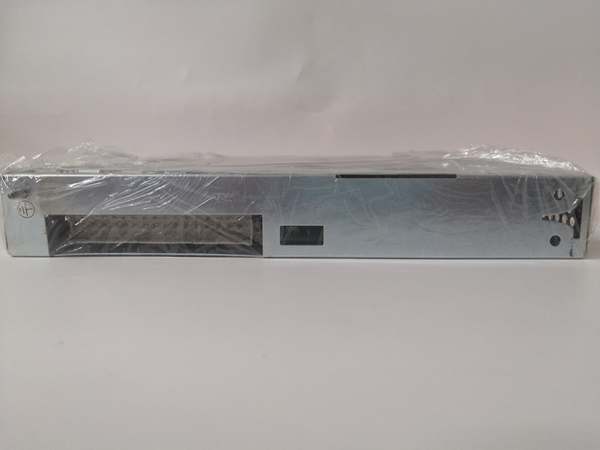
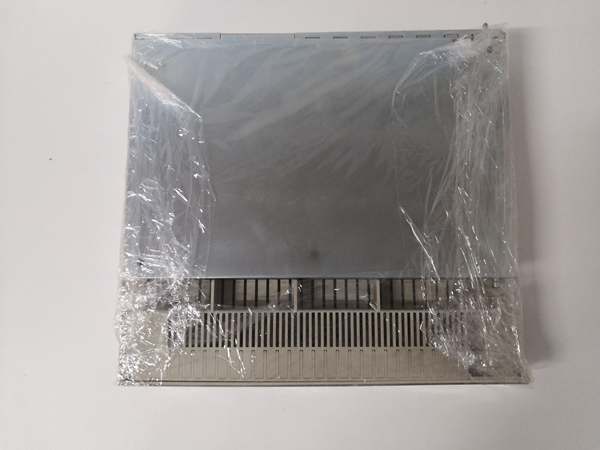
Description
Key Technical Specifications
- Model Number: AI610
- Manufacturer: ABB Process Automation
- Input Channels: 8 independent analog input channels (configurable per channel pair)
- Input Types: 4-20mA DC (2/4-wire transmitters), 0-10V DC, ±5V DC (software-configurable per 2-channel group)
- Resolution: 16-bit (0.015% of full scale)
- Accuracy: ±0.1% of full scale (at 25°C)
- Isolation Rating: 500V AC (channel-to-channel; channel-to-backplane)
- Sampling Rate: 10 samples per second per channel
- Backplane Compatibility: ABB S800 I/O rack backplane (1-slot occupancy)
- Power Supply: 24VDC ±10% (from S800 rack power supply; 0.3A max current draw)
- Operating Temperature: -20°C to +60°C (-4°F to +140°F)
- Storage Temperature: -40°C to +85°C (-40°F to +185°F)
- Protection Rating: IP20 (rack-mounted, indoor control cabinet use only)
- Certifications: UL 508, CE, ATEX Zone 2, IEC 61010-1

ABB AI610
Field Application & Problem Solved
In process plants, the biggest challenge with analog signal acquisition is precision and flexibility—legacy fixed-type analog modules force teams to stock separate units for current and voltage signals, increasing spare parts costs and cabinet clutter. A Gulf Coast chemical plant once maintained 12 different analog module types, tying up $50k in inventory and causing delays when a specific module failed.
The AI610 solves this by acting as a universal analog input module, handling both 4-20mA current loops (the industry standard for flow/pressure transmitters) and 0-10V voltage signals (for level sensors or potentiometers) via software configuration. You’ll find it in refineries monitoring crude oil flow rates, in chemical plants tracking reactor pressure, and in water treatment facilities measuring tank levels. Its core value is flexibility: configure 2 channels for 4-20mA, 4 for 0-10V, and 2 for ±5V on the same module—no hardware changes required. At the chemical plant, replacing 12 module types with the AI610 cut spare parts inventory by 75% and eliminated 90% of module-related downtime.
Another critical value is 16-bit resolution and ±0.1% accuracy—critical for tight process control. A Midwest pharmaceutical plant used the AI610 to monitor temperature in a vaccine production reactor; the module’s precision kept temperature within ±0.5°C of setpoint, ensuring batch consistency and regulatory compliance. The 500V AC isolation also blocks EMI from motor drives, preventing signal drift that causes off-spec product.
Installation & Maintenance Pitfalls (Expert Tips)
Channel Configuration Must Match Transmitter Type: Rookies leave all channels set to 4-20mA and connect 0-10V level sensors, resulting in “signal out of range” faults. The AI610’s channels are grouped into 4 pairs—each pair is configurable via Control Builder M. Match the configuration to the transmitter output (current vs. voltage) before powering on. A water treatment plant’s “erratic level readings” issue was fixed by reconfiguring 2 channel pairs from 4-20mA to 0-10V—simple, but easy to miss.
2-Wire vs. 4-Wire Transmitter Powering Is Critical: The AI610 supports both 2-wire (loop-powered) and 4-wire (externally powered) transmitters. For 2-wire devices, enable the channel’s loop power supply in software; for 4-wire devices, disable it. Rookies enable loop power for 4-wire transmitters, causing voltage conflicts that damage the transmitter. A refinery’s $2k pressure transmitter was fried this way—double-check transmitter wiring before enabling loop power.
Terminal Torque = 0.4 N·m (No Exceptions): Under-tightening terminals on high-impedance voltage signals causes signal drift; over-tightening strips threads or damages wire insulation. Use a calibrated torque screwdriver for 0.5mm² to 1mm² control wires. In high-vibration environments (e.g., near pumps), recheck torque every 6 months. A pulp mill’s “fluctuating pulp consistency” readings were traced to loose terminals on the AI610—torquing them to spec fixed the issue.
Hot-Swap Requires Module Deactivation First: The AI610 is hot-swappable, but rookies pull it from a live rack without deactivating it in the DCS. This causes the DCS to log “module communication fault” alarms and may corrupt analog signal data. First, set the module to “Out of Service” in Control Builder M, wait 5 seconds for the backplane to disconnect, then use the eject lever to remove it. This 10-second step prevents unnecessary DCS resets.
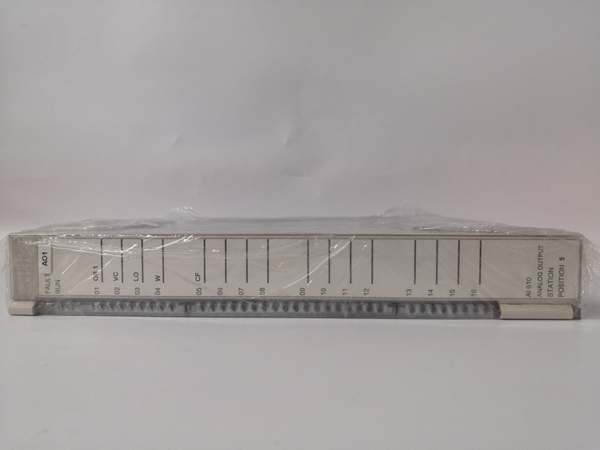
ABB AI610
Technical Deep Dive & Overview
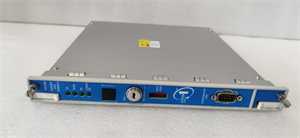
The ABB AI610 is a microprocessor-driven universal analog input module engineered for the S800 I/O system, designed to maximize flexibility and precision for process signal acquisition. At its core, a 16-bit analog-to-digital converter (ADC) samples each channel 10 times per second, converting analog voltage/current signals into digital values for the AC 800M DCS. The module’s channel grouping (4 pairs of 2) allows mixed input types on a single module— a key advantage over fixed-type analog modules that require separate units for current and voltage signals.
Galvanic isolation (500V AC) between channels and the backplane blocks ground loops and EMI, critical for maintaining signal integrity in harsh industrial environments. The module’s loop power supply (24VDC) supports 2-wire transmitters, eliminating the need for external power supplies and reducing field wiring costs. Front-panel LEDs provide per-channel status feedback (normal, under-range, over-range), letting technicians diagnose faulty transmitters without a laptop—critical for remote plant floors.
Unlike low-cost analog modules, the AI610 uses auto-zeroing and linearization algorithms to maintain ±0.1% accuracy across the entire operating temperature range. It communicates with the AC 800M DCS via the S800 backplane bus, transmitting digital signal data in a compressed format to minimize bus traffic. Built with conformal-coated circuit boards to resist dust and moisture, the AI610 is rated for 15+ years of operation in process plants—making it a reliable workhorse for analog signal acquisition.