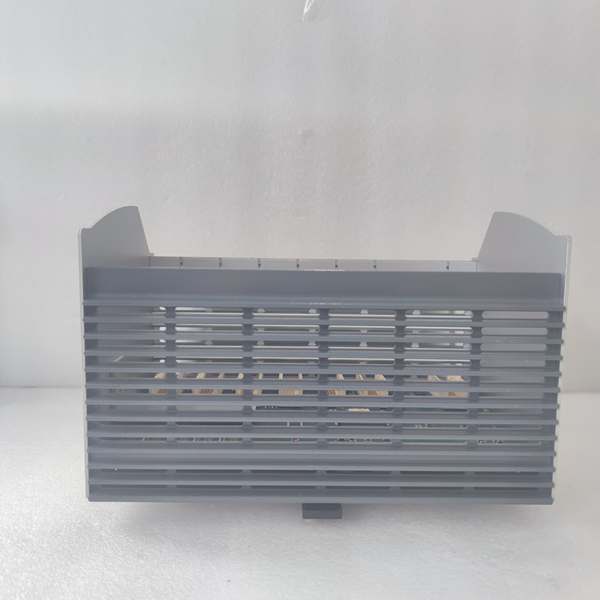
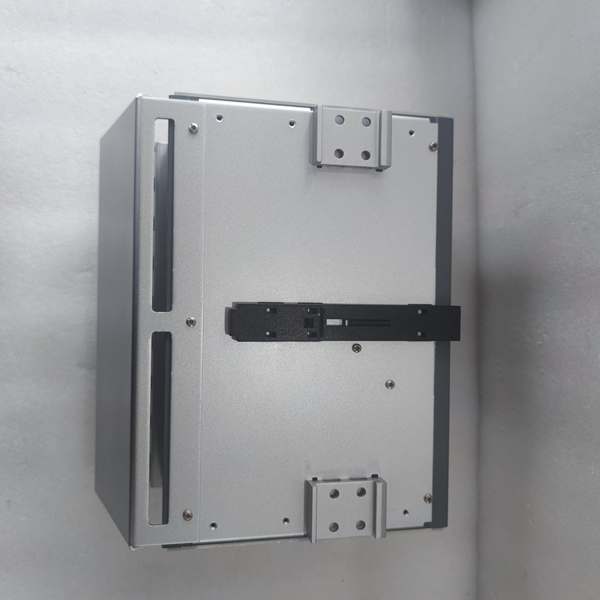
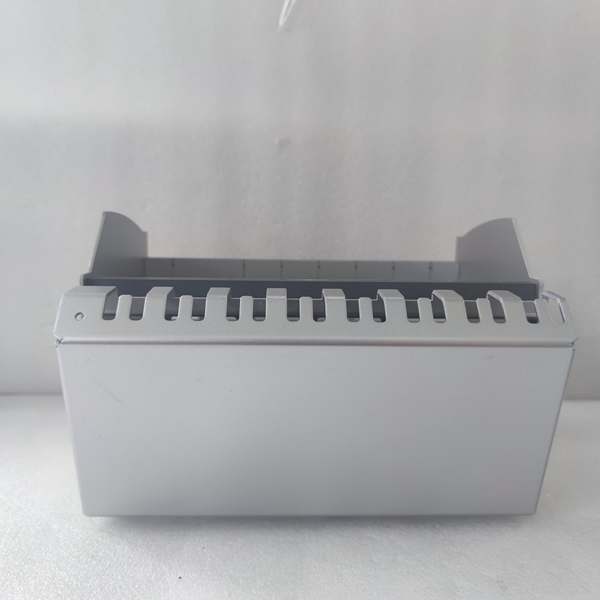
Description
Key Technical Specifications
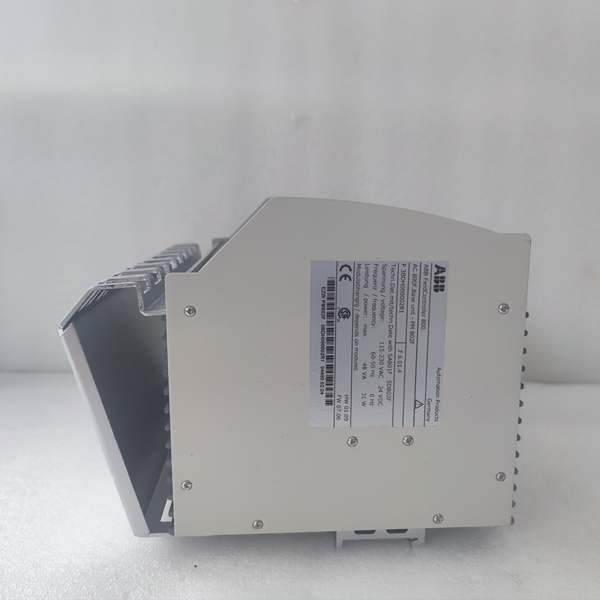
- Model Number: ABB AC800F/PM802F
- Manufacturer: ABB Industrial Automation Division
- CPU Architecture: 32-bit Super Scalar RISC processor, 150 MIPS (million instructions per second)
- Memory Configuration: 4MB battery-backed RAM (error-correcting), 4MB Flash-EPROM (non-volatile)
- Redundancy Support: 1+1 hot-standby, automatic failover <5ms, sync via dedicated backplane link
- Communication Ports: 2 × 10/100Mbps Ethernet (RJ45), 1 × PROFIBUS-DPV1 port, 1 × CAN bus (backplane)
- Protocol Support: Modbus RTU/TCP, PROFIBUS-DPV1, FOUNDATION Fieldbus HSE (via module), IEC 60870-5-101/104
- Power Supply: 24VDC ±10% (from Freelance backplane), 0.5A typical current draw
- Operating Temperature: 0°C to +60°C (32°F to +140°F)
- Safety Certification: IEC 61508/61511 (SIL 3) for safety-critical control loops
- I/O Capacity: Up to 1,000 I/O points per controller (expandable via fieldbuses)
- Compatibility: ABB Freelance I/O modules (DI810, AI810, AO810), Freelance Engineering Tool, 800xA DCS (via gateway)
- Certifications: CE, UL 508, NAMUR, ISA-S71.04 (G3 environmental severity)

ABB AC800F/PM802F
Field Application & Problem Solved
In mid-scale process automation—refinery auxiliary systems, power plant boiler controls, chemical batch reactors—generic controllers fail two critical tests: safety compliance and seamless multi-protocol integration. A Louisiana chemical plant lost $180k in a 4-hour outage when a non-SIL-certified generic controller failed to trigger an emergency shutdown during a reactor overpressure event. Legacy controllers also force costly gateways: a Pennsylvania power plant spent $30k on protocol converters to connect a third-party controller to PROFIBUS sensors and Modbus RTUs, leading to 2 hours of monthly downtime from communication failures.
You’ll find this controller as the backbone of Freelance DCS racks in: small-to-medium refineries (crude distillation auxiliary loops), coal plant boiler feedwater control, and pharmaceutical batch reactors. Its core value is SIL 3 safety compliance + native multi-protocol support + reliable redundancy. The SIL 3 certification ensured the Louisiana plant met OSHA safety standards, avoiding $250k in non-compliance fines. At the power plant, built-in PROFIBUS and Modbus support replaced three gateways, cutting downtime to 15 minutes monthly and saving $24k annually.
For a Minnesota paper mill, the battery-backed RAM preserved control logic during a 3-hour power outage, allowing immediate restart without reconfiguration—something the previous generic controller (non-battery-backed) couldn’t do, costing 8 hours of production pre-upgrade.
Installation & Maintenance Pitfalls (Expert Tips)
- Redundancy Sync Cable: Use ABB-Certified Only: Rookies use generic Ethernet cables for controller sync, causing failover failures. A Texas refinery did this; the standby controller failed to sync during a voltage sag, triggering a 90-minute shutdown. Use ABB’s 1SFL500003R0001 shielded cable (max length 2m) and secure with strain relief—generic cables can’t handle the sync link’s real-time data requirements.
- Firmware Mismatch Breaks Safety Logic: Outdated PM802F firmware (pre-v5.1) with Freelance Engineering Tool v9.0+ corrupts SIL 3 logic. A North Carolina pharmaceutical plant learned this the hard way when a batch failed due to safety interlock misfires. Update firmware via Ethernet using the Freelance Tool; verify both redundant controllers have identical firmware versions (check ABB’s compatibility matrix).
- Battery Replacement: Don’t Delay Past 5 Years: The RAM backup battery degrades after 5 years, risking logic loss during power outages. A Michigan chemical plant neglected this, losing 3 hours of production when the battery died and control logic was corrupted. Replace with ABB’s 3BSE008510R1 lithium battery annually as preventive maintenance (don’t wait for low-battery alarms).
- Safety I/O Mapping: Validate with Test Kit: Incorrectly mapping safety-related I/O in the Freelance Tool renders SIL 3 certification void. A Florida power plant’s boiler shutdown logic failed during testing because AI channels were assigned to non-safety I/O groups. Use ABB’s 1SVR730700R0000 test kit to verify safety signal paths, and document mappings per OSHA requirements.
ABB AC800F/PM802F
Technical Deep Dive & Overview
The ABB AC800F/PM802F is a mid-range process control CPU module engineered for Freelance DCS, balancing performance, safety, and integration for mid-scale industrial applications. At its core, a 150 MIPS RISC processor executes control logic (PID loops, sequential function charts) and safety interlocks simultaneously, with dedicated hardware for SIL 3 compliance—lockstep processing ensures safety logic is validated against hardware faults, a critical feature missing from generic controllers.
The 4MB battery-backed RAM preserves control logic and process data during power outages (up to 72 hours without power), while 4MB Flash-EPROM stores firmware and user programs with wear leveling for long-term reliability. A separate communication processor handles protocol translation and backplane traffic, eliminating bottlenecks that plague single-processor generic controllers—this ensures control loop scan times remain <5ms even when polling 500+ I/O points.
Redundancy is managed via a dedicated backplane sync link: the primary controller transmits real-time data (loop setpoints, I/O status, safety flags) to the standby unit at 1ms intervals. If the primary detects a fault (CPU error, power loss, communication failure), the standby takes over in <5ms—faster than the Freelance I/O’s data hold time, so no process disruption.
What sets it apart from generic controllers is seamless Freelance DCS integration—no custom drivers or scripting required. It’s factory-calibrated to work with Freelance I/O modules and the Freelance Engineering Tool, reducing commissioning time by 40%. For facilities where safety compliance and uptime are non-negotiable, this module isn’t just a controller—it’s a reliable, compliant core that keeps mid-scale processes running safely and efficiently.