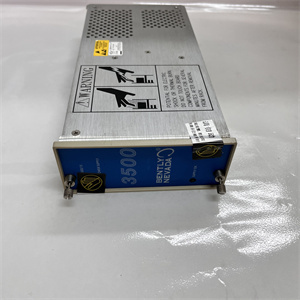
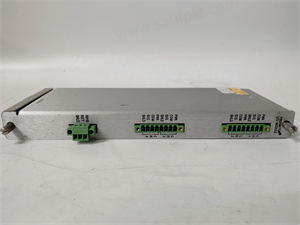
Description
Key Technical Specifications
- Model Number: 3BHL000397P0001 5SDF0860H0003
- Manufacturer: ABB Robotics Division
- Power Stage: 6-pack IGBT module (5SDF0860H0003), 650V/800A rating
- Input Voltage: 540VDC ±10% (from IRC5 main DC bus)
- Output Rating: 3-phase AC (0-480V, 0-400A peak) for high-power servo motors
- Cooling Type: Forced air (standard) or liquid-cooled (optional, for continuous high-load operation)
- Operating Temperature: 0°C to +45°C (32°F to +113°F); derate 5% per 5°C above 40°C
- Isolation Rating: 2.5kV AC (power circuits to control circuits)
- Protection Features: Overcurrent (IGBT desaturation), overtemperature, overvoltage, short-circuit protection
- Mechanical Design: Plug-in module, IRC5 high-power rack-mount (3U height), metal housing (IP20)
- Compatibility: ABB IRC5 MultiMove High-Power controllers; IRB 6700 (150-300kg payload), IRB 7600 (300-500kg payload) robot series
- Certifications: CE, UL 508C, RoHS 2.0, IEC 61800-5-1
- Weight: 4.2kg (9.3lbs)
- Firmware Compatibility: IRC5 controller firmware v7.0+
Field Application & Problem Solved
In heavy-duty industrial robotics—automotive body welding (IRB 6700), aerospace component handling (IRB 7600), and heavy-load material transfer—generic power modules fail to deliver the high current and stability required for large robot joints. These units lack integration with ABB IRC5 controllers, suffer from IGBT thermal runaway, and cause catastrophic production halts. A Michigan auto plant lost $350k in a 7-hour outage when a generic power stack’s IGBT failed mid-welding cycle, scrapping 600 vehicle frames and damaging a robot joint motor. Legacy replacements also struggle with load spikes: a Texas aerospace facility spent $40k annually replacing off-brand modules that couldn’t handle the 400A peak current of IRB 7600 robots during lift cycles.
You’ll find this power stack module in IRC5 High-Power controllers powering: IRB 6700 welding robots in auto body shops, IRB 7600 heavy-load robots in aerospace factories, and large material handlers in steel mills. Its core value is ABB-native integration + high-current IGBT design + industrial ruggedness. The 5SDF0860H0003 IGBT sub-component is calibrated to ABB’s high-power servo motors, eliminating thermal mismatch issues. For a Pennsylvania steel mill, the module’s liquid-cooled option prevented overheating during 24/7 operation—something air-cooled generic modules couldn’t do, reducing downtime by 85% for their heavy-load robot line.
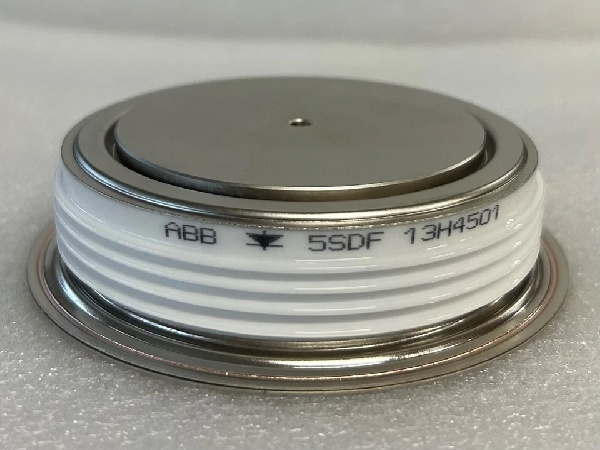
ABB 3BHL000397P0001 5SDF0860H0003
Installation & Maintenance Pitfalls (Expert Tips)
- IGBT Wiring Phase: Match Exactly to Motor Leads: Rookies mix up 3-phase output wiring, causing robot joint jitter and IGBT stress. An Ohio metal fabricator’s IRB 7600 crashed into a workpiece after miswiring—follow ABB’s color-coded diagram (U=red, V=yellow, W=blue) and verify with a phase rotation tester. Mismatched phases damage both the module and motor.
- Cooling System: Don’t Skimp on Airflow/Liquid Flow: Inadequate cooling triggers overtemperature shutdowns or IGBT failure. A Florida plastics plant’s modules failed hourly during summer until technicians upgraded to 120CFM cabinet fans (air-cooled) and cleaned dust filters weekly. For liquid-cooled variants, ensure flow rate stays above 5L/min—use ABB’s flow sensor (1SFL500005R0001) to monitor.
- Firmware Sync: Critical for High-Power Control Loops: Outdated module firmware (pre-v7.0) with IRC5 v8.0+ causes current regulation errors. A North Carolina aerospace plant’s robot exhibited erratic lift performance until the power stack was updated via RobotStudio. Always match firmware across all power modules in a MultiMove setup—mismatched versions corrupt torque control data.
- Terminal Torque: 4.5Nm for Power Connections: Loose DC bus or motor terminals cause arcing and IGBT damage. A Louisiana refinery’s power stack failed after 3 months due to loose DC connections—torque all power terminals to ABB’s specified 4.5Nm with a torque wrench. Use anti-oxidant paste on copper terminals to prevent corrosion.
- Load Testing: Simulate Peak Loads Post-Installation: Rookies skip full-load testing, missing latent IGBT defects. A Texas auto plant’s module failed during a production run when it hit 350A peak current—use RobotStudio’s heavy-load motion test to simulate 110% of rated load. Monitor IGBT temperature via IRC5 diagnostics (keep below 125°C).
Technical Deep Dive & Overview
The ABB 3BHL000397P0001 5SDF0860H0003 is a high-power stack module engineered to deliver stable 3-phase AC power to ABB’s heaviest industrial robots, leveraging a rugged IGBT-based design for extreme current demands. At its core, the 5SDF0860H0003 6-pack IGBT module converts 540VDC from the IRC5 main DC bus into variable-voltage, variable-frequency AC—precisely tailored to the torque and speed requirements of IRB 6700/7600 servo motors. The module’s integrated microcontroller communicates with the IRC5 main CPU via the internal backplane, adjusting current output in real time to handle dynamic loads (e.g., lifting 500kg components or welding at high speeds).
Unlike generic power stacks, this unit features ABB’s proprietary IGBT gate drive circuitry, which minimizes switching losses and prevents thermal runaway—a common flaw in budget modules. It includes built-in desaturation protection (detects IGBT short circuits) and overtemperature monitoring, shutting down power within 2ms to protect both the module and robot motor. The plug-in design enables hot-swapping for zero-downtime maintenance, critical for 24/7 manufacturing environments.
What sets it apart is its seamless integration with ABB’s high-power robot ecosystem: it’s calibrated to match the electrical characteristics of IRB 6700/7600 motors, eliminating the need for custom tuning. The optional liquid cooling supports continuous operation at peak current, while the conformal-coated PCB resists dust and humidity in harsh industrial settings. For facilities relying on heavy-duty robots, this power stack isn’t just a component—it’s a precision-engineered workhorse that delivers the high current and reliability needed to keep large-scale automation running at peak performance.