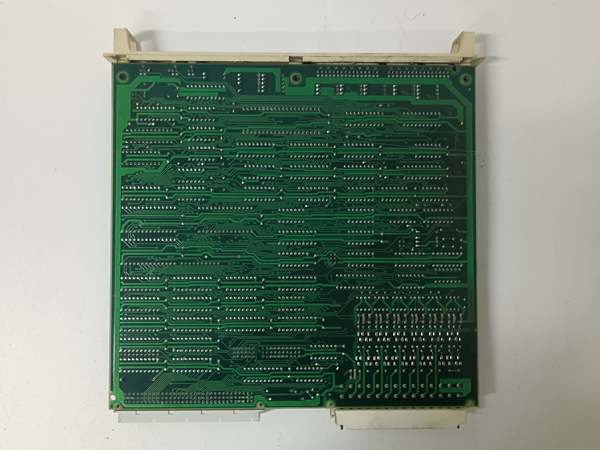
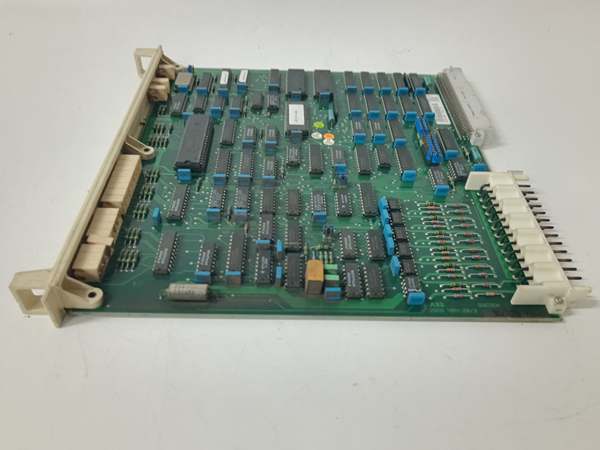
Description
Key Technical Specifications
-
Model Number: 4781020-001K
-
Manufacturer: ABB (Sweden)
-
On-board Transformer: 20.5 VA, 440-380-220 V primary / 20-0-20 V, 0-5 V secondary
-
Operating Voltage: 5.2 kV system class (board isolated to 2 kV working)
-
Pulse Current: 3 A peak per channel, 10 µs width
-
Logic Supply: 24 VDC (18-30 V), 150 mA
-
Isolation: 2 kV primary-to-secondary, 500 V channel-to-ground
-
Temperature Range: –40 °C…+70 °C
-
Connectors: Plug-in 12-pin, 5 mm pitch, locking latch
-
Dimensions: 120 × 60 × 40 mm (board only)
-
Weight: 0.3 kg

ABB DSCS131 57310001-LM
Field Application & Problem Solved
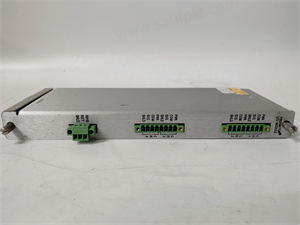
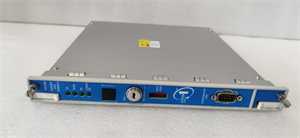
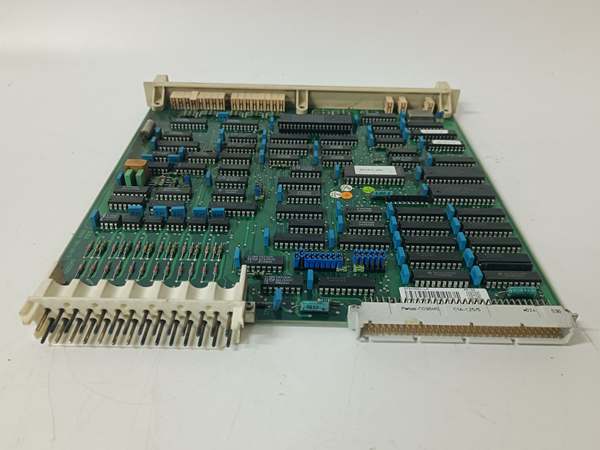
Medium-voltage TyRak-S drives in paper mills use SCR phase-control to soft-start 4 kV chipper motors. The 4781020-001K sits on the gate-post—its on-board transformer drops the 440 V bus to ±20 V floating supplies, while the 0-5 V secondary feeds the feedback optos. When the AC 800PEC issues a 24 V fire pulse the board delivers a 3 A, 10 µs gate burst to six parallel 77 mm thyristors. Result: ramp from 0-4 kV in 8 s with < 200 A inrush instead of 2 kA across-the-line. I’ve swapped these on a 2.5 MW refiner in Georgia—one board change and the drive was back to full torque without re-calibrating the whole firing table. Value: it collapses isolation transformer, dual supply, and gate amplifier into one plug-in card you can swap in a minute with the cell still hot (de-energized, not cooled).
Medium-voltage TyRak-S drives in paper mills use SCR phase-control to soft-start 4 kV chipper motors. The 4781020-001K sits on the gate-post—its on-board transformer drops the 440 V bus to ±20 V floating supplies, while the 0-5 V secondary feeds the feedback optos. When the AC 800PEC issues a 24 V fire pulse the board delivers a 3 A, 10 µs gate burst to six parallel 77 mm thyristors. Result: ramp from 0-4 kV in 8 s with < 200 A inrush instead of 2 kA across-the-line. I’ve swapped these on a 2.5 MW refiner in Georgia—one board change and the drive was back to full torque without re-calibrating the whole firing table. Value: it collapses isolation transformer, dual supply, and gate amplifier into one plug-in card you can swap in a minute with the cell still hot (de-energized, not cooled).
Installation & Maintenance Pitfalls (Expert Tips)
Primary Jumper Wrong = Smoke – The transformer has three input taps: 440 / 380 / 220. Clip the wrong jumper and 440 V on the 220 V tap saturates the core, blows the 2 A internal fuse, and takes out the downstream 5 V reg. Verify with a DMM before power-on.
Pulse Cable Too Long – Gate leads longer than 1 m pick up dv/dt from adjacent phases. Keep twisted-pair under 0.5 m or you’ll get self-firing at 60° phase-angle and the drive trips on over-current.
Forget the Ferrite – The 5 V secondary feeds the opto feedback. Route it through the on-board ferrite bead; otherwise common-mode hits from SCR turn-off will give false “phase-loss” alarms every load step.
Tighten the Plug Screws – Vibration from the compressor above the MCC will walk the 12-pin connector out; once it backs off 2 mm you lose one phase and the motor single-phases until the thermal trips. Snug the locking screws and dab of Loctite 222.
Primary Jumper Wrong = Smoke – The transformer has three input taps: 440 / 380 / 220. Clip the wrong jumper and 440 V on the 220 V tap saturates the core, blows the 2 A internal fuse, and takes out the downstream 5 V reg. Verify with a DMM before power-on.
Pulse Cable Too Long – Gate leads longer than 1 m pick up dv/dt from adjacent phases. Keep twisted-pair under 0.5 m or you’ll get self-firing at 60° phase-angle and the drive trips on over-current.
Forget the Ferrite – The 5 V secondary feeds the opto feedback. Route it through the on-board ferrite bead; otherwise common-mode hits from SCR turn-off will give false “phase-loss” alarms every load step.
Tighten the Plug Screws – Vibration from the compressor above the MCC will walk the 12-pin connector out; once it backs off 2 mm you lose one phase and the motor single-phases until the thermal trips. Snug the locking screws and dab of Loctite 222.
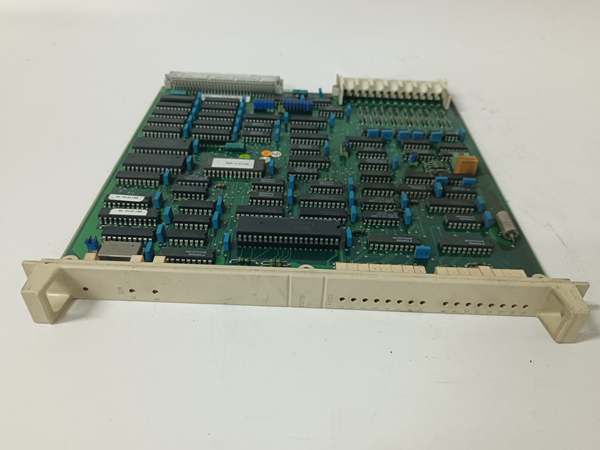
ABB DSCS131 57310001-LM
Technical Deep Dive & Overview
The 4781020-001K is basically a “gate firing power-supply on a postcard.” A miniature 20.5 VA toroid provides floating ±20 V for SCR gate drive and a regulated 5 V for on-board opto-isolators. The FPGA section shapes the 24 V logic pulse into two 10 µs bursts with 2 µs dead-time, then drives dual 3 A MOSFETs. Output is galvanically isolated to 2 kV so the gate can sit at line potential. Board edge has a local 250 mA poly-fuse; if you short the gate lead the fuse opens, saves the MOSFET, and resets when you remove the fault. LED indicators show “Pwr”, “Fire”, and “Fault” so you can see at a glance whether the pulse left the board or the transformer primary is open-circuit.
The 4781020-001K is basically a “gate firing power-supply on a postcard.” A miniature 20.5 VA toroid provides floating ±20 V for SCR gate drive and a regulated 5 V for on-board opto-isolators. The FPGA section shapes the 24 V logic pulse into two 10 µs bursts with 2 µs dead-time, then drives dual 3 A MOSFETs. Output is galvanically isolated to 2 kV so the gate can sit at line potential. Board edge has a local 250 mA poly-fuse; if you short the gate lead the fuse opens, saves the MOSFET, and resets when you remove the fault. LED indicators show “Pwr”, “Fire”, and “Fault” so you can see at a glance whether the pulse left the board or the transformer primary is open-circuit.