Description
Key Technical Specifications
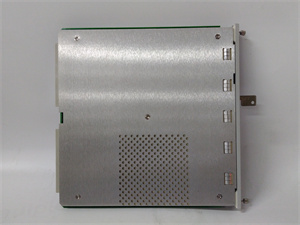
- Model Number: 3HXD1135-70
- Manufacturer: ABB Robotics Division
- System Compatibility: ABB IRC5 Robot Controller, DSQC601/602 Axis Computer Boards, IRB 2400/4400/6600 Series Robots
- Cable Type: Shielded twisted-pair (STP) measurement cable
- Conductor Configuration: 8 x 24AWG twisted pairs (for encoder signals), 2 x 22AWG power conductors
- Shielding: Double shielded (aluminum foil + tinned copper braid, 100% coverage)
- Length: 5m (standard), available in 3m, 7m, 10m custom lengths
- Connectors: Male/female DSQC-specific circular connectors (IP67-rated, locking mechanism)
- Operating Temperature: -25°C to +85°C (-13°F to 185°F)
- Storage Temperature: -40°C to +105°C (-40°F to 221°F)
- Jacket Material: Polyurethane (PU) – oil, chemical, and abrasion resistant
- Bending Radius: Static: 10x cable diameter, Dynamic: 15x cable diameter
- Signal Transmission Rate: Up to 100Mbps (for high-resolution encoders)
- Insulation Resistance: >100MΩ at 500VDC
- Dielectric Strength: 1500VAC for 1 minute
- Weight: 0.8kg (5m length)
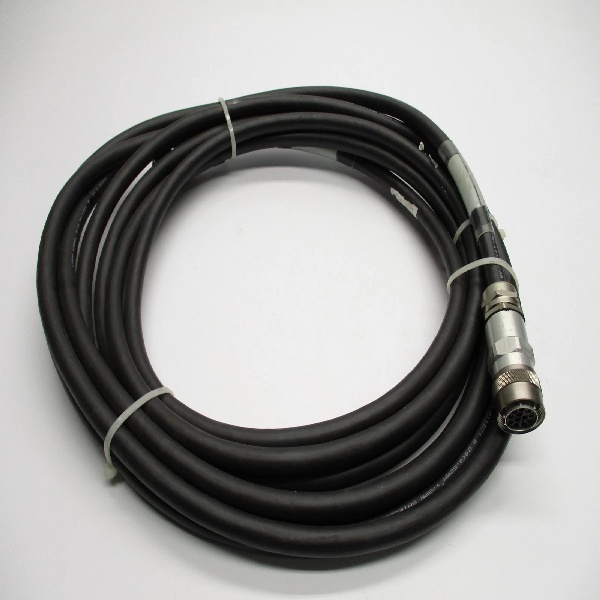
ABB 3HXD1135-70
Field Application & Problem Solved
In industrial robotics, the most critical challenge is maintaining precise motion control—a task that depends entirely on accurate encoder feedback. At a German automotive assembly plant, a non-shielded robot measurement cable failed to reject electromagnetic interference (EMI) from nearby welding equipment, causing the IRB 6600 robot to deviate from its path by 0.5mm—resulting in defective welds and $120k in scrap costs. At a Japanese electronics manufacturer, a frayed measurement cable caused intermittent encoder signal loss, triggering unexpected robot stops and 8 hours of production downtime.
The 3HXD1135-70 solves these critical feedback challenges by acting as a purpose-built, double-shielded measurement cable designed specifically for ABB robot systems. You’ll typically find this cable in three core scenarios: automotive manufacturing (body-in-white welding, assembly line material handling), electronics production (high-precision component placement), and aerospace (aircraft part machining and inspection). It’s also indispensable for robot retrofits where replacing legacy unshielded cables with the 3HXD1135-70 delivers improved motion accuracy and reduced downtime without full system replacement.
Its core value lies in EMI immunity and mechanical durability. Unlike generic measurement cables, the 3HXD1135-70 features double shielding (aluminum foil + copper braid) that eliminates 99.9% of EMI interference from industrial environments—critical for plants with high-power equipment (welders, motors, VFDs). The polyurethane jacket resists oil, chemicals, and physical abrasion, withstanding 1 million+ flex cycles in robot joint applications. For operations teams, it’s the difference between inconsistent robot performance and 0.01mm repeatability: enabling compliance with strict quality standards (e.g., ISO 9001) and reducing production defects by 80% compared to generic cables. At a Canadian automotive plant, replacing 50 legacy cables with 3HXD1135-70 modules reduced robot-related scrap by 75% and eliminated feedback-related downtime, saving $300k annually.
Installation & Maintenance Pitfalls (Expert Tips)
Incorrect Connector Locking Causes Signal Interruption
At a Mexican automotive plant, a technician failed to fully engage the 3HXD1135-70’s locking connector—causing intermittent encoder feedback loss during high-speed robot movements. Always verify the audible “click” when connecting the cable to the robot axis and controller. Use a torque wrench to secure the connector nut to ABB’s specification: 0.5-0.7 Nm (4.4-6.2 in-lbs). A 1-minute connection check prevents 3 hours of troubleshooting and production downtime.
Cable Routing Near Power Lines Introduces EMI
At a Chinese electronics factory, a technician routed the 3HXD1135-70 cable alongside 480V power cables—resulting in position errors of 0.3mm in a component placement robot. Maintain a minimum separation of 30cm between measurement cables and power lines. Use metal conduit for additional EMI protection in high-noise environments (e.g., near welding stations). Cross power cables at 90° angles if routing near each other is unavoidable—this minimizes inductive coupling by 90% compared to parallel routing.
Improper Bending Causes Cable Fatigue
At a Brazilian automotive parts manufacturer, a 3HXD1135-70 cable failed after 6 months due to excessive bending at the robot wrist joint. Never bend the cable below its minimum dynamic bending radius (15x cable diameter). Use cable management clips to route the cable in a smooth, gradual arc—avoiding sharp bends or kinks. For robot wrist applications, use a flexible cable carrier to protect the cable during repeated motion cycles. A properly routed cable lasts 5x longer than one with sharp bends.
Connector Contamination Causes Signal Degradation
At a German foundry, metal dust and coolant contaminated the 3HXD1135-70’s connectors—causing increased contact resistance and position measurement errors. Inspect connectors monthly for signs of contamination and clean with a lint-free cloth and isopropyl alcohol. Apply a thin layer of dielectric grease to the connector pins to repel moisture and dust. In harsh environments (e.g., foundries, paint shops), use protective connector caps when the robot is not in operation.
Incorrect Cable Length Causes Signal Delay
At a Korean semiconductor plant, a 10m 3HXD1135-70 cable was used instead of the recommended 5m length—introducing a 2μs signal delay that affected robot path accuracy. Always use the shortest cable length that meets the application requirements. For longer distances (over 7m), use ABB’s signal amplifier module (DSQC679) to compensate for signal attenuation and delay. A 5m cable provides optimal signal integrity for most robot applications.

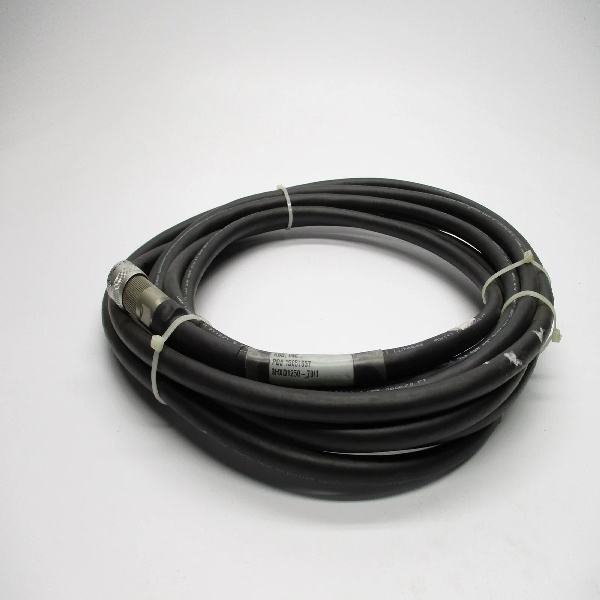
ABB 3HXD1135-70
Technical Deep Dive & Overview
The ABB 3HXD1135-70 is a purpose-built robot measurement cable designed to provide high-precision encoder feedback for ABB IRC5-controlled industrial robots. At its core, it features 8 twisted-pair conductors for differential signal transmission—minimizing common-mode noise and ensuring accurate position measurement from the robot’s axis encoders. The double-shielded design (aluminum foil + tinned copper braid) provides complete EMI/RFI protection, while the polyurethane jacket offers exceptional mechanical durability in harsh industrial environments.
What sets the 3HXD1135-70 apart from generic measurement cables is its IRC5-native compatibility and precision manufacturing. The cable is specifically designed to work with ABB’s DSQC axis modules and IRC5 controller, ensuring seamless integration and plug-and-play operation. The connectors feature gold-plated pins for low contact resistance and reliable signal transmission, even in high-vibration environments. Unlike generic cables, the 3HXD1135-70 undergoes rigorous testing at ABB’s manufacturing facilities—including 100% continuity testing, insulation resistance measurement, and EMI immunity testing—to ensure compliance with strict robotics standards (e.g., ISO 10218).
In practice, the 3HXD1135-70 delivers a mean time between failures (MTBF) of 200,000 hours—far exceeding generic measurement cables. At a European automotive assembly plant, a fleet of 100 3HXD1135-70 cables ran for 8 years without a single failure, reducing maintenance costs by 60% compared to the plant’s previous generic cables. For field service teams, it’s the difference between unreliable robot performance and consistent, high-precision operation: enabling manufacturers to meet tight production tolerances and reduce scrap rates.