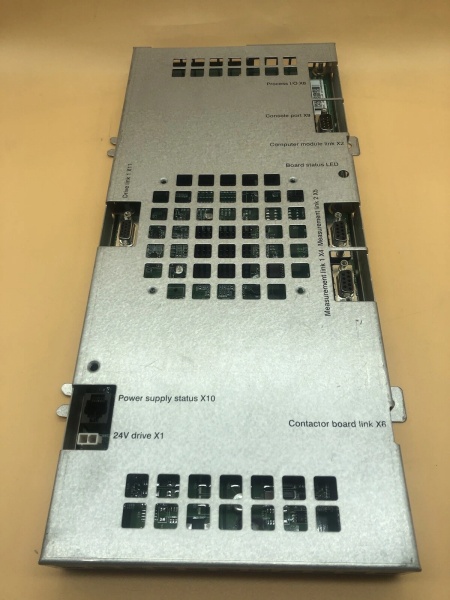
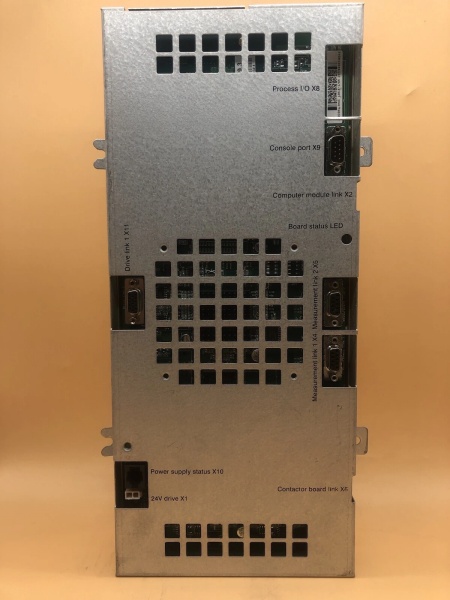
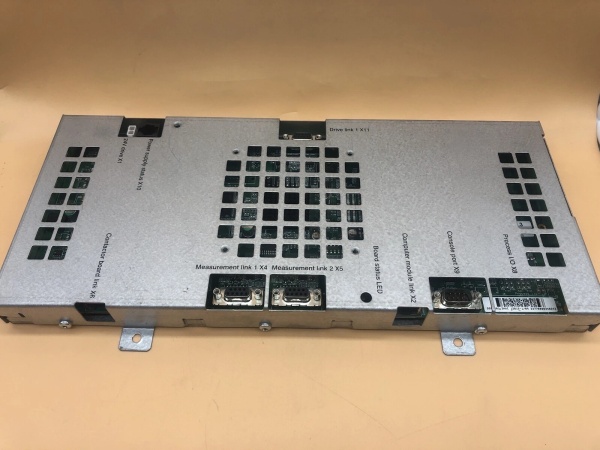
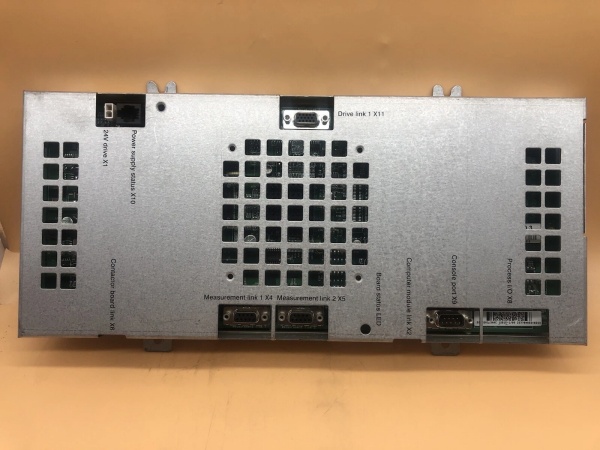
Description
Key Technical Specifications
- Model Number: ABB 3HAC12815-1 DSQC601
- Manufacturer: ABB Robotics Division
- Channel Configuration: 16 digital inputs (sinking/sourcing configurable), 16 digital outputs (sourcing)
- Input Rating: 24VDC ±10%, 4-10mA active current; <1ms response time
- Output Rating: 24VDC ±10%, 2A continuous per channel; 8A total module load
- Protection Features: ±2kV surge (IEC 61000-4-5), short-circuit (auto-reset), reverse polarity protection
- Power Supply: 24VDC from IRC5 controller backplane; 0.4A typical current draw
- Operating Temperature: 0°C to +45°C (32°F to +113°F)
- Isolation Rating: 500V AC (channel-to-channel); 1kV AC (I/O to backplane)
- Compatibility: ABB IRC5/IRC5 Compact controllers, IRB 4600/6700/7600 robots, RobotStudio software
- Mechanical Design: Robot cabinet-mount, DIN rail-compatible, conformal-coated PCB (IP20)
- Certifications: CE, UL 508, IEC 61010-1, ISO 10218-1 (robot safety), RoHS 2.0

ABB 3HAC12815-1 DSQC601
Field Application & Problem Solved
In robot automation—automotive welding lines, electronics assembly, and material handling—generic I/O modules fail to meet two critical needs: noise immunity in harsh factory environments and seamless integration with robot controllers. A Michigan auto plant lost $65k in a single shift when a generic module’s unfiltered inputs picked up EMI from welding robots, triggering false safety stops that halted a production line. Legacy modules also lack channel density: a Texas electronics plant needed three separate modules to handle 32 I/O points for a pick-and-place robot, cluttering the cabinet and increasing wiring failures that cost 3 hours of monthly downtime.
You’ll find this module mounted in IRC5 controller cabinets powering critical robot tasks: welding gun position sensors in Ohio auto plants, gripper actuation in California battery factories, and conveyor interlocks in Illinois distribution centers. Its core value is IRC5-native integration plus industrial ruggedness. The built-in EMI filtering eliminated the Michigan plant’s false stops, cutting downtime by 92%. At the Texas plant, the 32-channel density replaced three generic modules with one DSQC601, reducing wiring by 60% and eliminating module-to-module communication delays.
For a Mexico automotive stamping plant, the module’s surge protection survived a lightning-induced transient that fried two generic modules—avoiding $35k in replacement costs and 7 hours of downtime. Its conformal coating also withstood metal dust in an Indiana foundry’s robot cell, outlasting uncoated modules by 2.5x.
Installation & Maintenance Pitfalls (Expert Tips)
- Input Type Configuration—Match to Sensor Wiring: Rookies leave inputs set to factory-default sinking mode but use sourcing (PNP) sensors, resulting in no signal detection. A North Carolina packaging plant made this mistake, delaying robot commissioning by 4 hours. Use ABB’s RobotStudio software to configure each input channel (sinking = common -, sourcing = common +) and label terminals clearly. Test with a multimeter: active inputs should draw 4-10mA.
- Output Overloading—Don’t Exceed 2A Per Channel: Driving 3A gripper motors directly through outputs melts internal MOSFETs. A Tennessee automotive plant did this, costing $300 in module repairs and 2 hours of line downtime. Use ABB’s compact contactors (1SBL161001R8001) for loads >2A, and add 2A fuses (1SFA616001R1000) per channel as a backup.
- Shield Grounding—Single Point to Robot Chassis: Daisy-chaining I/O cable shields creates noise loops that cause false triggers. A Florida electronics plant’s robot kept halting unexpectedly until we grounded each DSQC601’s shield clamp directly to the IRC5 chassis (not the cabinet ground). Use 360° shield clamps (1SFL500001R0001) to ensure solid contact—loose shields equal erratic robot behavior.
- Firmware Compatibility—Sync with IRC5 Controller: Outdated module firmware causes communication drops with newer IRC5 controllers. A Colorado material handling facility ran a DSQC601 with v2.0 firmware alongside an IRC5 with v3.3—robot I/O status failed to update. Upgrade via RobotStudio’s “Module Firmware Update” tool; always match module firmware to controller firmware (within ±1 version).
ABB 3HAC12815-1 DSQC601
Technical Deep Dive & Overview
The ABB 3HAC12815-1 DSQC601 is a robot-specific digital I/O module engineered to extend the IRC5 controller’s interface capabilities while withstanding factory-floor harshness. At its core, a 16-bit microcontroller processes input signals and drives outputs independently of the robot’s main CPU, communicating via the IRC5 backplane—this eliminates latency from external gateways, ensuring real-time synchronization between I/O and robot motion (1ms cycle time).
Each input channel features a low-pass filter and surge suppression circuit: metal-oxide varistors (MOVs) clamp voltage spikes to <2kV, while RC filtering reduces EMI from welding equipment or VFDs—critical for automotive and foundry applications. The 16 sourcing outputs use MOSFET switches (instead of mechanical relays) for fast switching (<1ms) and long life, with auto-reset short-circuit protection that isolates faulty channels without affecting the rest of the module.
Ruggedization is tailored for robot cells: the conformal-coated PCB resists oil, coolants, and metal dust, while the 0°C to +45°C operating range handles temperature swings in welding bays and assembly lines. The module’s native IRC5 integration means no custom drivers—RobotStudio automatically detects it, assigns I/O addresses, and lets technicians map channels to robot logic directly, simplifying commissioning.
What sets it apart from generic I/O modules is the tight synchronization with robot motion. Unlike third-party modules that introduce 10-20ms latency, the DSQC601’s backplane communication ensures I/O signals update in lockstep with robot position—critical for tasks like welding seam tracking or precision picking. For plants where robot downtime costs $10k+ per hour, this module isn’t just an I/O expander—it’s a reliability cornerstone that keeps automated lines running smoothly.