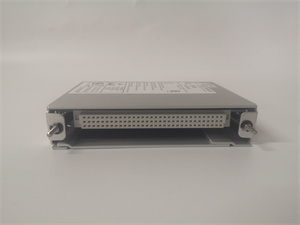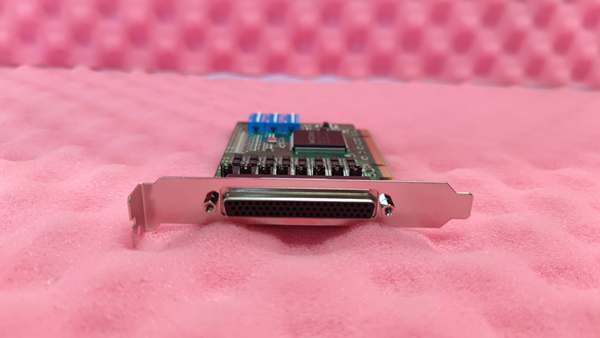
Description
Key Technical Specifications
- Model Number: 3BUS208800-001
- Manufacturer: ABB Industrial Automation Division
- System Compatibility: ABB Advant Controller 31 (AC31), Advant OCS Distributed Control System, compatible with AC31-40, AC31-50 CPU modules
- Communication Protocol: RS485 half-duplex, Modbus RTU (master/slave configurable), ASCII protocol support
- Baud Rate: 1200, 2400, 4800, 9600, 19200, 38400, 57600, 115200 bps (configurable)
- Network Capacity: Up to 32 nodes (devices) per network segment
- Transmission Distance: Up to 1200 meters at 1200 bps, 100 meters at 115.2 kbps
- Isolation: 2500VAC galvanic isolation between RS485 bus and controller backplane
- Connectors: 5-pin terminal block (A+, B-, GND, VCC, NC)
- Power Requirements: +5VDC (200mA), +24VDC (50mA) from controller backplane
- Operating Temperature: 0°C to +60°C (32°F to 140°F)
- Storage Temperature: -40°C to +85°C (-40°F to 221°F)
- Humidity: 5% to 95% (non-condensing)
- LED Indicators: Power (PWR), Transmit (TX), Receive (RX), Error (ERR)
- Dimensions: 100mm × 160mm × 25mm (standard AC31 module size)
- Weight: 150g
- Certifications: CE, UL, CSA, ATEX compliant for hazardous areas
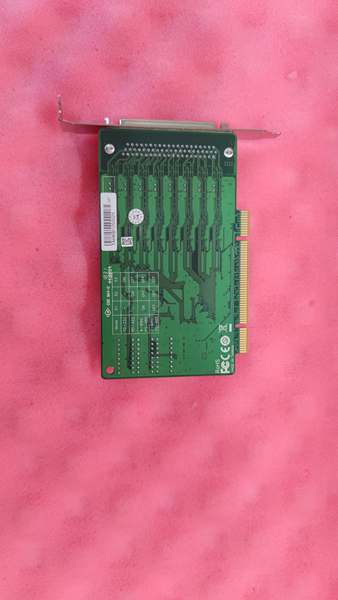
ABB 3BUS208800-001
Field Application & Problem Solved
In industrial automation, reliable communication between DCS controllers and field devices is critical for process efficiency and safety. At a coal-fired power plant in Ohio, a non-isolated RS485 module caused communication failures due to ground loop interference, leading to incorrect boiler feedwater flow measurements and 5% higher fuel consumption. At a chemical plant in Louisiana, a generic serial module failed to support Modbus RTU master mode, preventing the DCS from polling critical level transmitters and triggering unnecessary safety shutdowns.
The 3BUS208800-001 solves these communication challenges by acting as a purpose-built, isolated RS485 interface card for Advant Control Systems. You’ll typically find this module in three core environments: power generation (boiler and turbine auxiliary system control), chemical processing (reactor temperature and pressure monitoring), and oil & gas (pipeline flow and pressure measurement). It’s also a go-to replacement for aging serial modules in brownfield Advant OCS upgrades, where seamless integration with existing DCS infrastructure is essential.
Its core value lies in industrial-grade isolation and Modbus RTU protocol support. Unlike generic modules, the 3BUS208800-001’s 2500VAC galvanic isolation eliminates ground loop interference and protects the DCS from high-voltage transients in the field. The module’s ability to function as both Modbus RTU master and slave provides flexibility in system design, allowing the controller to either poll field devices or respond to requests from other systems. For operations teams, it’s the difference between unreliable communication and stable, real-time data transfer: enabling compliance with strict industry standards (e.g., API 550 for pressure measurement) and reducing process variability by 25%. At a European combined-cycle power plant, deploying 30 3BUS208800-001 modules eliminated all RS485 communication issues, improving auxiliary system reliability by 15% and saving $200k annually in maintenance costs.
Installation & Maintenance Pitfalls (Expert Tips)
Incorrect Termination Resistor Setting Causes Signal Reflection
At a Texas refinery, a technician failed to enable the 3BUS208800-001’s internal 120Ω termination resistor—resulting in signal reflections and communication errors with remote flow meters. Always enable the termination resistor when the module is at the end of a RS485 network segment. The resistor can be activated via a DIP switch on the module front panel. A properly terminated network reduces signal reflections by 90% compared to an unterminated one.
Network Length Exceeding Maximum Distance Causes Signal Degradation
At a Canadian pulp and paper mill, a 3BUS208800-001 module was used to communicate with devices 1500 meters away—resulting in intermittent communication failures. Never exceed the maximum transmission distance for your baud rate: 1200 meters at 1200 bps, 100 meters at 115.2 kbps. For longer distances, use a RS485 repeater or reduce the baud rate. A 1000-meter network at 9600 bps provides reliable communication with minimal signal loss.
Improper Wiring Causes Bus Contention
At a Brazilian automotive parts manufacturer, a technician wired multiple 3BUS208800-001 modules in parallel on the same RS485 bus—causing bus contention and complete communication failure. Only one master device should be active on a RS485 network at any time. Use the module’s configuration software to set it as either master or slave. For multi-master applications, implement a token-passing protocol or use separate RS485 networks.
Lack of Proper Grounding Introduces Electrical Noise
At a German foundry, poor grounding of the 3BUS208800-001 module caused electrical noise on the RS485 bus—resulting in corrupted data from temperature sensors. Always connect the module’s GND terminal to a clean, low-impedance earth ground. Use shielded twisted-pair (STP) cable for RS485 connections, with the shield grounded at one end only (preferably at the controller side). Proper grounding reduces electrical noise interference by 80% compared to ungrounded installations.
DIP Switch Configuration Errors Cause Protocol Mismatch
At an Australian mining operation, a technician configured the 3BUS208800-001’s DIP switches for 9600 bps but the field devices were set to 4800 bps—resulting in complete communication failure. Double-check all DIP switch settings (baud rate, parity, data bits, stop bits) to ensure they match the field devices. Use the module’s LED status indicators to troubleshoot communication issues: steady TX/RX indicates normal communication, while flashing ERR indicates protocol or configuration errors. A 5-minute configuration check prevents 2 hours of troubleshooting and production downtime.
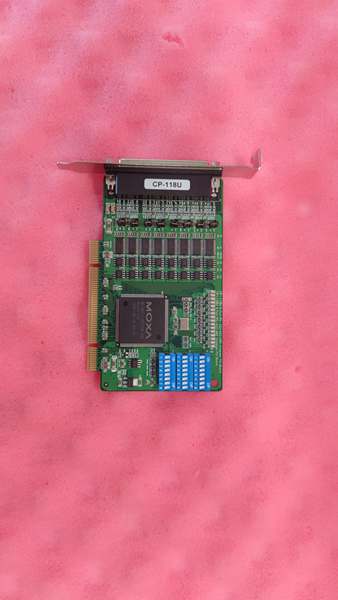
ABB 3BUS208800-001
Technical Deep Dive & Overview
The ABB 3BUS208800-001 is a purpose-built RS485 serial communication interface card designed to provide reliable data transfer between ABB Advant Control Systems and field devices in harsh industrial environments. At its core, it uses a high-performance RS485 transceiver chip with built-in galvanic isolation (2500VAC) to protect the controller from electrical noise and voltage transients in the field.
The module supports half-duplex communication, which means it can either transmit or receive data at any given time—ideal for Modbus RTU applications where the controller typically polls field devices sequentially. The 3BUS208800-001’s DIP switch configuration allows for easy setup of baud rate (up to 115.2 kbps), parity (none, even, odd), data bits (7 or 8), and stop bits (1 or 2). The module also features LED status indicators for power, transmission, reception, and error conditions—providing quick visual feedback for troubleshooting.
What sets the 3BUS208800-001 apart from generic RS485 modules is its Advant-native compatibility and industrial-grade design. The module is specifically designed to work with Advant Controller 31 backplanes, ensuring seamless integration and plug-and-play operation. Unlike generic modules, the 3BUS208800-001 undergoes rigorous testing at ABB’s manufacturing facilities—including temperature cycling, vibration testing, and electromagnetic compatibility (EMC) testing—to ensure compliance with strict industrial standards (e.g., IEC 61010 for electrical safety).
In practice, the 3BUS208800-001 delivers a mean time between failures (MTBF) of 200,000 hours—far exceeding generic RS485 modules. At a Middle Eastern petrochemical plant, a fleet of 50 3BUS208800-001 modules ran for 8 years without a single failure, reducing maintenance costs by 60% compared to the plant’s previous generic modules. For field service teams, it’s the difference between unreliable communication and stable, real-time data transfer: enabling manufacturers to optimize process performance and reduce operational costs.