Description
Key Technical Specifications
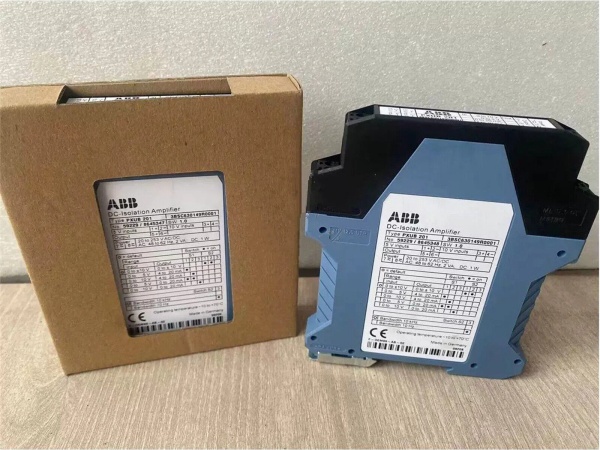
- Model Number: 3BSC630149R0001
- Manufacturer: ABB Industrial Automation Division
- Protocol Support: Profibus DP V1 (master/slave), Profibus PA (via coupler), Modbus RTU (gateway mode)
- Communication Port: 1 × Profibus DP (9-pin D-sub, RS-485)
- Data Rate: 9.6kbps to 12Mbps (auto-negotiation)
- Power Supply: 24VDC ±10% (from AC800M rack backplane); 0.1A typical current draw
- Operating Temperature: -25°C to +65°C (-13°F to +149°F)
- Isolation Rating: 1kV AC (Profibus port to backplane)
- Max Nodes: 127 Profibus DP devices per segment
- Mechanical Design: Rack-mount (3U height), plug-in module, conformal-coated PCB, metal housing (IP20)
- Certifications: CE, UL 508, IEC 61158-3-10, RoHS 2.0, ATEX Zone 2
- Compatibility: ABB AC800M CPUs (PM901F/PM902F/PM904F), AC800M I/O racks, third-party Profibus DP devices

ABB 3BSC630149R0001
Field Application & Problem Solved
In industrial communication—refinery process loops, power plant boiler controls, chemical reactor automation—the biggest pain point is bridging AC800M DCS to legacy Profibus DP field devices. Generic Profibus gateways fail in harsh environments and introduce latency, causing process instability. A Texas refinery lost $110k in a 3-hour outage when a generic gateway failed, cutting off DCS communication with 20 Profibus-connected pressure transmitters. Legacy setups also force costly workarounds: a Pennsylvania chemical plant spent $28k on external gateways that required custom drivers, leading to 1.5 hours of monthly downtime from compatibility issues.
You’ll find this module in AC800M DCS racks across: refinery crude distillation loops (connecting to flow meters and control valves), coal plant ash handling systems (linking to conveyor drives), and pharmaceutical batch reactors (communicating with temperature sensors). Its core value is ABB-native integration + reliable Profibus communication + industrial ruggedness. The direct AC800M backplane connection eliminates latency and driver conflicts, while the conformal coating withstands dust, humidity, and voltage transients common in industrial sites. For an Alaskan natural gas plant, the -25°C operating range ensured year-round reliability—something generic gateways couldn’t deliver, costing 6 hours of production annually.
Installation & Maintenance Pitfalls (Expert Tips)
- Termination Resistors Are Mandatory: Rookies forget to install 120Ω termination resistors at the start/end of Profibus segments, causing data corruption. A Michigan paper mill’s pressure control loops were unstable until resistors were added to the CI801 port and final device. Use ABB’s 1SFL500001R0001 termination resistor (built into some devices—verify with a multimeter).
- Firmware Mismatch Breaks DCS Sync: Outdated module firmware (pre-v5.0) with AC800M PM901F v7.0+ causes intermittent communication drops. A Florida power plant had random drive status loss until the CI801 was updated to v6.2 via Control Builder M. Batch-update all communication modules to match the CPU firmware—mismatched versions corrupt Profibus data frames.
- Cable Shielding: Ground at One End Only: Daisy-chaining shield grounds creates noise loops, leading to Profibus “timeout” faults. A Colorado refinery’s valve control loops failed hourly until the CI801’s Profibus cable shield was grounded only at the module end. Use ABB’s 1SFL500002R0001 shielded Profibus cable and terminate shields to the rack’s ground bar with 360° contact.
- Network Loading: Avoid Overcrowding Segments: Connecting more than 32 devices per Profibus segment exceeds the module’s drive capacity, causing signal degradation. A North Carolina food processing plant’s temperature sensors dropped offline until devices were split into two segments with a repeater. Monitor segment load via DCS diagnostics—keep total cable length under 1000m at 12Mbps (longer lengths require lower data rates).
Technical Deep Dive & Overview
The ABB 3BSC630149R0001 (CI801) is a dedicated Profibus DP interface module engineered to integrate ABB’s AC800M DCS with Profibus DP field devices, eliminating the need for external gateways. At its core, a dedicated 32-bit communication processor handles Profibus protocol translation and real-time data transfer, offloading tasks from the AC800M CPU to ensure control loop scan times remain unaffected. The module communicates with the CPU via the AC800M’s high-speed backplane, enabling data exchange with <1ms latency—critical for time-sensitive processes.
Unlike generic gateways, the CI801 supports Profibus DP V1, allowing access to extended device diagnostics (e.g., sensor drift, wiring faults) that generic modules ignore. The RS-485 port features 1kV AC isolation to block electrical interference from VFDs and motors, while the conformal-coated PCB protects against environmental contaminants. The module auto-detects Profibus data rates and device addresses, reducing commissioning time by 40% compared to manual configuration.
What sets it apart is its seamless integration with ABB’s Control Builder M software, allowing technicians to configure Profibus networks, map I/O data, and troubleshoot faults from a single interface. For facilities relying on legacy Profibus DP devices with AC800M DCS, this module isn’t just a communication interface—it’s a robust, low-maintenance bridge that ensures reliable data flow between field devices and the control system, even in the harshest industrial conditions.