Description
Key Technical Specifications
- Model Number: 3BHT300057R1
- Manufacturer: ABB Power Generation & Process Automation
- Input Channels: 8 independent analog input channels
- Input Signal Range: 4–20mA DC (loop-powered or externally powered sensors)
- Isolation Rating: 500V AC channel-to-channel, 1kV AC channels to backplane
- Accuracy: ±0.1% of full scale (20mA)
- Sampling Rate: 10 samples per second per channel
- Communication Interface: Symphony Plus I/O backplane (proprietary high-speed bus)
- Power Supply: 24VDC (derived from backplane, 0.15A typical current draw)
- Operating Temperature: -20°C to +60°C (-4°F to +140°F)
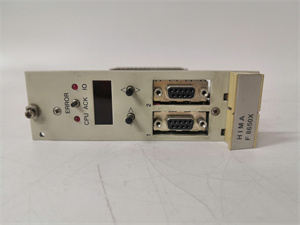
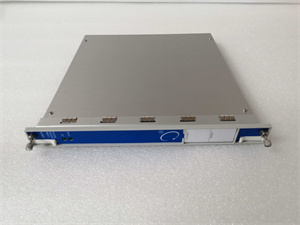
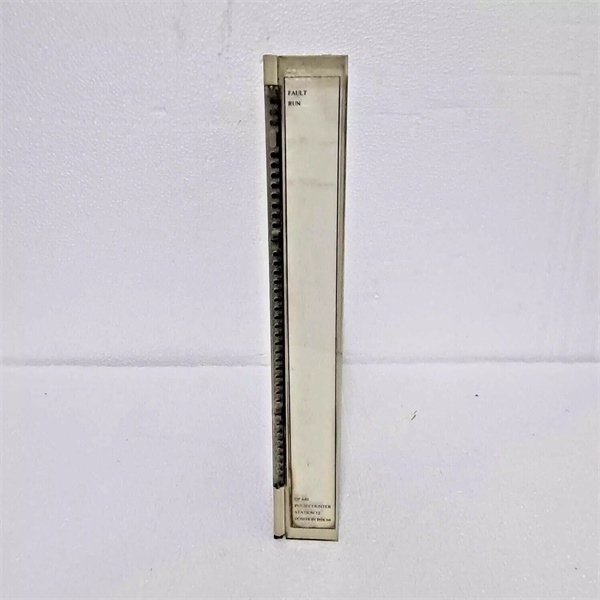
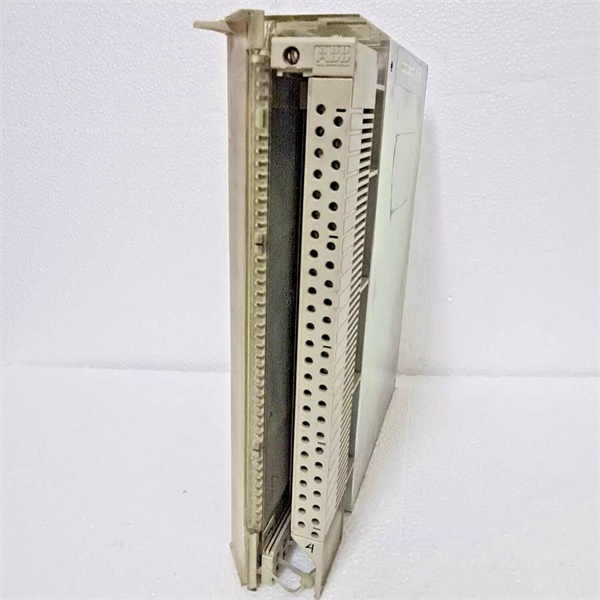
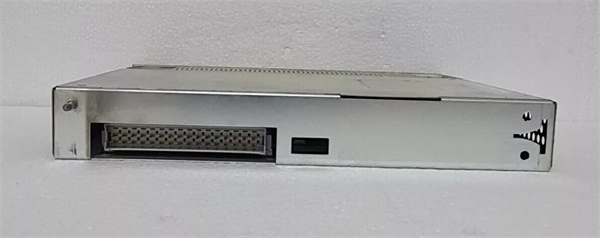
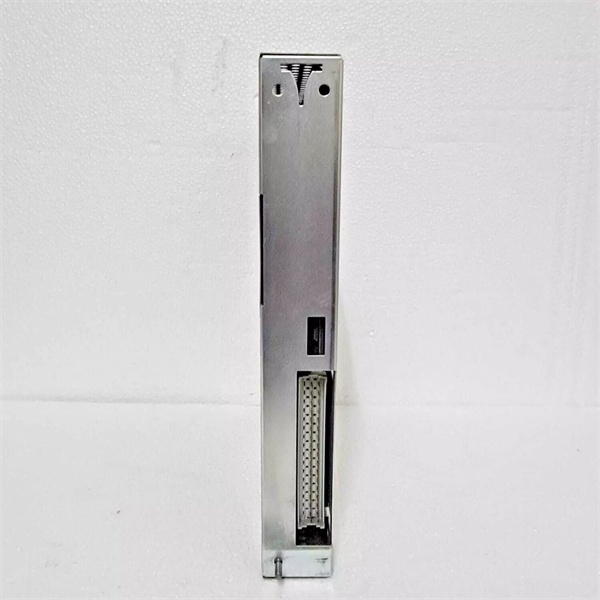
- Physical Design: Rack-mount, 120mm × 85mm × 150mm (W×H×D), IP20 protection, hot-swappable
- Certifications: IEC 61508 (SIL 2), CE, UL 508

ABB 3BHT300057R1
Field Application & Problem Solved
In power plants and refineries, the biggest pain point for process monitoring is reliable collection of low-level analog signals from field sensors (e.g., pressure transmitters, temperature RTDs converted to 4-20mA). Legacy non-isolated AI modules suffer from cross-channel interference and ground loop noise—this leads to inaccurate signal readings, false process alarms, and costly process shutdowns. I’ve seen a 600MW coal-fired plant trigger a boiler trip because a non-isolated AI module picked up noise from a nearby motor, causing a false “high flue gas temperature” alarm that shut down the combustion system.
You’ll find the 3BHT300057R1 installed in Symphony Plus I/O racks, typically in control rooms or remote I/O shelters, collecting signals from field sensors scattered across the plant. It’s a staple in boiler control systems, distillation column monitoring, and turbine lube oil temperature loops—applications where signal accuracy is mission-critical. Its core value is channel-to-channel isolation: each input channel is electrically isolated from the others and the backplane, eliminating cross-talk and ground loop noise that plagues non-isolated modules. At a Texas refinery, retrofitting old non-isolated AI modules with this model reduced false process alarms by 85% in the crude distillation unit—saving 10+ hours of unplanned downtime per month.
Another critical value is its hot-swappable design. In a power plant, you can’t shut down the I/O rack to replace a faulty module—that would take the entire process loop offline. This module lets you pull a failed unit and plug in a replacement while the rack is powered up, with zero disruption to other channels. I’ve swapped three of these modules in live refinery racks without a single process upset—something you can’t do with non-hot-swappable legacy hardware.
Installation & Maintenance Pitfalls (Expert Tips)
- Sensor Wiring Must Match Isolation Requirements: Rookies mix loop-powered and externally powered sensors on the same module without checking isolation boundaries. While each channel is isolated, loop-powered sensors share a common ground—mixing them can still cause ground loops. Group loop-powered sensors on one set of channels and externally powered sensors on another; label the groups clearly to avoid confusion during maintenance. I fixed a Florida plant’s signal drift issue by re-wiring their sensors to separate channel groups—they’d been mixing loop and external power for months.
- Hot-Swap Timing Matters: The module is hot-swappable, but you can’t yank it mid-data transfer without risking temporary signal loss. Check the module’s status LED—wait for a solid green light (indicating idle state) before pulling it. Never swap modules during peak process loads (e.g., boiler startup, refinery batch changes)—wait for a stable operating window. A Pennsylvania plant lost a flow signal for 2 seconds during a hot-swap mid-batch, causing a minor product quality issue; timing the swap during a lull solved the problem.
- Terminal Tightening Torque Is Critical: Loose terminal screws cause intermittent signal drops—one of the most frustrating faults to diagnose. The module’s terminals require a 0.8 N·m torque setting (use a calibrated torque screwdriver). Over-tightening strips the threads; under-tightening causes resistance and signal noise. I’ve spent 4 hours chasing intermittent “signal loss” faults that turned out to be under-tightened terminals—don’t skip this step during commissioning.
- Calibration Can’t Be Skipped: Technicians often assume factory calibration is good enough, but shipping and installation can shift accuracy. Calibrate each channel with a precision 4-20mA signal generator before putting the module into service. Verify 4mA (0% scale), 12mA (50% scale), and 20mA (100% scale) readings—adjust via the Symphony Plus DCS if needed. A Louisiana chemical plant’s pH measurement loop was off by 5% because they skipped calibration; a 30-minute calibration fixed the issue and prevented product waste.
ABB 3BHT300057R1
Technical Deep Dive & Overview
The 3BHT300057R1 is an 8-channel isolated analog input module engineered for ABB’s Symphony Plus DCS, designed to collect and condition 4-20mA process signals in harsh industrial environments. At its core, each channel uses a 16-bit analog-to-digital converter (ADC) that converts the 4-20mA current signal to a digital value for processing by the DCS. The channel-to-channel isolation is achieved via optocouplers—this blocks electrical noise and ground loops from propagating between channels, ensuring clean, accurate signal readings even in high-EMI environments like power plant switchyards.
The module communicates with the Symphony Plus DCS via the backplane bus, transferring 10 samples per second per channel to the DCS for process control and monitoring. Its hot-swappable design is enabled by a backplane connector that maintains power and communication to other modules while a single unit is removed—this eliminates the need for rack shutdowns during maintenance. The module’s compact form factor maximizes rack space efficiency, allowing up to 16 modules per standard Symphony Plus I/O rack.
Unlike generic AI modules, the 3BHT300057R1 is calibrated at the factory for industrial temperature ranges, ensuring accuracy doesn’t drift when exposed to the heat of a refinery control room or the cold of a remote power plant shelter. Its conformal-coated circuit boards resist dust, moisture, and chemical fumes—critical for longevity in refineries and chemical plants. Built to withstand vibration from turbine and compressor operation, this module is a reliable workhorse for process signal collection in the most demanding industrial environments.