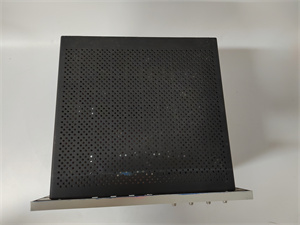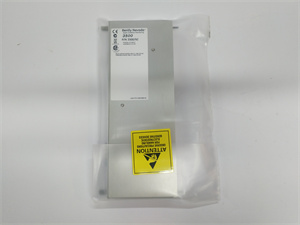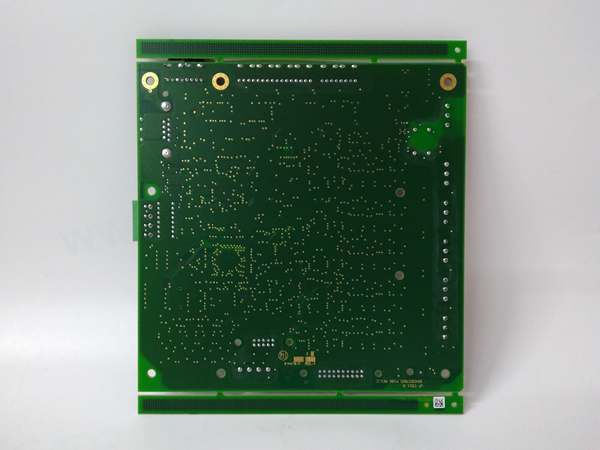
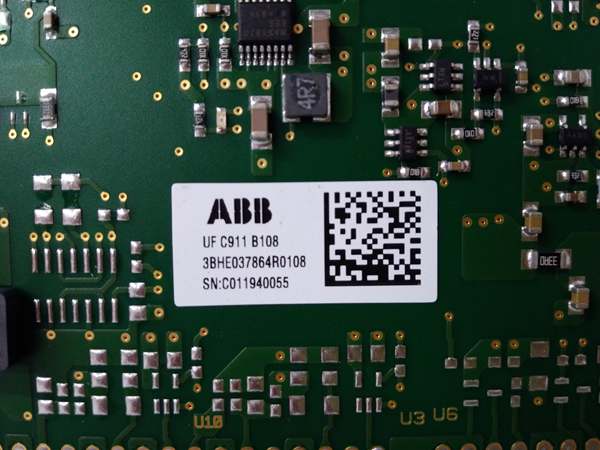
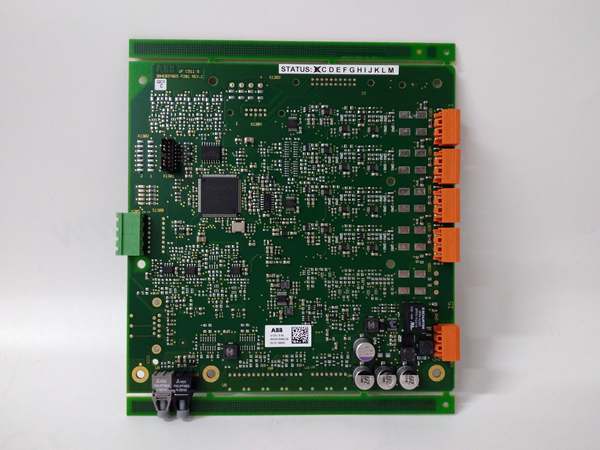
Description
Key Technical Specifications
- Model Number: 3BHE037864R0108 UFC911B108
- Manufacturer: ABB Process Automation
- Communication Interface: 2 x redundant I/O bus ports (ABB proprietary S800 bus protocol)
- Backplane Compatibility: ABB S800 I/O rack backplane (supports up to 12 I/O modules per rack)
- Data Transfer Rate: 10 Mbps (full-duplex, redundant bus sync)
- Isolation Rating: 500V AC (bus ports to rack backplane; module to CPU logic)
- Power Supply: 24VDC ±10% (from S800 rack power supply; 0.2A max current draw)
- Redundancy Support: 1:1 hot standby (dual bus ports for redundant communication paths)
- Operating Temperature: -20°C to +60°C (-4°F to +140°F)
- Storage Temperature: -40°C to +85°C (-40°F to +185°F)
- Mounting: Rack-mounted (fits S800 I/O rack slot 1; mandatory for rack operation)
- Status Indicators: Front-panel LEDs (power, bus A active, bus B active, fault, sync OK)
- Certifications: UL 508, CSA C22.2 No. 142, CE, ATEX Zone 2 compliant

ABB 3BHE037864R0108 UFC911B108
Field Application & Problem Solved
In refineries, chemical plants, and power stations running AC 800M DCS with S800 I/O racks, the biggest pain point is I/O rack communication failure— a single broken bus cable or faulty interface module can take an entire rack offline, leading to process upsets and unplanned downtime. Legacy single-port interface modules create a single point of failure; if the bus port or cable fails, the I/O rack is cut off from the CPU. The UFC911B108 solves this with dual redundant I/O bus ports: one primary, one standby, with automatic failover in less than 50ms. This eliminates communication-related single points of failure and ensures I/O data flows to the CPU even if one bus path is disrupted.
You’ll find this module in every S800 I/O rack— it’s the mandatory “gateway” between the rack’s I/O modules (AI, AO, DI, DO) and the AC 800M controller. It’s critical for remote I/O racks located in harsh field environments (e.g., near furnaces or pump skids) where cable damage is common. Its core value is redundant communication paired with hot-swappability: if the module fails, you can replace it without powering down the I/O rack, minimizing downtime. I’ve seen this module save a chemical plant from a $300k batch loss— a rodent chewed through the primary bus cable, and the module switched to the standby bus instantly, with no disruption to the reactor control loop.
Another hidden value is its backplane data aggregation. The UFC911B108 collects data from all I/O modules in the rack and sends it to the CPU in a single data packet, reducing bus traffic by 60% compared to individual module communication. This lowers CPU overhead and keeps control cycle times consistent, even with fully loaded I/O racks.
Installation & Maintenance Pitfalls (Expert Tips)
Redundant Bus Ports Require Separate Cable Paths: Rookies run both redundant bus cables through the same cable tray, defeating the purpose of redundancy. If the tray is damaged (e.g., by a forklift), both cables are cut. Route bus A and bus B through separate, physically isolated cable paths—ideally on opposite sides of the plant or rack. This is the only way to guarantee redundant communication in the event of cable damage. I’ve fixed two I/O rack outages caused by shared cable paths—this is the #1 mistake with this module.
Module Must Occupy Slot 1 of S800 I/O Rack: The UFC911B108 is hard-coded to work only in slot 1 of the S800 I/O rack. Rookies try to install it in other slots to free up space, resulting in “rack not recognized” faults. Slot 1 is reserved for the interface module because it controls backplane power distribution and bus communication—no exceptions. Always verify slot position before powering on the rack; this simple step prevents hours of troubleshooting.
Hot-Swap Requires Bus Sync Confirmation First: The module is hot-swappable, but you can’t yank it out mid-operation without checking the sync status. The “sync OK” LED must be lit (green) to confirm the standby bus is active and synced with the primary. If you swap the module while sync is not confirmed, the I/O rack will lose communication with the CPU for 2–3 seconds—long enough to trigger a process upset. Wait 10 seconds after the sync LED illuminates, then use the eject lever to remove the module.
Firmware Version Must Match CPU and I/O Modules: A firmware mismatch between the UFC911B108, AC 800M CPU, and S800 I/O modules causes “bus communication timeout” faults. Rookies install a replacement module with newer firmware and assume it’s compatible—this is a costly mistake. Always check the firmware revision of the failed module (via Control Builder or front-panel LED codes) and match it with the replacement. If a firmware update is required, update the CPU first, then the interface module, then the I/O modules—never update the interface module first, as this will break communication with the CPU.
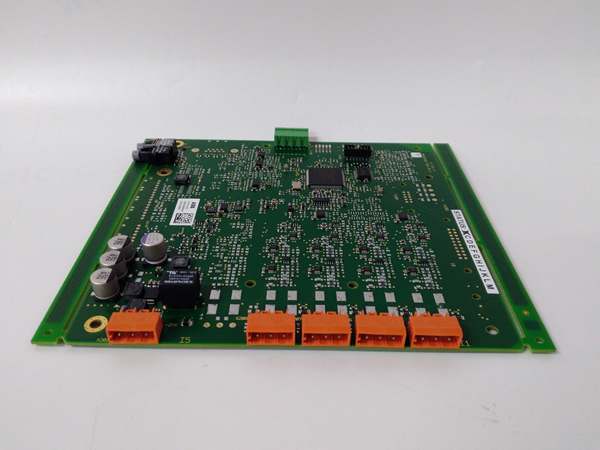
ABB 3BHE037864R0108 UFC911B108
Technical Deep Dive & Overview
The ABB 3BHE037864R0108 UFC911B108 is a redundant bus interface module that serves as the critical link between S800 I/O racks and AC 800M DCS controllers. At its core, it uses a dedicated communication processor that manages two redundant I/O bus paths (bus A and bus B). The processor continuously monitors the primary bus for link integrity—if it detects a cable break, port fault, or signal loss, it switches to the standby bus in less than 50ms. This switchover is transparent to the CPU and I/O modules; there’s no need to reconfigure or restart the rack.
The module aggregates data from up to 12 S800 I/O modules in the rack, packaging it into a single data frame for transmission to the CPU. This reduces bus traffic and lowers CPU scan time, a key advantage over legacy interface modules that send data per module. The 500V AC isolation between bus ports and backplane protects the CPU from field-side surges (e.g., lightning strikes or motor drive noise), ensuring communication stability in high-EMI environments.
Unlike generic bus couplers, the UFC911B108 is fully integrated with ABB’s Control Builder software—all configuration (bus speed, redundancy mode, firmware updates) is done via the DCS engineering environment. The front-panel LEDs provide real-time diagnostics without needing to connect a laptop: power (green), bus A active (green), bus B active (green), fault (red), and sync OK (green). For maintenance teams, this means faster fault diagnosis in remote field locations where HMI access is limited.
In the field, this module’s strength is its reliability and redundancy. It’s the unsung hero of S800 I/O racks—without it, the rack can’t communicate with the DCS. Install it correctly, match firmware versions, and separate redundant bus cables, and it will run for 10+ years without intervention.