Description
Key Technical Specifications
-
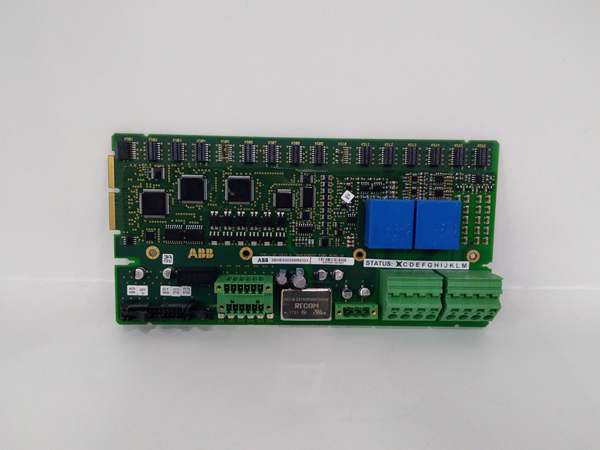
Model Number: 3BHE020356R0101 GFD212A
-
Manufacturer: ABB
-
Input Voltage: 100–240V AC (wide range), 50/60Hz; dual redundant inputs (A/B)
-
Output Voltage: 24V DC ±0.5% (regulated), adjustable 22–26V DC
-
Output Current: 10A continuous, 15A peak (10s max)
-
Efficiency: ≥88% at full load (24V DC/10A)
-
Operating Temperature: -10°C to +60°C (-14°F to +140°F)
-
Storage Temperature: -40°C to +85°C (-40°F to +185°F)
-
Isolation: 3kV AC (input to output), 2kV AC (output to ground)
-
Protection Features: Overload (auto-reset), short-circuit, over-voltage, reverse polarity
-
Dimensions (W x H x D): 120mm x 180mm x 85mm
-
Weight: Approx. 1.2kg
-
Compliance: IEC 61010-1, IEC 61000-4 (EMC), UL 508, CE

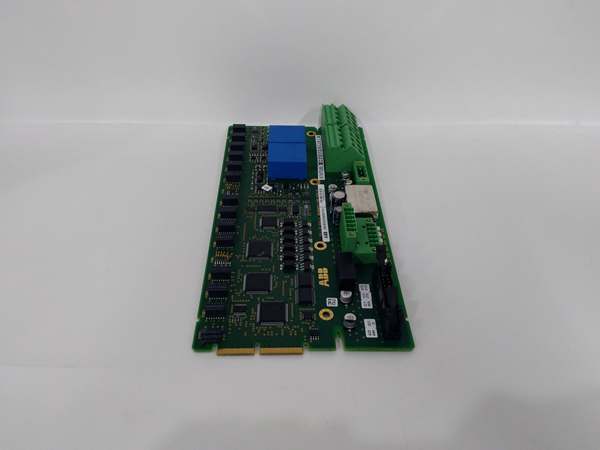
ABB GFD212A 3BHE020356R0101
Field Application & Problem Solved
In critical DCS environments—refineries, nuclear power plants, and chemical processing facilities—the single biggest risk is unplanned power loss to control systems. I saw a 2022 refinery shutdown that cost $2M/hour trace back to a non-redundant power supply: a surge fried the unit, and the backup never kicked in because it was wired to the same input. Legacy power supplies also fail from heat buildup in cramped control cabinets or corrosion in coastal refineries, leading to erratic voltage that crashes I/O modules. The GFD212A solves these issues with dual redundant inputs, rugged thermal design, and tight voltage regulation—eliminating the “single point of failure” that plagues older power systems.
You’ll find this module in three non-negotiable spots: Power plant turbine control cabinets, where it feeds 24V DC to AC 800M controllers and emergency shutdown logic. Refinery distillation units, powering valve positioners and pressure transmitter loops that can’t drop out during crude oil grade changes. Chemical plant reactor control racks, where its corrosion-resistant housing stands up to caustic vapor. It’s also the go-to for retrofits—swap out a 10-year-old power supply with this, and you add redundancy without rewiring the entire cabinet.
Its core value is “fail-safe reliability.” The dual inputs let you wire to separate UPS feeds—if one goes down, the module switches to the other in <1ms, no blip to the DCS. The 88% efficiency means less heat, so it doesn’t cook adjacent modules in tight cabinets. For maintenance teams, the auto-reset overload protection cuts down on midnight calls—no more manually resetting tripped breakers for a temporary load spike. In one coastal power plant, replacing 8 legacy supplies with GFD212A reduced power-related DCS faults by 92% in the first year.
Installation & Maintenance Pitfalls (Expert Tips)
Redundant Input Wiring: Never Share Feeds
Rookies wire both input terminals to the same power rail—defeating the whole point of redundancy. I once found a GFD212A where both inputs were tied to the same UPS; a UPS battery failure still took down the DCS. Always connect Input A to UPS 1 and Input B to UPS 2 (or utility power + UPS). Use color-coded wire (red for A, blue for B) and label the terminals. Test by pulling one input at a time during commissioning—if the module drops out, your wiring’s wrong.
Heat Dissipation: Don’t Block the Vents
This module vents heat through the top and sides, but techs often stack terminal blocks or zip-tie cables over the vents. In a Texas refinery, this cooked a GFD212A in 6 months—voltage drifted to 26.5V and fried two I/O modules. Leave 50mm of clear space above and 20mm on each side. If the cabinet runs hot (over 45°C), add a small fan pointed at the module’s vents. Check the case temperature with an infrared gun during PMs—if it’s over 70°C, you’ve got a ventilation problem.
Output Load Balancing: Don’t Daisy-Chain High-Draw Devices
Each output terminal is rated for 10A total, but rookies plug 3 high-current solenoid valves (2A each) into one terminal block. This causes voltage drop at the farthest valve and trips the overload. Spread high-draw devices across multiple output terminals. Calculate total load: 24V DC devices list current draw—add them up and never exceed 8A (20% safety margin). Use a clamp meter to check terminal current during peak operation—if it’s over 10A, split the load.
Calibration: Verify Voltage Regulation Quarterly
Technicians assume “set it and forget it” works for power supplies, but capacitor degradation can cause voltage drift. The GFD212A’s ±0.5% regulation is critical—drift to 25V can damage 24V sensors. Every 3 months, use a precision multimeter to check output voltage at the terminals (not just the front panel). If it’s above 24.5V or below 23.5V, adjust the trim pot on the front. Do this under full load—voltage can look fine at no load but drift when powering I/O.
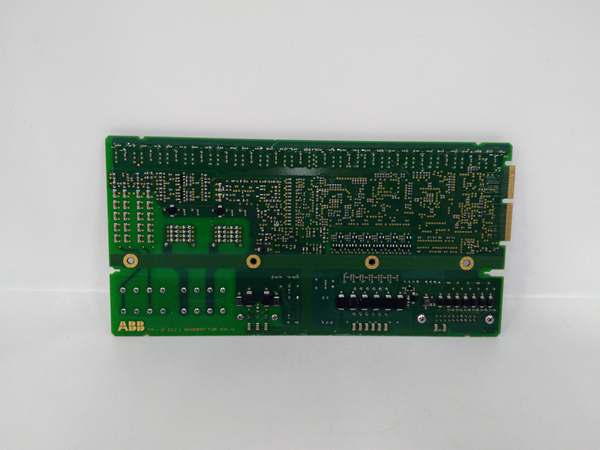
ABB GFD212A 3BHE020356R0101
Technical Deep Dive & Overview
The GFD212A is a switching power supply that converts AC line voltage to regulated 24V DC for industrial control systems. At its core, a PWM (pulse-width modulation) controller adjusts the output voltage by varying the duty cycle of a high-frequency switching transistor—this is why it’s more efficient than old linear supplies (which waste power as heat). The dual input design uses a diode OR-ing circuit to switch between Input A and B seamlessly; if one input fails, the diode blocks reverse current, and the other input takes over instantly.
What makes it industrial-grade is the ruggedization: The circuit board is coated with conformal epoxy to resist dust and moisture, while the aluminum case acts as a heat sink. The overload protection uses a current-sensing resistor that triggers the PWM controller to reduce output if current exceeds 10A—no fuses to replace, just auto-reset when the fault clears. The tight voltage regulation comes from a feedback loop that compares the output voltage to a reference, adjusting the PWM signal to correct drift.
Integration with ABB systems is plug-and-play—its DIN rail mount fits standard AC 800M cabinets, and the output terminals match ABB’s I/O module wiring harnesses. The front-panel LEDs (Power A, Power B, Output OK, Fault) let you diagnose issues at a glance: Flashing Fault means overload; solid Power A + off Power B means Input B failure. Unlike consumer power supplies, it’s designed to run 24/7 for 10+ years—capacitors are rated for 10,000 hours at 85°C, double the lifespan of commercial-grade parts.