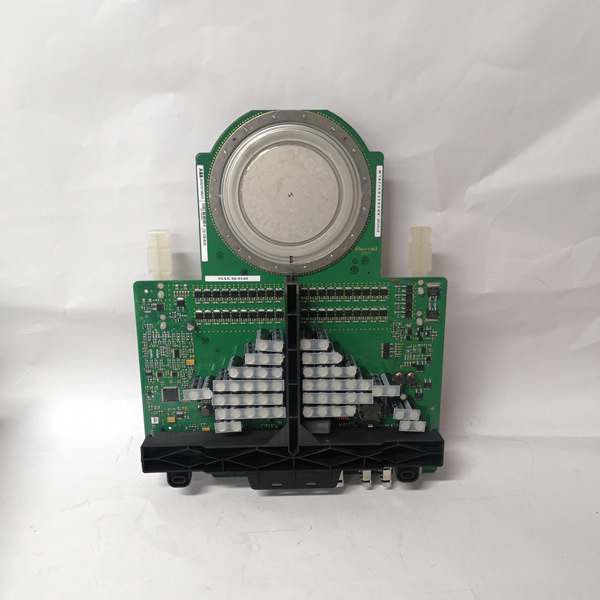
Description
Key Technical Specifications
-
Model Number: 3BHE019719R0101
-
Manufacturer: ABB Process Automation
-
Channel Configuration: 8 differential channels (configurable per channel), no channel-to-channel crosstalk
-
Input Signal Types: 4-20mA DC (2-wire/4-wire), 0-10V DC, thermocouple (J/K/T/E type, optional)
-
Measurement Accuracy: ±0.05% of full scale (4-20mA range), ±0.1% (0-10V range)
-
Resolution: 16-bit (65536 discrete values)
-
Auxiliary Power: 24VDC ±10% (from S800 I/O rack), 0.2A typical current draw
-
Operating Temperature: -25°C to +60°C (-13°F to +140°F)
-
Isolation Rating: 2kV AC (channel to backplane), 500V AC (channel to channel)
-
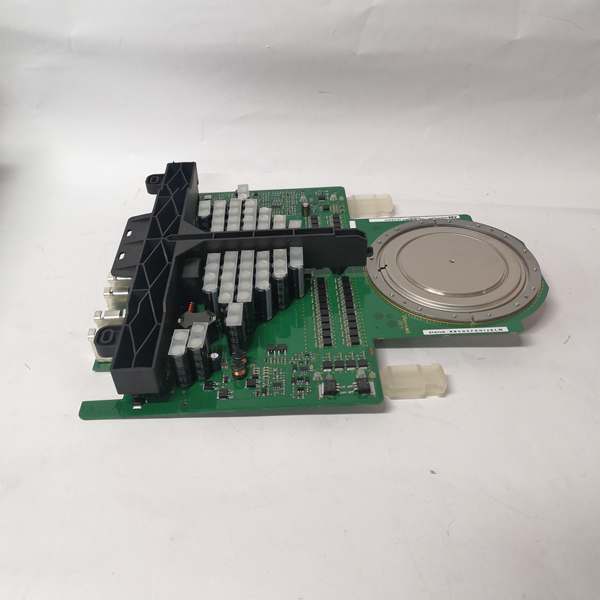
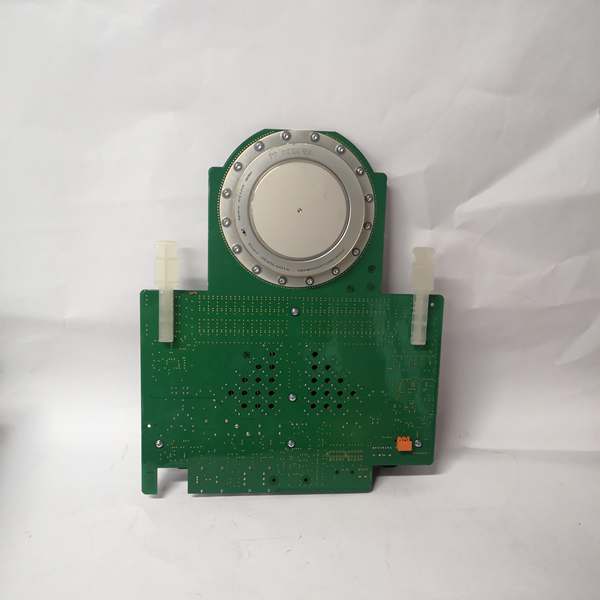
Physical Design: Rack-mount (S800 I/O rack compatible), 100mm×160mm×25mm (W×H×D), IP20 protection
-
Special Functions: Signal linearization, cold-junction compensation (for thermocouples), fault self-diagnosis
-
Certifications: IEC 61131-2, CE, UL 508, ATEX Zone 2

ABB 3BHE019719R0101
Field Application & Problem Solved
In industrial process control—such as chemical reactor temperature monitoring or water treatment plant flow control—the most critical risk is inaccurate or unstable analog signal acquisition. Legacy AI modules often suffer from signal drift or crosstalk between channels, leading to wrong DCS commands. I witnessed a petrochemical plant in Jiangsu where a legacy module’s 0.5% measurement error caused a reactor temperature overshoot by 15°C, resulting in a $300k batch scrapping. Another water treatment plant in Hebei had frequent false “low flow” alarms due to channel crosstalk, forcing unnecessary pump startups that wasted 15% of energy.
The 3BHE019719R0101 is installed in S800 I/O racks of ABB Symphony Plus DCS, acting as the “data gateway” between field sensors and control systems. It collects signals from pressure transmitters (e.g., reactor pressure), flow meters, and temperature sensors, converting analog signals to digital data for the DCS. Its core value is high-precision isolation: 16-bit resolution and ±0.05% accuracy ensure stable data acquisition, while 2kV galvanic isolation blocks electromagnetic interference (EMI) from nearby high-voltage cables. At a Shandong thermal power plant, retrofitting with this module reduced steam pressure measurement error from 0.8% to 0.1%, cutting boiler efficiency losses by 2%.
Another key advantage is its hot-swappable design. In 24/7 continuous processes like oil refining, shutting down the I/O rack to replace a faulty AI module costs $5k+ per hour. This module can be replaced during operation—just unlock the front latch and pull it out, with the DCS automatically switching to redundant signals if configured. A Zhejiang chemical plant swapped a faulty module in 90 seconds during a production run, avoiding a 4-hour shutdown. Its per-channel configuration also saves cost: one module can handle 4-20mA pressure signals and 0-10V level signals simultaneously, eliminating the need for multiple specialized modules.
Installation & Maintenance Pitfalls (Expert Tips)
Sensor Wiring Polarity & Load Matching
Rookies reverse the polarity of 4-20mA sensors or use 2-wire sensors with insufficient loop power. For 2-wire transmitters, the module provides 24VDC excitation—reverse wiring cuts power to the sensor, showing “0mA” in the DCS. For 4-wire sensors, ensure the power supply and signal lines are separated to avoid EMI. Also, check the module’s load capacity (max 500Ω per channel)—daisy-chaining too many devices causes signal attenuation. I fixed a Henan brewery’s “fluctuating level” issue by correcting reversed sensor wiring and removing an extra 300Ω resistor from the loop.
Shield Grounding Prevents EMI Interference
Technicians often ground sensor cable shields at both ends, creating ground loops that cause 50Hz noise in signals. The correct method is to ground the shield only at the module end (terminal marked “GND”) and leave the sensor end floating. For long cables (over 100m), use twisted-pair shielded cable with 90% braid coverage. A Hubei wastewater plant had 0.5mA signal fluctuations until we re-grounded the shields—post-fix, the signal stability improved by 90%.
Calibration Interval & Zero Adjustment
Assuming “high-precision = no calibration” leads to signal drift over time. Calibrate the module every 6 months using a precision signal generator (±0.01% accuracy). For 4-20mA channels, inject 4mA (zero point) and 20mA (full scale) and verify DCS readings. Use ABB Control Builder M software to adjust zero if needed—never tweak the sensor itself. A Jiangsu chemical plant ignored calibration for 18 months, leading to a 0.3% drift in pH sensor readings that disrupted the reaction process; calibration fixed the issue in 30 minutes.
Rack Power Supply Redundancy
The module relies on the S800 rack’s power supply—using a single supply risks total signal loss if it fails. Configure dual redundant 24VDC supplies (A/B) for the rack, with automatic switchover time <1ms. Label the supplies clearly and test redundancy monthly by disconnecting one supply. A Shandong power plant had a 2-hour outage because the single rack supply failed; after adding redundancy, they’ve had zero power-related signal losses in 2 years.
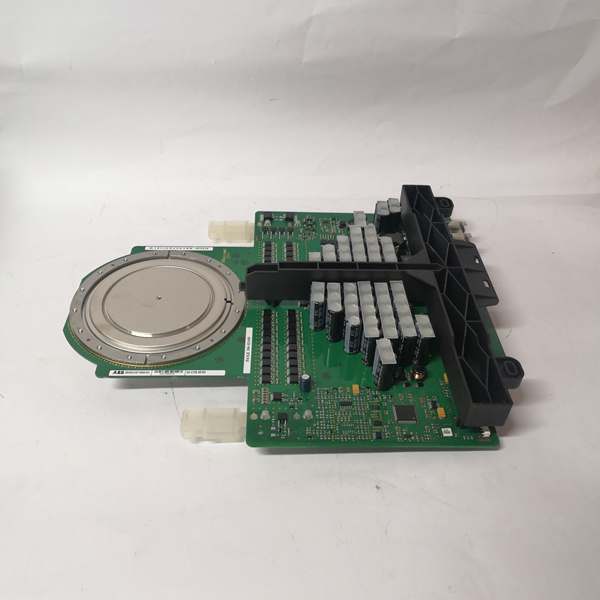
ABB 3BHE019719R0101
Technical Deep Dive & Overview
The 3BHE019719R0101 is a high-precision analog input module for ABB’s S800 I/O series, designed to bridge field sensors and the Symphony Plus DCS. At its core, a 32-bit microcontroller processes signals from 8 differential channels, each equipped with an independent 16-bit ADC (analog-to-digital converter) to avoid crosstalk. Unlike shared ADC modules, this per-channel design ensures that a faulty sensor on one channel won’t affect others—a critical feature for safety-critical processes.
For 4-20mA signals, the module uses a precision current-to-voltage converter with low offset drift (<1μV/°C), ensuring stable readings across temperature changes. For thermocouple inputs, built-in cold-junction compensation (using a precision thermistor) eliminates ambient temperature errors—this is far more reliable than external compensation resistors. The module communicates with the DCS via the S800 rack’s backplane bus, with data update rate up to 100ms per channel.
Its conformal-coated PCB resists dust, oil, and moisture in industrial environments, while the -25°C to +60°C operating range suits both northern cold storage and southern chemical plants. The hot-swappable mechanism uses spring-loaded connectors that maintain contact during replacement, avoiding signal interruption. With a 10+ year design life and low failure rate (<0.1% per year), it’s the preferred AI module for ABB DCS-based process control systems.