Description
Key Technical Specifications
-
Model Number: 3BDH000030R1
-
Manufacturer: ABB
-
Protocol Support: CAN 2.0B (ISO 11898)
-
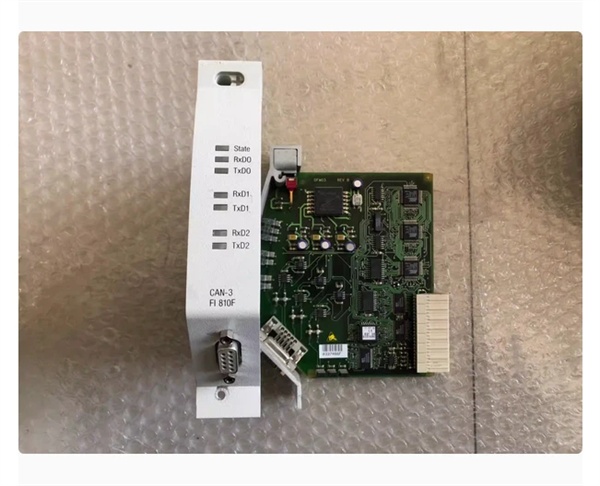
Ports: 3 × isolated CAN channels, DB-9 male
-
Data Rate: 9.6 k – 1 Mbps (software selectable)
-
Isolation: 2 kV port-to-system
-
Cable Length: ≤1 km @ 125 kbit/s (typ.)
-
Operating Temperature: −40 °C to +70 °C
-
Supply Voltage: 24 VDC (18–30 V)
-
Current Draw: <120 mA @ 24 V (no load)
-
Dimensions: 125 × 155 × 28 mm (DIN-rail)
-
Weight: 0.145 kg
-
RoHS: Compliant

Field Application & Problem Solved
In the field, the biggest pain-point is getting legacy CAN devices (drives, I/O, encoders) onto an ABB AC800F rack without adding another gateway. 3BDH000030R1 drops straight into the 800xA I/O rail and gives you three isolated CAN buses—no external converter, no extra 24 V brick. You’ll typically find this card hanging off the side of turbine skids, extruder lines, or any OEM package that still runs CANopen servos. Its main value is off-loading the bus from the CPU: each channel has its own 1 Mbps transceiver, so you can keep fast drives on one bus and slow I/O on another without timing collisions.
In the field, the biggest pain-point is getting legacy CAN devices (drives, I/O, encoders) onto an ABB AC800F rack without adding another gateway. 3BDH000030R1 drops straight into the 800xA I/O rail and gives you three isolated CAN buses—no external converter, no extra 24 V brick. You’ll typically find this card hanging off the side of turbine skids, extruder lines, or any OEM package that still runs CANopen servos. Its main value is off-loading the bus from the CPU: each channel has its own 1 Mbps transceiver, so you can keep fast drives on one bus and slow I/O on another without timing collisions.
Installation & Maintenance Pitfalls (Expert Tips)
Termination is not optional – Each CAN bus needs 120 Ω at both ends. Miss one and you’ll see “Bus-Off” alarms every time a VFD starts. Keep a bag of through-hole 120 Ω resistors in the tool box.
Ground-loop paranoia – Card is 2 kV isolated, but if you tie CAN shield to earth at both ends you’ll inject noise. Pick one end only—usually the panel star-point.
Baud-rate sanity check – 1 Mbps sounds nice, but at 1 km cable length you’ll need 125 kbit/s max. Use ABB’s online calculator—don’t guess.
DB-9 pin-out trap – Pin 2 is CAN-L, Pin 7 is CAN-H on ABB DB-9. Some vendors swap them—always meter the cable before you plug in.

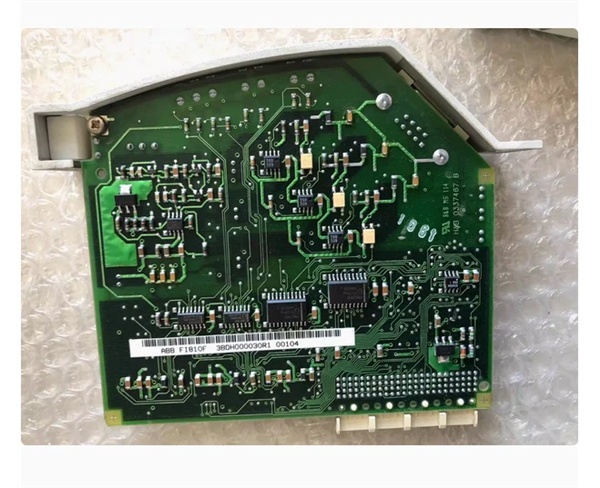
ABB 3BDH000030R1
Technical Deep Dive & Overview
3BDH000030R1 is a slave I/O module—no CPU onboard. It plugs into the AC800F rack and appears as three independent CAN interfaces in Control Builder M. Inside: triple CAN transceivers, galvanic isolation, and a small FPGA handling the backplane handshake. The FPGA also buffers 256 bytes per channel, so the CPU sees smooth data even if the bus stutters. No user firmware—set baud, node ID, and termination in the HW tree and you’re live. Lose 24 V and the whole card goes dark, so tie it to the same UPS feeding the CPU.
3BDH000030R1 is a slave I/O module—no CPU onboard. It plugs into the AC800F rack and appears as three independent CAN interfaces in Control Builder M. Inside: triple CAN transceivers, galvanic isolation, and a small FPGA handling the backplane handshake. The FPGA also buffers 256 bytes per channel, so the CPU sees smooth data even if the bus stutters. No user firmware—set baud, node ID, and termination in the HW tree and you’re live. Lose 24 V and the whole card goes dark, so tie it to the same UPS feeding the CPU.