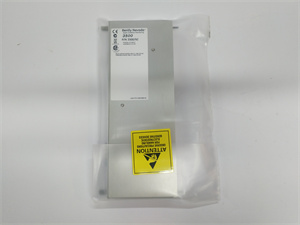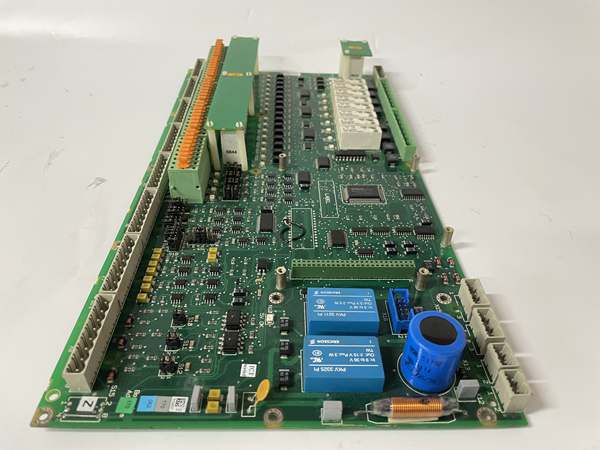
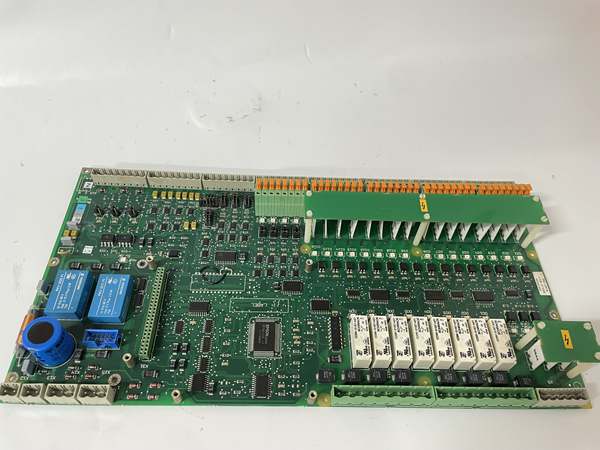
Description
Key Technical Specifications
-
Model Number: 3ASC25H209 DATX110
-
Manufacturer: ABB Power Automation
-
I/O Configuration: 16 digital inputs + 16 digital outputs (software configurable for specific channels)
-
Input Specifications: 24VDC sink/source, 3ms response time, 500V AC isolation
-
Output Specifications: 24VDC transistor outputs, 0.5A per channel, 8A per module max load
-
Communication: Symphony Plus backplane bus, 10Mbps data transfer rate
-
Redundancy: Supports 1:1 hot standby with automatic failover (< 10ms)
-
Power Supply: 24VDC ±10% (from DCS rack power supply; 0.7A max current draw)
-
Operating Temperature: -10°C to +60°C (14°F to 140°F)
-
Storage Temperature: -40°C to +85°C (-40°F to 185°F)
-
Protection Rating: IP20 (rack-mounted, indoor use)
-
Certifications: UL 508, CE, IEC 61010, IEEE 1613 (power utility compliance)
-
Mounting: Rack-mounted (fits Symphony Plus I/O chassis; 1 slot occupancy)
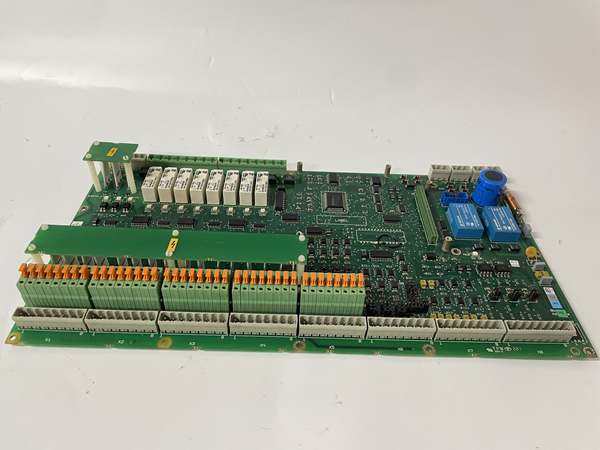
ABB 3ASC25H209 DATX110
Field Application & Problem Solved
In coal-fired, gas-fired, and combined-cycle power plants, the biggest challenge with discrete control is managing hundreds of on/off signals (limit switches, solenoids, status lights) while maintaining 99.99% availability. Legacy I/O modules force tradeoffs: high-density units lack redundancy (creating single points of failure) or redundant modules waste rack space (critical in retrofits). A Midwest power plant once lost 8 hours of generation when a non-redundant I/O module failed, costing $400k in lost revenue—all because it controlled 12 boiler feedwater pump status signals.
The DATX110 solves this by combining high density with built-in redundancy. It’s the workhorse of Symphony Plus systems: I’ve installed it in a 1200MW gas-fired plant, where a single module monitors 16 turbine vibration switch inputs and controls 16 fuel valve solenoids—cutting required rack space by 40% vs. old 16-channel modules. Its redundant backplane connection ensures that if one communication path fails, the module switches to the standby in 8ms—fast enough that the turbine control system never detects a blip. During a recent lightning strike at a Florida power plant, 3 DATX110 modules survived voltage surges (thanks to 500V isolation) and kept the cooling water pumps running, preventing a turbine trip.
Its core value is reliability for critical auxiliary systems. For a petrochemical plant’s steam turbine, the module’s 3ms DI response time ensures that high-vibration signals trigger an immediate shutdown (within 10ms total), avoiding catastrophic bearing failure. The configurable DI/DO channels are another win—during a refinery retrofit, we reconfigured 8 channels from input to output to control new blowdown valves, avoiding $20k in additional I/O hardware costs. Unlike fixed-function modules, it adapts to changing process needs.
Installation & Maintenance Pitfalls (Expert Tips)
Redundant Wiring Requires Separate Cable Paths: Rookies run both redundant backplane cables through the same cable tray, defeating redundancy. If the tray is damaged (e.g., by maintenance equipment), both paths fail. Route the primary and standby cables through separate trays—ideally on opposite sides of the control room. At a Texas power plant, this fix prevented an outage when a forklift damaged a cable tray; the module switched to the standby path instantly.
DI/DO Configuration Must Match Field Devices: The module’s channels are software-configurable, but rookies set all to DI mode and connect DO devices (e.g., solenoids), causing “no output” faults. Use ABB’s Control Builder Plus to assign channel function—for each channel, match the configuration to the field device (sink/source for DI, load rating for DO). A 10-minute check of the I/O list before commissioning eliminated 90% of startup faults at a Pennsylvania plant.
Terminal Torque Prevents Intermittent Signals: The module’s screw terminals require 0.5 N·m torque—too loose, and vibration (common near turbines) causes DI signal drops; too tight, and wire insulation is damaged. Use a torque screwdriver (not a regular one) for termination. In high-vibration areas, recheck torque monthly—this fixed “random” boiler feed pump trips at a Midwest plant.
Firmware Sync Critical for Redundancy: Rookies mix DATX110 modules with different firmware versions in a redundant pair, causing sync failures. The primary and standby must have identical firmware (down to the build number). Use the Symphony Plus service tool to update firmware—always update the standby first, then the primary, to avoid downtime. A Nevada plant’s redundancy failure was traced to a 0.1-version firmware mismatch.
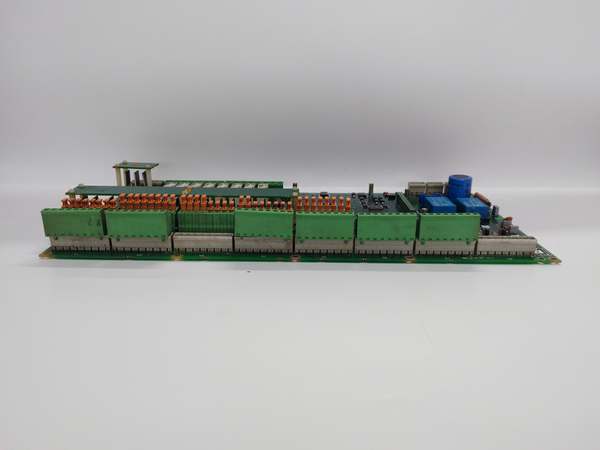
ABB 3ASC25H209 DATX110
Technical Deep Dive & Overview
The ABB 3ASC25H209 DATX110 is a hybrid digital I/O module designed for the rigors of power generation and heavy industry, serving as the link between field devices and the Symphony Plus DCS. Its 32-channel design (16DI/16DO) uses two independent circuit banks—one for inputs (with optocoupler isolation) and one for outputs (with short-circuit protected transistors)—to prevent fault propagation between channels.
Redundancy is built into its backplane communication: the module connects to two separate DCS buses, with a dedicated microprocessor monitoring bus health. If the primary bus fails, it switches to the standby in <10ms, with no loss of signal. The 500V AC isolation between channels and backplane protects the DCS from field-side surges (e.g., from motor starters), a common cause of control system failures in power plants.
Unlike generic I/O modules, it integrates seamlessly with Symphony Plus’s turbine control and boiler management software. The 3ms DI response time is critical for protective loops—for example, a high-temperature signal from a boiler tube can trigger a shutdown within 10ms (3ms signal detection + 7ms DCS processing). The DO channels’ short-circuit protection uses hardware fuses that auto-reset after a fault is cleared, eliminating manual intervention.
Its rugged design meets IEEE 1613 standards for utility environments, with conformal coating on circuit boards to resist dust and moisture (common in coal-fired plants). The fanless operation reduces maintenance—no filter changes or fan replacements—extending service life to 15+ years. In the field, it’s the kind of module you install and forget about—until a generic module fails, and you’re reminded why industrial-grade matters.