Description
Product Core Brief
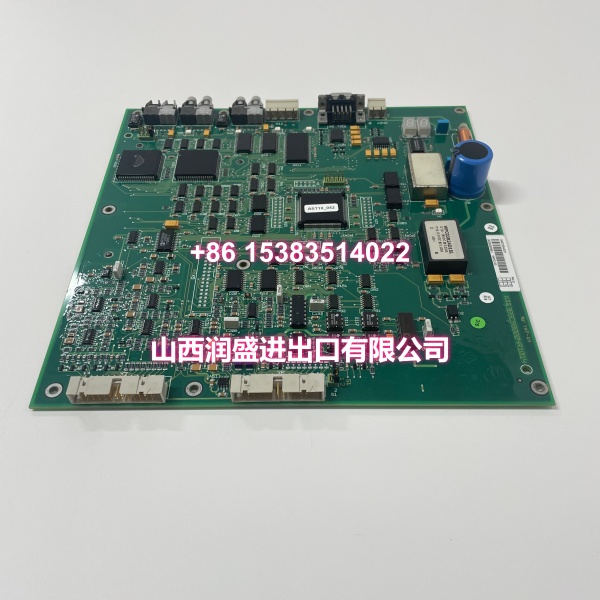
- Model: 3ASC25H203 DAPC100
- Brand: ABB
- Series: DAPC100 Series
- Core Function: High-performance control module for industrial automation systems and robotics.
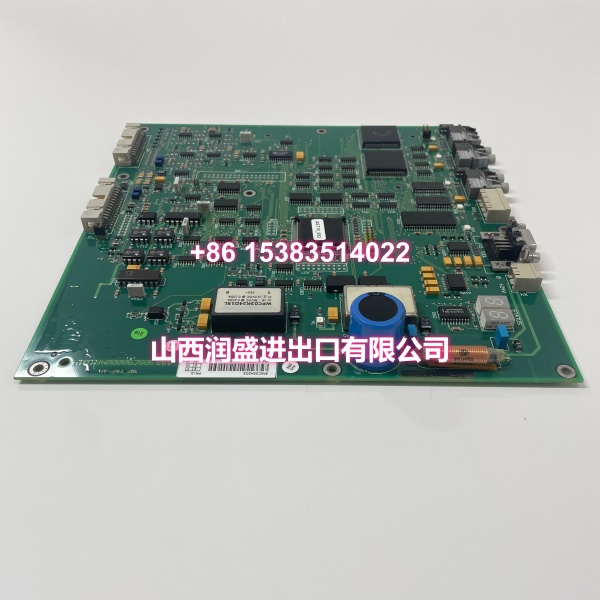
- Product Type: DAPC100 System Control Board
- Key Specs: 16-bit A/D conversion | 2 analog input channels (0-10V, 4-20mA, 0-20mA, 1-5V) | Industrial-grade reliability
- Condition: New Surplus
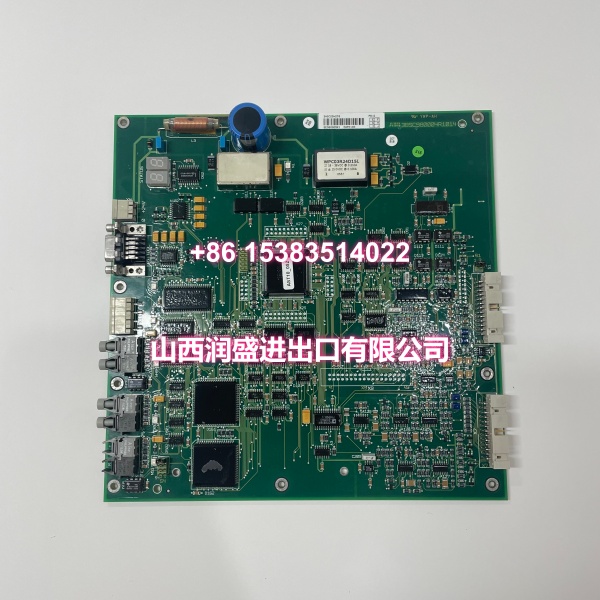
Key Technical Specifications
- Model Number: 3ASC25H203
- Product Type: DAPC100 System Control Board
- Brand: ABB
- Origin: Switzerland/Sweden
- Analog Input Channels: 2
- Supported Input Signals: 0-10V, 4-20mA, 0-20mA, 1-5V
- A/D Conversion: 16-bit precision
- Operating Voltage: AC 220V
- Power Rating: 200W
- Frequency: 50/60Hz
- Operating Temperature: -10°C to 50°C
- Storage Temperature: -20°C to 70°C
- Dimensions: 200mm x 150mm x 50mm
- Weight: 1.5kg
- Housing Material: Aluminum alloy
- Compliance: CE, RoHS
Product Introduction (No Fluff)
The ABB 3ASC25H203 DAPC100 is a high-performance control module designed for industrial automation systems and robotics. Built for demanding environments, this system control board delivers precise signal processing and reliable operation across manufacturing, logistics, and process control applications.
What sets this unit apart is its 16-bit A/D conversion across dual analog input channels, supporting multiple signal types (0-10V, 4-20mA, 0-20mA, 1-5V) without requiring additional signal conditioning hardware. The aluminum alloy housing provides superior heat dissipation and EMI shielding, which matters when you’re running continuous cycles in a noisy electrical cabinet.
QA & Testing SOP (Dynamic & Transparent)
Every unit goes through a structured verification process before it ships:
- Visual & Anti-Counterfeit Inspection: We check PCB trace integrity, solder joint quality, component markings, and serial number authenticity against ABB’s known production ranges. Counterfeit boards often have subtle silkscreen or component placement errors.
- Cold-Boot Test: The module is powered on in a controlled test rack to verify POST (power-on self-test) completion and firmware initialization. We log boot time and check for error codes.
- Analog Signal Injection Test: Using a calibrated Fluke signal generator, we inject known 4-20mA and 0-10V signals into each analog input channel and verify the 16-bit A/D conversion accuracy against expected digital values.
- Load & Thermal Test: The board runs under load for a minimum of 4 hours while we monitor voltage rails with a multimeter and check for thermal anomalies on critical components.
- Anti-Static Packaging: After passing all tests, the unit is sealed in ESD-safe packaging with desiccant to prevent moisture damage during transit.
Installation Pitfalls & Guide (Engineer to Engineer)
Replacing a control board like this isn’t plug-and-play if you want to avoid costly mistakes. Here are the real-world pitfalls:
❗ Grounding Loops: The DAPC100 is sensitive to ground potential differences. If your cabinet ground and field ground aren’t at the same potential, you’ll get noise on those analog channels that looks like a faulty module. Always verify ground continuity before powering up.
❗ Backplane Pin Damage: When removing the old board, pull straight out. Angled extraction bends the backplane pins, and bent pins on the rack side are a nightmare to fix. If a pin is already bent, do not force the new board in.
❗ ESD Damage: These boards are shipped in anti-static bags for a reason. Touching the PCB traces or connectors without proper grounding can destroy sensitive ICs. Wear an ESD wrist strap.
❗ Firmware/Configuration Mismatch: If you’re replacing a failed unit, the new board won’t have the same firmware version or configuration as the original. You’ll need to download the correct firmware and restore the application configuration from your backup.
4-Step Replacement Guide:
- Pre-Install: Power down the rack, verify LOTO, and confirm the replacement board’s firmware version matches your system requirements.
- Removal: Disconnect all field wiring, release the board latches, and pull straight out evenly.
- Install: Align the new board with the backplane guides, push firmly and evenly until fully seated, then reconnect field wiring.
- Power-On Test: Restore power, verify POST completion, download firmware if needed, and run a functional test with known input signals.
Technical FAQ
Is this compatible as a direct replacement for my existing 3ASC25H203? Yes. The 3ASC25H203 DAPC100 is an OEM-compatible replacement. However, verify your firmware version and application configuration before swapping. The hardware is identical, but mismatched firmware can cause communication errors with the rest of your system.
What’s the warranty on surplus stock? We provide a 12-month warranty on all units. Since this is new surplus (not used or refurbished), you’re getting a board that was never commissioned in the field. The warranty covers manufacturing defects and DOA failures.
Can I use this in a hazardous area? This module carries CE and RoHS compliance but is not rated for hazardous (Ex-rated) environments. If your application requires ATEX or IECEx certification, you’ll need a specifically rated variant.
Why are there different suffixes like 3ASC25H203-57? The base model 3ASC25H203 is the standard DAPC100 control board. Suffixes like “-57” typically indicate firmware revisions, regional variants, or customer-specific configurations. For most replacements, the base model is functionally equivalent, but confirm with your system documentation if a specific suffix is required.
How long does shipping take? Standard lead time is 1-2 working days for processing, plus transit time via DHL, UPS, FedEx, or TNT depending on your location. We ship globally and can accommodate expedited requests.