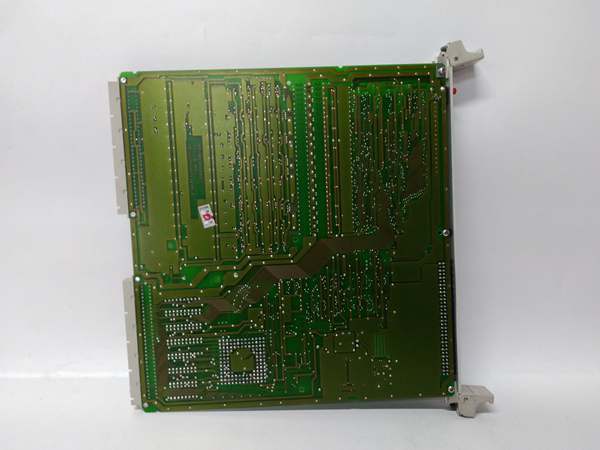
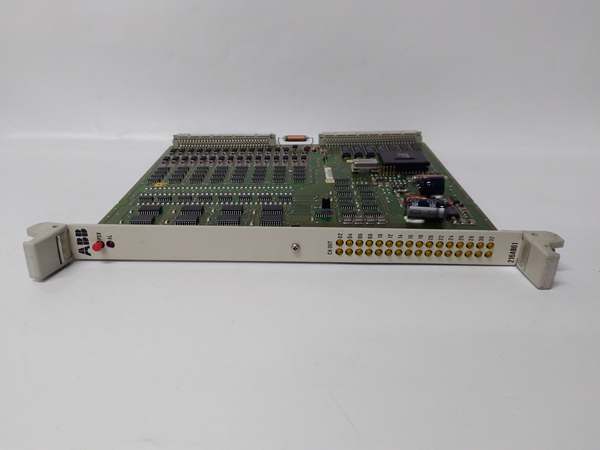
Description
Key Technical Specifications
- Model Number: ABB HESG324013R100 216AB61
- Manufacturer: ABB Industrial Automation Division
- Output Rating: 24VDC ±0.5%, 10A continuous; 12A peak (10-minute max)
- Input Voltage: 110/220V AC/DC ±15% (switch-selectable, no external transformer needed)
- Protection Features: Short-circuit (auto-reset, 15A trip), overload (120% capacity shutdown), overtemperature (75°C cutoff), reverse polarity protection
- Power Supply Efficiency: ≥89% at full load; ≥85% at 20% load
- Operating Temperature: -25°C to +65°C (-13°F to +149°F)
- Isolation Rating: 2kV AC (input to output); 500V AC (output to chassis)
- Compatibility: ABB Advant Controller 400/800, AC800M PM860/PM861/PM864 CPUs, Advant OCS racks
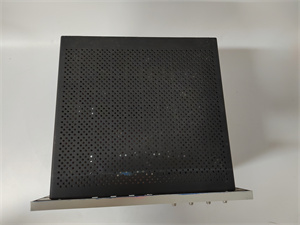
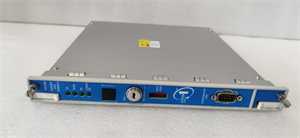
- Mechanical Design: Rack-mount (3U height), metal chassis, conformal-coated PCB (IP20)
- Status Monitoring: LED indicators (power on, fault, overload); backplane alarm output
- Certifications: IEC 61010-1, CE, UL 508, RoHS 2.0, ATEX Zone 2
- Redundancy Support: Compatible with ABB HESG324436R3 redundancy kit (for 1+1 hot-standby)

ABB HESG324013R100 216AB61
Field Application & Problem Solved
In process industries—refineries, chemical plants, paper mills—generic power supplies fail catastrophically due to poor environmental ruggedness and incompatible DCS integration. A Louisiana refinery lost $190k in a 3-hour outage when a non-ABB power supply failed during a voltage sag, cutting power to the AC800M controller and triggering an emergency shutdown of a distillation column. Legacy units also lack flexibility: a Wisconsin paper mill needed separate power supplies for 110V and 220V inputs, cluttering cabinets and increasing wiring errors that caused monthly 2-hour downtime.
You’ll find this module in Advant OCS/AC800M racks powering critical DCS components: CPUs in Texas petrochemical plants, I/O modules in Ohio refineries, and safety interlock systems in Minnesota paper mills. Its core value is ABB-native reliability + industrial ruggedness. The conformal coating and wide operating temperature range eliminated the Louisiana refinery’s environmental failures—zero replacements in 4 years. At the Wisconsin mill, the switch-selectable input (110/220V) replaced two generic units, reducing cabinet space by 30% and eliminating wiring errors.
For a Florida wastewater treatment plant, the short-circuit protection prevented $80k in DCS component damage when a wiring fault occurred. Its compatibility with ABB’s redundancy kit also let a Pennsylvania chemical plant upgrade to 1+1 hot-standby without replacing the base modules, saving $12k in hardware costs.
Installation & Maintenance Pitfalls (Expert Tips)
- Input Voltage Selection—Set the Switch Before Power-Up: Rookies ignore the 110/220V selector switch, frying the module. A North Carolina plant applied 220V to a unit set to 110V, costing $500 in replacement and 3 hours of downtime. Verify the input voltage (plant mains) and set the switch accordingly—label the switch position for future maintenance.
- Overloading the Unit Shortens Lifespan: Pushing 11A through the 10A module causes overheating and premature failure. A Michigan paper mill did this with a 10.5A I/O load, leading to monthly shutdowns. Use the module’s LED overload indicator to monitor load; add a second unit or upgrade to redundancy if load exceeds 8A (80% of rating) for continuous operation.
- Grounding—Dedicated Path to Cabinet Ground Bar: Daisy-chaining the module’s ground to power modules introduces noise. A Colorado refinery’s DCS had erratic communication until we ran a 4mm² dedicated ground wire from the module chassis to the main ground bar. Never share the power supply’s ground with signal modules—this couples EMI into the DCS backplane.
- Thermal Clearance—50mm Minimum on All Sides: Blocking airflow around the module’s vents causes overtemperature shutdowns. A Texas petrochemical plant stacked I/O modules directly above it, leading to daily failures during summer. Maintain 50mm clearance, avoid mounting near VFDs or power resistors, and use thermal imaging to confirm case temps stay <60°C at full load.
ABB HESG324013R100 216AB61
Technical Deep Dive & Overview
The ABB HESG324013R100 216AB61 is a purpose-built power supply module for ABB’s DCS systems, engineered to deliver stable, reliable power in harsh industrial environments. At its core, a high-efficiency switch-mode converter converts 110/220V AC/DC input to regulated 24VDC output, minimizing heat generation and energy waste. The converter uses pulse-width modulation (PWM) technology to maintain ±0.5% voltage accuracy, critical for sensitive DCS components that require stable power.
Protection circuits are layered for industrial resilience: auto-reset short-circuit protection clamps current to 15A to prevent wire damage, while overtemperature shutdown (75°C) protects internal components from thermal degradation. Reverse polarity protection prevents damage from wiring errors, a common issue during maintenance.
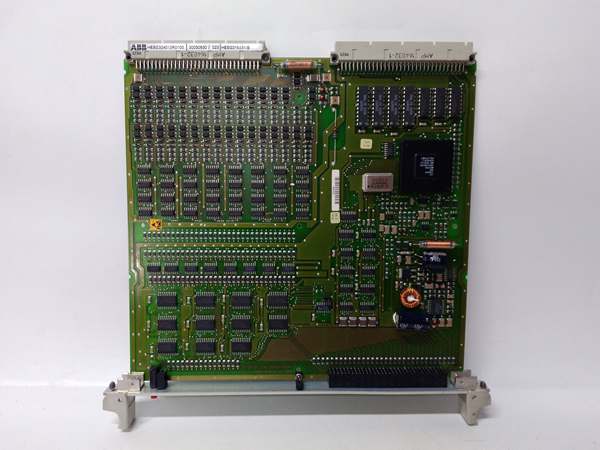
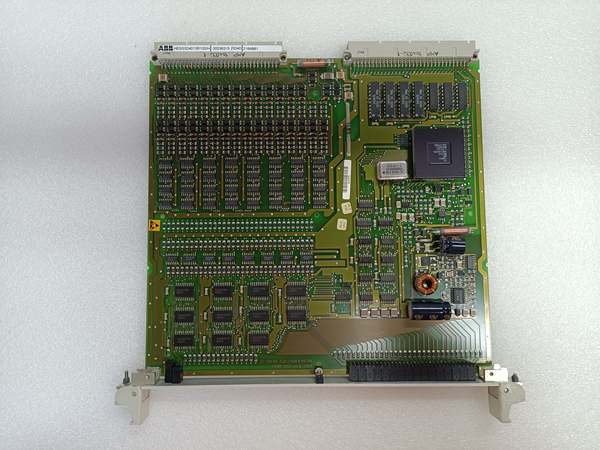
Ruggedization features include a conformal-coated PCB that repels dust, moisture, and chemical vapors—essential for refineries and paper mills. The metal chassis shields against electromagnetic interference (EMI) from nearby motors or VFDs, ensuring stable output. Unlike generic power supplies, it’s factory-calibrated for ABB’s DCS backplane, enabling plug-and-play integration with no custom wiring or programming.
What sets it apart is the balance of compatibility, ruggedness, and flexibility. Its switch-selectable input eliminates the need for multiple power supplies, while redundancy support lets plants scale to hot-standby configurations as needed. For process plants where downtime costs $10k+/minute, this module isn’t just a power supply—it’s a reliable link that keeps critical control systems running, even in the harshest conditions.