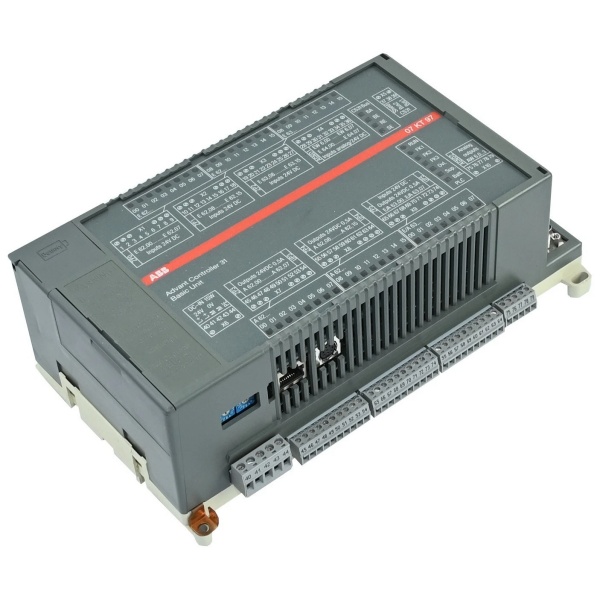
Description
Key Technical Specifications
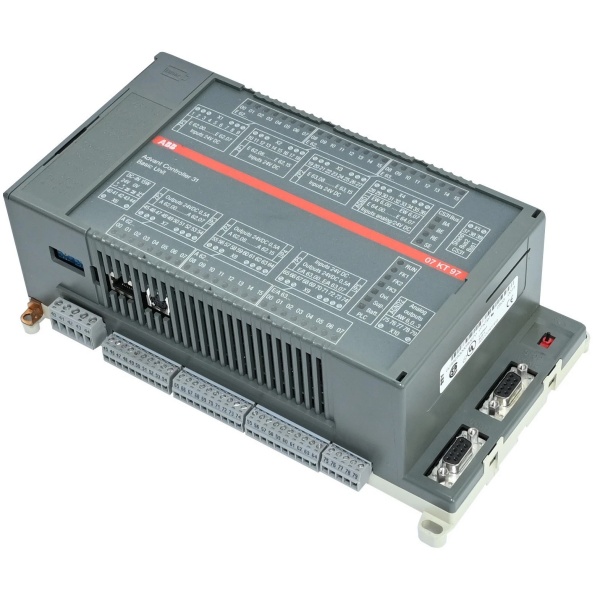
- Model Number: 07KT97-ARCNET
- Manufacturer: ABB Industrial Automation Division (Legacy PLC Business Unit)
- Protocol Support: ARCNET (ANSI/EIA 878), token-passing topology
- Baud Rate: 1Mbps (fixed, standard for ABB ARCNET implementations)
- Communication Port: 1 × BNC (coaxial) or terminal block (twisted pair, configurable)
- Power Supply: 24VDC ±10% (from 460/800 PLC backplane); 0.08A typical current draw
- Operating Temperature: -10°C to +60°C (14°F to +140°F)
- Isolation Rating: 500V AC (ARCNET port to PLC backplane)
- Max Nodes: 255 ARCNET devices per network segment
- Cable Compatibility: RG-62 coaxial (50Ω) or twisted pair (120Ω, with adapter)
- Termination Requirement: 93Ω resistor (end-of-segment mandatory)
- Certifications: CE, UL 508, IEC 61131-2 (legacy compliance), RoHS (legacy exemption)
- Compatibility: ABB 460/800 Series PLCs (460CPU, 800CPU), legacy ARCNET field devices (sensors, drives, HMIs)

ABB 07KT97-ARCNET
Field Application & Problem Solved
In brownfield industrial facilities—paper mills, legacy refineries, older power plants—ABB 460/800 PLCs remain critical to operations, but replacing them with modern systems costs millions. The biggest pain point is keeping these legacy PLCs connected to ARCNET, a token-passing fieldbus once ubiquitous in 1990s-2000s industrial control. Generic ARCNET modules fail to integrate with ABB’s proprietary backplane, causing communication drops and unplanned downtime. A Wisconsin paper mill lost $75k in a 3-hour outage when a generic module failed, halting a tissue production line controlled by an ABB 800 PLC. Legacy setups also force costly workarounds: a Pennsylvania refinery spent $30k annually on custom converters to bridge ARCNET to modern SCADA, leading to 2 hours of monthly downtime from protocol translation delays.
You’ll find this module installed in 460/800 PLC racks across: legacy paper mill machine controls, refinery auxiliary systems (pump stations, valve manifolds), and older coal plant ash handling systems. Its core value is ABB-native compatibility + legacy ARCNET support + industrial ruggedness. The direct backplane integration eliminates driver conflicts that plague generics, while the 1Mbps fixed baud rate matches ABB’s original ARCNET implementations—critical for maintaining communication with legacy field devices. For a Texas refinery, the module’s ability to work with both coaxial and twisted pair cables simplified a network upgrade, avoiding $50k in cable replacement costs.
Installation & Maintenance Pitfalls (Expert Tips)
- Termination Resistors: Use 93Ω (Not 120Ω!): Rookies confuse ARCNET with Profibus and install 120Ω resistors, causing signal reflection and network crashes. A Michigan steel mill’s ARCNET network failed to initialize until 93Ω resistors were installed at segment ends. Verify with a multimeter—only 93Ω resistors (ABB part 1SFL500004R0001) work for this module.
- Cable Type Matters: RG-62 Coaxial Is Preferred: Using RG-58 coaxial (common in Ethernet) or unshielded twisted pair leads to signal degradation. A Florida food processing plant’s PLC lost communication with ARCNET sensors until RG-62 cable was installed. For twisted pair, use ABB’s 1SFL500002R0001 shielded cable and enable the module’s twisted pair mode via DIP switch.
- Baud Rate: Never Attempt to Change from 1Mbps: Generic modules allow baud rate adjustments, but the 07KT97-ARCNET is hardwired to 1Mbps (ABB’s standard). A North Carolina refinery’s technician fried a module trying to reconfigure baud rate—leave it at 1Mbps, as all ABB ARCNET devices are calibrated to this speed.
- Backplane Connection: Seat Fully Until Lock Clicks: Loose backplane connections cause intermittent communication. An Ohio paper mill’s PLC dropped ARCNET traffic hourly until the module was reseated with a firm push (listen for the locking tab click). Avoid partial insertion—this damages both the module and PLC backplane.
- Legacy Firmware: Don’t Attempt Updates: Unlike modern modules, the 07KT97-ARCNET’s firmware is factory-fixed. A Pennsylvania utility’s attempt to flash modern firmware bricked three modules ($2,400 total). If firmware compatibility is an issue, verify the PLC’s CPU firmware version (must be v4.0+ for 800 Series).
ABB 07KT97-ARCNET
Technical Deep Dive & Overview
The ABB 07KT97-ARCNET is a legacy communication module engineered exclusively for ABB’s 460/800 Series PLCs, designed to bridge these older controllers to ARCNET networks—a token-passing protocol once dominant in industrial automation for its reliability in noisy environments. At its core, a dedicated ARCNET controller chip (compatible with ANSI/EIA 878) handles token management and data framing, offloading communication tasks from the PLC’s CPU to avoid scan time overruns.
Unlike generic ARCNET modules, it uses ABB’s proprietary backplane interface to communicate directly with the 460/800 CPU—no external wiring or adapters needed. The module supports both coaxial (BNC) and twisted pair (terminal block) connections, offering flexibility for legacy cable infrastructures. The 93Ω termination requirement is critical: ARCNET’s token-passing topology relies on matched impedance to prevent signal reflection, a flaw generic modules often ignore.
What sets it apart is its rugged, no-frills design—built for the harsh conditions of 1990s industrial facilities, with conformal-coated PCBs to resist dust and humidity, and 500V AC isolation to block electrical noise from motors and VFDs. While ARCNET is a legacy protocol, the 07KT97-ARCNET remains indispensable for brownfield sites where replacing 460/800 PLCs is cost-prohibitive. It doesn’t offer modern features like Ethernet integration, but it excels at its core job: keeping legacy ABB PLCs connected reliably to ARCNET networks, extending the life of critical industrial systems by 10+ years. For facilities with millions invested in legacy infrastructure, this module isn’t just a communication interface—it’s a cost-saving lifeline that delays the need for a full control system overhaul.