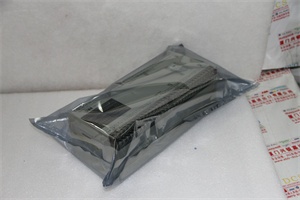
Description
Product Introduction
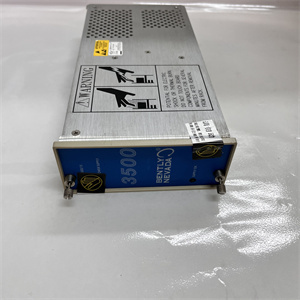
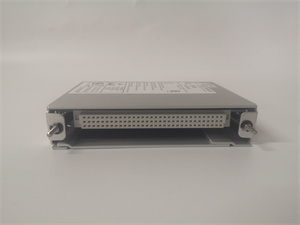
The ABB 07KR264 is a self-contained controller from the Procontic K200 series, bundling the CPU and I/O into a single 330 x 140 mm housing. It handles relay logic, timers, and counters directly, driving 24 V DC sensors and 230 V AC loads without expansion racks for basic machinery.
This unit integrates 1K EEPROM for program storage and handles roughly 5 ms per 1000 instructions. It differs from the AC31 series by relying on 230 V AC mains power rather than a separate 24 V DC PSU—well, technically it has internal 24 V DC for inputs, but the main feed is 230 V AC.
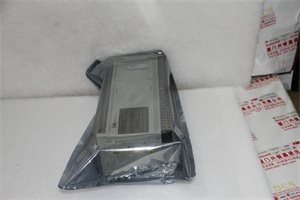
ABB 07KR264
Key Technical Specifications
- Supply Voltage: 230 V AC (50/60 Hz, Range +15% / -25%)
- Power Consumption: 39 VA (Without programming unit)
- Digital Inputs: 40 Channels (24 V DC, 10 mA, Opto-isolated)
- Digital Outputs: 24 Channels (Relay, 2 A @ 230 V AC)
- Program Memory: 1K EEPROM (Integrated) + 2K External (EEPROM/EPROM)
- Timers: 40 (Range 0.01 s to 999 s)
- Counters: 16 Down / 8 Up-Down (Battery backed)
- Cycle Time: ~5 ms / 1000 instructions (Typical)
- Operating Temp: 0 °C to +55 °C
- Dimensions: 330 mm (L) x 140 mm (H) x 102 mm (W)
- Programming: 907PC322 Software (RS-232 Interface)
Quality Control Process (Engineer’s Perspective)
- Incoming Verification: Cross-check the ABB 07KR264 serial against shipping docs. Inspect the screw terminals for corrosion or stripped threads. Check the relay contacts with a multimeter; old K200 units often have pitted contacts from inductive switching.
- Live Functional Test: Power up on 230 V AC. Connect via RS-232 and download a test routine with timer/counter logic. Run for >24 hrs, cycling outputs every 5 mins while monitoring coil temperatures with a Fluke 115 thermal gun.
- Electrical Parameter Test: Megger the 230 V AC terminals to the chassis at 500 V. Insulation must hold >10 MΩ. Low resistance here suggests moisture ingress into the old potting compound.
- Firmware Verification: Read the EPROM checksum via the PG201 handheld or PC software. Photograph the DIP switch bank for the site record—these settings dictate I/O mapping and comms params.
- Final QC & Packaging: Exercise all relays 50 times to burn off oxidation. Clean the RS-232 port. Bag in anti-static foam. Label “QC Passed – Logic Verified” with the date.
Replacement Pitfall Guide
❗ Power Source: The ABB 07KR264 runs on 230 V AC mains. Swapping in a 24 V DC unit (like an AC31) without rewiring the L/N terminals fries the power supply instantly.
❗ DIP Switch Mapping: Factory DIPs rarely match the installed base config. Forgetting to set the “Node Address” or “Terminator” bits breaks the K-Bus communication with remote I/O modules.
❗ Output Loading: The 24 relay outputs are rated 2 A. Connecting them directly to contactor coils without surge suppressors welds the contacts shut within a month—always add RC snubbers or varistors.
❗ Backup Battery: Program is in EEPROM (non-volatile), but counter values and retentive flags rely on the backup capacitor/battery (verify with OEM datasheet). A dead cell resets counts to zero on power cycle.
❗ ESD to Comms: The RS-232 port is sensitive. Discharge to the cabinet frame before plugging in the PG201 programmer—though your mileage may vary on shop floor grounding.
Keep these in mind and you’ll cut 90% of rework time.
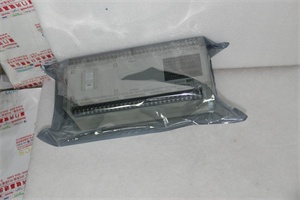
ABB 07KR264
Compatibility Matrix & Benchmarks
- ABB 07KR264 → ABB 07KR51 : Needs Adaptation — 07KR51 is Advant AC31; requires 24 V DC PSU and new wiring
- ABB 07KR264 → ABB 07 DC 91 ( I/O) : Direct — Expands I/O via K-Bus ribbon cable
- ABB 07KR264 → Modern ABB AC500 : Incompatible — Requires full rewire and logic conversion
- Scan time: ~5 ms (Per 1000 boolean instructions)
- I/O Response: 10 ms (Relay output switching delay)
- Timer Accuracy: ±10 ms (Typical, verify with OEM datasheet)