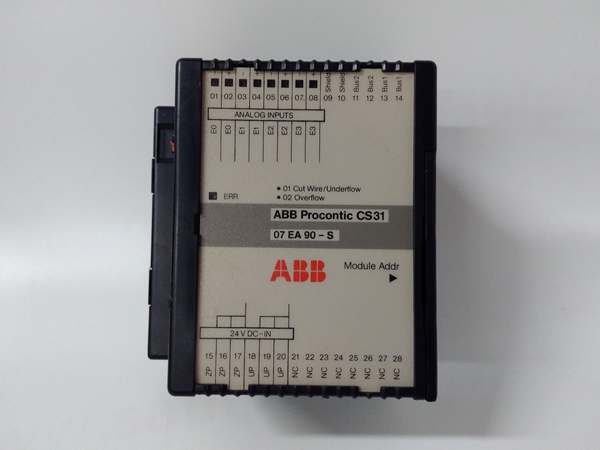
Description
Key Technical Specifications
- Model Number: ABB 07EA90-SI
- Manufacturer: ABB
- Pole Configuration: 3-pole (3P)
- Rated Current (Iₙ): 90A (adjustable 63-90A)
- Rated Voltage (Uₙ): 415V AC (max 690V AC)
- Breaking Capacity (Iₙ): 15kA @ 415V AC (industrial duty)
- Protection Type: Thermal-magnetic (thermal for overload, magnetic for short-circuit)
- Overload Trip Class: Class 10 (10x Iₙ for 2-10 seconds, motor-compatible)
- Short-Circuit Trip Setting (Iᵢ): 10x Iₙ (fixed, magnetic instantaneous)
- Operating Temperature: -5°C to 60°C (23°F to 140°F)
- Storage Temperature: -25°C to 85°C (-13°F to 185°F)
- Mounting: Panel mounting (fixed or withdrawable)
- Connection Type: Cable-in/cable-out (copper/aluminum conductors)
- Conductor Cross-Section: Up to 50mm² (copper), 35mm² (aluminum)
- Protection Rating (IP): IP20 (enclosure), IP40 with accessory cover
- Mechanical Life: 10,000 operations (open/close)
- Electrical Life: 500 operations @ rated breaking capacity
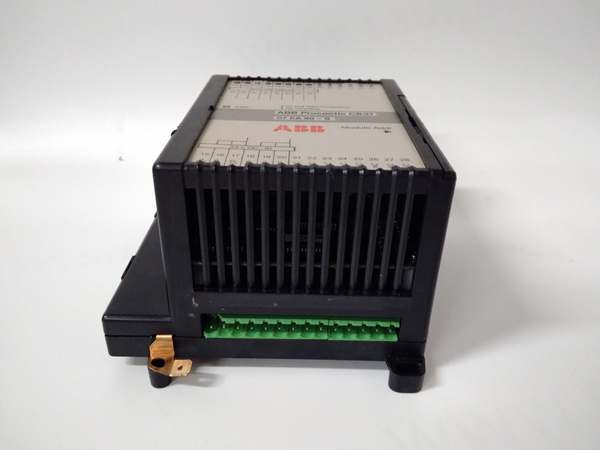
ABB 07EA90-SI
Field Application & Problem Solved
In industrial power distribution—motor control centers (MCCs), panel boards, and equipment power feeds—protecting circuits from overload and short-circuit faults requires reliable, motor-rated circuit breakers. The challenge? Standard thermal circuit breakers lack the fast magnetic trip needed to stop short-circuits before equipment damage occurs. Many breakers have non-adjustable trip settings, forcing over-sizing or under-protection for variable loads. Low-breaking-capacity models fail catastrophically during high-current faults, while non-motor-rated trip classes (e.g., Class 5) trip prematurely during motor inrush. The ABB 07EA90-SI solves these pain points with thermal-magnetic dual protection, Class 10 motor compatibility, adjustable overload settings, and 15kA breaking capacity.
You’ll typically find this breaker in applications like protecting 55kW (75HP) motor circuits in wastewater pumps, feeding power to industrial conveyor systems, or acting as the main breaker in small MCCs. It’s a staple in manufacturing plants and processing facilities, where its Class 10 trip curve tolerates motor inrush currents (6-10x rated) without nuisance tripping. In chemical plants, it protects pump and agitator motors from overload due to process jams, while its 15kA breaking capacity survives fault currents from industrial power grids. It also excels in retrofits of older systems, replacing outdated breakers with a drop-in solution that meets modern safety standards.
Its core value is targeted protection for motor and industrial loads. The thermal element provides slow, proportional trip for overloads (e.g., seized bearings), while the magnetic element delivers instant trip for short-circuits (e.g., wire insulation failure). Adjustable overload settings (63-90A) adapt to different load sizes, eliminating over-protection. For plant operators, this means minimized equipment damage, reduced downtime from nuisance tripping, and compliance with electrical safety standards—critical in environments where circuit faults risk fire, injury, or production loss.
Installation & Maintenance Pitfalls (Expert Tips)
- Overload Setting Misalignment (Wrong Adjustment = Nuisance Tripping/Under-Protection): Rookies often leave the adjustable overload setting at 90A for a 70A motor, leading to under-protection, or set it too low (e.g., 63A for 80A load) causing frequent trips. Adjust the overload dial to match the actual load current (not the breaker’s max rating). For motors, set it to the motor’s rated current (found on the nameplate), not the full 90A. Verify with a clamp meter during operation—overload trips should only occur if current exceeds 115% of the set value for extended periods.
- Conductor Size Mismatch (Undersized Wires = Overheating): The breaker accepts up to 50mm² copper conductors, but rookies often use 25mm² wire for 90A loads. Undersized wires overheat, even if the breaker doesn’t trip, creating fire risks. Match conductor size to the breaker’s rated current: use 50mm² copper for 90A, 35mm² for 70A, and 25mm² for 63A. Torque terminal connections to ABB’s specs (25Nm for 50mm² copper) to prevent loose connections and hot spots.
- Ignoring Trip Class Compatibility (Non-Class 10 = Premature Motor Trips): The breaker is Class 10 (motor-rated), but rookies often use it with Class 5 settings or mix it with non-motor loads that require faster trips. Class 10 allows 10x rated current for 2-10 seconds—ideal for motor inrush. Using it for resistive loads (e.g., heaters) may delay overload trips; use Class 5 or Class 2 for non-motor circuits. Never replace a Class 10 breaker with a lower class for motor applications—this causes nuisance tripping during startup.
- Environmental Temperature Neglect (Extreme Temp = Trip Curve Drift): The breaker’s thermal element is temperature-sensitive, but rookies install it in hot enclosures (>60°C) or cold areas (<-5°C) without adjusting settings. High temperatures make the thermal element trip faster; low temperatures delay trips. Install the breaker in environments within -5°C to 60°C. If mounted in a hot panel, derate the overload setting by 10% for every 10°C above 40°C. Use a thermal shield if the breaker is near heat sources (e.g., motors, heaters).
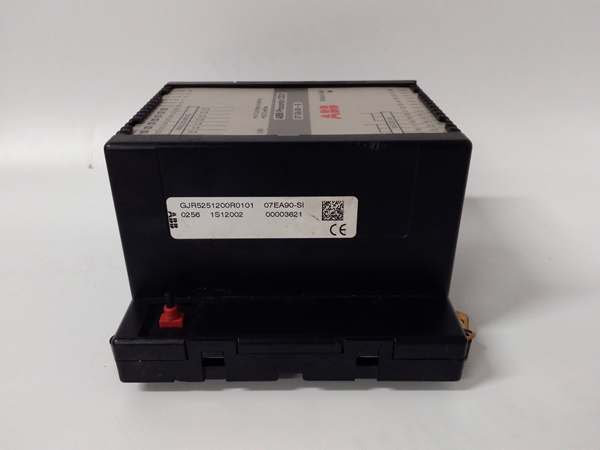
ABB 07EA90-SI
Technical Deep Dive & Overview
The ABB 07EA90-SI is a 3-pole thermal-magnetic molded case circuit breaker designed for industrial load protection, with a focus on motor circuits. Its core design combines two independent protection mechanisms: a bimetallic thermal element for overload protection and a magnetic solenoid for short-circuit protection. This dual approach ensures precise, application-specific protection—slow response for gradual overloads, instant response for catastrophic faults.
The thermal element uses a bimetallic strip that bends when heated by excess current (e.g., motor overload from jammed bearings). The bend triggers the breaker to open after a time proportional to the current magnitude (inverse-time curve). The adjustable overload dial (63-90A) modifies the tension on the bimetallic strip, allowing calibration to the load’s actual current draw.
The magnetic solenoid provides instantaneous trip for short-circuits (current >10x Iₙ). When a high-current fault occurs, the solenoid generates a magnetic field strong enough to trip the breaker in milliseconds, limiting fault duration and minimizing equipment damage. The fixed 10x Iₙ magnetic setting is optimized for Class 10 motor protection, tolerating inrush currents while stopping destructive short-circuits.
The breaker’s molded case is made of flame-retardant thermoplastic, providing insulation and mechanical strength. Internal arc chutes redirect and cool arcs during opening, reducing contact wear and ensuring reliable breaking at 15kA. The panel-mount design and cable-in/cable-out connections simplify integration into existing power systems, while compatibility with copper and aluminum conductors adds installation flexibility.
Compliance with IEC 60947-2 and UL 489 standards ensures global safety and performance. Its Class 10 trip curve aligns with motor protection requirements, making it a drop-in solution for industrial applications. The breaker’s robust construction—including IP20 protection and wide temperature range—ensures reliability in harsh industrial environments, from dusty factories to outdoor power skids.