Description
Key Technical Specifications
- Model Number: 07BR61R1 GJV3074376R1
- Manufacturer: ABB
- Number of Channels: 16 independent Form C (SPDT) relays
- Switching Capacity: 10A @ 250V AC / 10A @ 30V DC
- Coil Voltage: 24V DC (nominal)
- Coil Power Consumption: 1.2W per channel (max)
- Operating Temperature: -25°C to +70°C (-13°F to +158°F)
- Isolation: 2.5kV AC (channel-to-channel, channel-to-backplane)
- Response Time: <10ms (operate), <5ms (release)
- Diagnostic Capabilities: Coil fault detection, overcurrent monitoring
- Mounting: DIN rail (35mm) via AC 800M I/O base unit
- Dimensions (W x H x D): 80mm x 140mm x 110mm
- Weight: Approx. 480g
- Protection Class: IP20 (when mounted with base unit)
- Lifetime: 100,000 mechanical operations; 10,000 electrical operations (at max load)
- Backplane Communication: ABB I/O bus (compatible with AC 800M controllers)
- Status Indicators: Red LED per channel (coil energized)
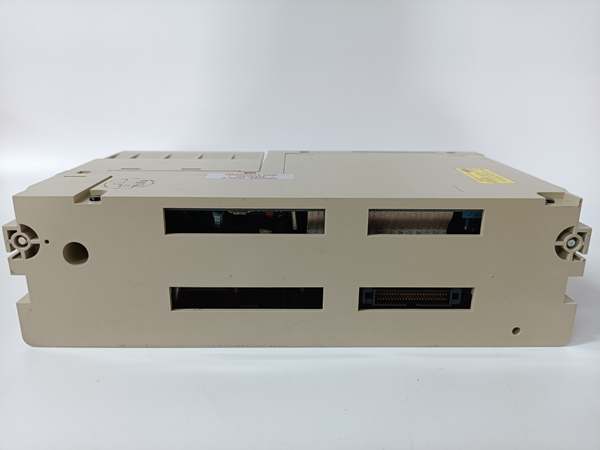
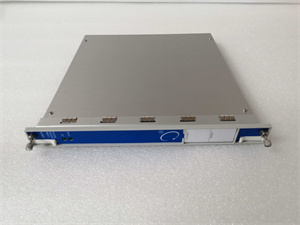
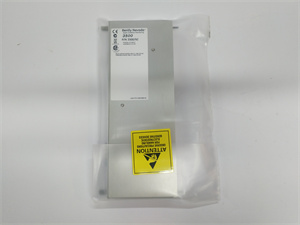
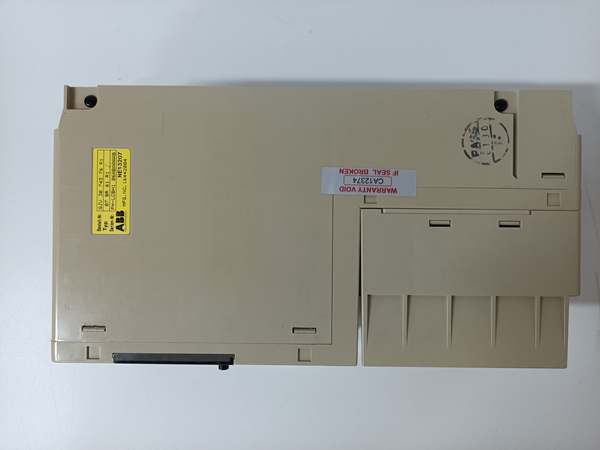
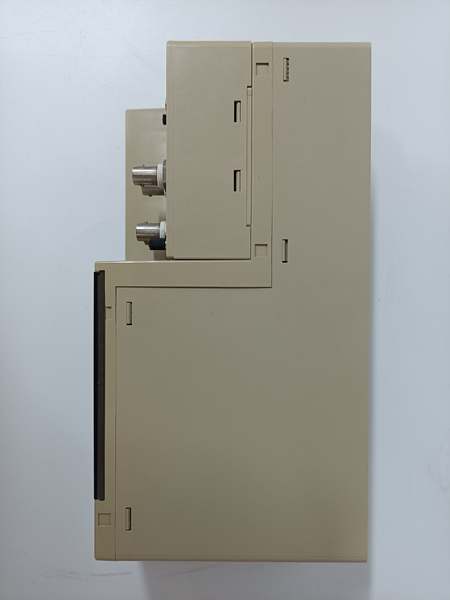
ABB 07BR61R1 GJV3074376R1
Field Application & Problem Solved
In process industries—refineries, chemical plants, and pulp mills—the biggest headache is reliably switching high-current devices (valves, pumps, heating elements) from a central PLC. Legacy relay modules often fail under heavy load, lack diagnostic visibility, or can’t withstand the extreme temperatures and vibration of industrial environments. This module solves that by combining rugged construction with precise control, eliminating the “black box” problem of unmonitored relay failures.
You’ll find this module at the heart of critical control loops: think refinery distillation column valve actuation, chemical plant batch reactor temperature control, or pulp mill dryer section motor switching. It’s also a staple in safety systems—where fail-safe relay operation is non-negotiable—such as emergency shutdown (ESD) circuits for pressure vessels. Its compatibility with ABB’s AC 800M controller family makes it a seamless fit for both greenfield installations and brownfield upgrades, replacing outdated electromechanical relays that require constant manual checks.
Its core value is twofold: durability and visibility. The 10A switching capacity handles the most demanding industrial loads without premature contact wear, while the built-in diagnostic features alert operators to coil failures or overcurrent conditions before they cause unplanned downtime. In the field, this means technicians don’t have to physically inspect each relay to find a fault—they get real-time alerts via the PLC, cutting troubleshooting time from hours to minutes. For plant operators, this translates to higher uptime, lower maintenance costs, and more reliable process control.
Installation & Maintenance Pitfalls (Expert Tips)
Overlooking Contact Rating Limits
Rookies often push this module beyond its 10A switching capacity to avoid adding extra modules. Running 12A through a 10A contact causes arcing, which burns the relay contacts and leads to intermittent switching or complete failure. Always de-rate the contacts by 20% for inductive loads (e.g., motors) and verify the load current with a clamp meter before finalizing wiring—overloaded relays are the #1 cause of unplanned outages with this module.
Poor Wiring Torque Leads to Loose Connections
The module’s terminal blocks require 0.8–1.0 Nm of torque for solid wires (1.0–1.2 Nm for stranded wires with ferrules). Too loose, and vibration in refineries or mills will wiggle the wires free, causing open circuits. Too tight, and you’ll strip the terminals or crack the plastic housing. Use a torque screwdriver—don’t guess. Recheck torque during quarterly maintenance, especially in high-vibration areas.
Ignoring Coil Polarity (Yes, It Matters)
While the module’s coil is technically non-polarized, reversed wiring can cause voltage spikes when the coil de-energizes. These spikes damage the module’s internal electronics over time, leading to erratic diagnostic readings. Follow ABB’s wiring diagram: connect positive (+24V DC) to terminal 1 and negative (0V) to terminal 2 for each channel. Use surge suppressors (varistors) for inductive loads to absorb voltage spikes—this doubles the module’s lifespan.
Forgetting Diagnostic Configuration
The module’s coil fault detection won’t work unless you enable it in the AC 800M controller software. Rookies often skip this step, leaving them blind to failed coils. In the control system, map each channel’s diagnostic bit to the PLC’s HMI—this lets operators see which relay isn’t energizing, even if the load is still running. Also, set up overcurrent alerts for critical channels (e.g., pump motors) to catch short circuits before they damage the relay or load.
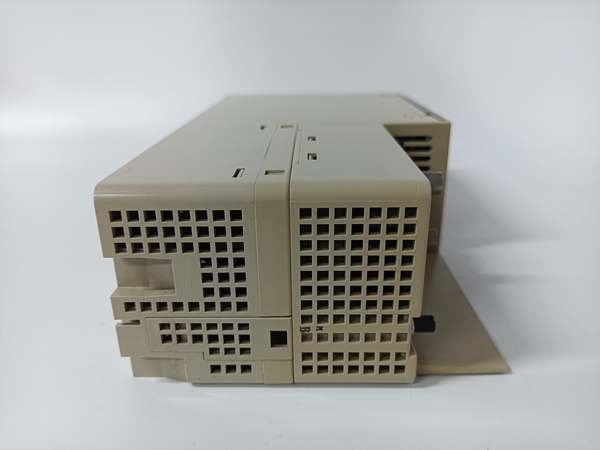
ABB 07BR61R1 GJV3074376R1
Technical Deep Dive & Overview
The ABB 07BR61R1 GJV3074376R1 is a 16-channel Form C (single-pole, double-throw) relay output module designed for integration with ABB’s AC 800M distributed control system. It acts as the interface between the PLC’s low-voltage control signals and high-current industrial devices, converting logic commands from the controller into physical switching actions.
Each channel features an electromechanical relay with NO (normally open) and NC (normally closed) contacts, allowing flexible wiring for both fail-safe and standard applications. The relays are driven by 24V DC coils, with internal surge protection to mitigate voltage spikes from inductive loads. The module communicates with the AC 800M controller via the ABB I/O backplane bus, a high-speed serial interface that transmits control signals and diagnostic data in real time.
What sets this module apart is its diagnostic engine. Each channel monitors coil current: if a coil burns out (open circuit) or draws too much current (short circuit), the module sends a fault signal to the controller. This eliminates the need for manual continuity checks—technicians can pinpoint failed relays from the HMI. The front-facing LEDs provide at-a-glance status: a red LED indicates the coil is energized, while a missing LED (or a fault code in the PLC) signals a problem.
Ruggedness is built into the design: the module uses industrial-grade components rated for -25°C to +70°C, with 2.5kV isolation to protect against electrical noise and ground loops. The DIN rail mounting (via an AC 800M base unit) ensures secure installation in control cabinets, even in high-vibration environments. Internally, the relays are rated for 100,000 mechanical cycles, making the module suitable for high-duty-cycle applications like continuous process control. Overall, it’s a workhorse designed for the rigors of industrial field service—reliable, diagnosable, and built to last.