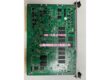
Product Core Brief
- Model: A06B-6096-H105
- Brand: Fanuc (发那科)
- Series: Alpha Series Servo Amplifier
- Core Function: Provides high-precision current, speed, and position control for Fanuc AC servo motors in CNC machines and industrial robots.
- Product Type: Servo Amplifier / Servo Drive
- Key Specs: Alpha Series | Modular Design | High Dynamic Response | Integrated Protection
- Condition: New Surplus / Original OEM
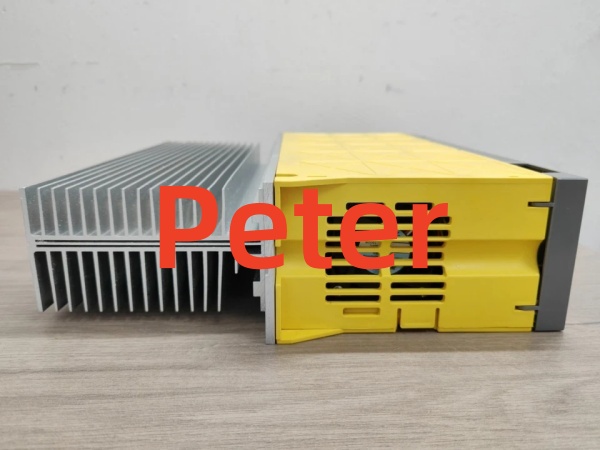
Fanuc A06B-6079-H208
Key Technical Specifications
- Manufacturer: Fanuc
- Part Number:
- Product Category: Servo Amplifier
- System Architecture: Fanuc Alpha / Alpha-i Series
- Control Method: Full Digital Sinusoidal PWM
- Protection Features: Overcurrent, Overvoltage, Undervoltage, Overheat, Encoder Fault
- Communication: FSSB (Fiber Optic) / Serial Servo Bus
- Operating Temp Range: Standard Industrial CNC Range
- Compliance: CE / UL
Product Introduction (No Fluff)
nuc is a core servo amplifier module within the Alpha series, designed to drive Fanuc AC servo motors with exceptional dynamic response and positioning accuracy. It receives digital commands via the FSSB fiber optic bus and outputs precise three-phase AC power to achieve closed-loop current, speed, and position control.
This amplifier features a modular, compact design for easy installation and maintenance, along with built-in regenerative braking handling and comprehensive self-diagnostics. Sourcing this exact OEM replacement prevents axis instability, contouring errors, and prolonged machine downtime caused by degraded power modules or control circuitry.
QA & Testing SOP (Dynamic & Transparent)
Servo amplifiers demand rigorous electrical and functional valiv undergoes a strict inspection process:
- Anti-Counterfeit Inspection: Verify Fanuc factory labels, PCB silkscreen, and IGBT module markings against OEM baselines.
- Power Stage Test: Verify DC bus charging, IGBT switching integrity, and output phase balance using a dedicated servo test bench.
- Control Logic Validation: Connect to a Fanuc CNC or test simulator to confirm FSSB communication, parameter loading, and alarm-free operation.
- Protection Function Test: Simulate overcurrent and overvoltage conditions to verify the amplifier trips within specified microseconds.
- Burn-In: 4-hour continuous operation under nominal load to identify marginal power components.
- Packaging: Shipped in anti-static shielding with a printed QA test report.
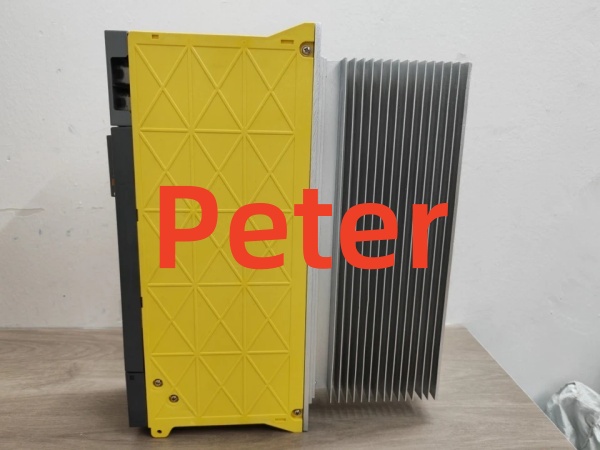
Fanuc A06B-6079-H208
Installation Pitfalls & Guide (Engineer to Engineer)
❗ FSSB Fiber Optic Handling: The FSSB connection uses fragile fiber optic cables. Never bend the cable beyond its minimum radius or pull on the connector. A damaged fiber will cause #196 or #197 FSSB communication alarms. Always handle by the connector body and ensure the dust cap is removed only when ready to connect.
❗ Regenerative Resistor Matching: This amplifier may require an external regenerative resistor depending on the axis load and deceleration rate. Verify the resistor specification matches the amplifier’s requirements. An undersized or missing resistor will trigger #430 overvoltage alarms during deceleration.
❗ Motor ID Parameter Matching: The amplifier must have the correct motor ID parameter set to match the connected servo motor. Mismatched parameters can cause motor oscillation, excessive heating, or #430/#410 alarms. Always verify the motor model and amplifier parameters before power-on.
❗ Grounding & Shielding: Fanuc servo systems are highly sensitive to EMI. Ensure the amplifier chassis is grounded to the machine frame with a low-impedance strap. Motor power and encoder cables must be shielded and grounded at the amplifier end only. Grounding at both ends creates ground loops that cause #368 encoder alarms or axis vibration.
Replacement Protocol:
- Pre-Install: Lock out the CNC machine power. Wait at least 10 minutes for the DC bus capacitors to fully discharge. Verify 0 VDC at the amplifier terminals.
- Removal: Disconnect the FSSB fiber, motor power (U, V, W), encoder feedback, and control power cables. Release the retaining screws and extract the amplifier straight out. Inspect the backplane connector for bent pins.
- Install: with the guides. Seat it firmly and secure the faceplate screws. Reconnect all cables, ensuring the FSSB fiber clicks securely into place.
- Power-on Test: Restore power. Verify the “READY” LED illuminates. Check the CNC diagnostic page for zero servo alarms. Run a low-speed axis jog to verify direction and encoder feedback. Gradually test rapid traverse and cutting operations while monitoring the servo load meter.
Technical FAQ
Yes, provided the basm matches exactly. The “” suffix denotes specific hardware revision, firmware version, or optional features (e.g., built-in regenerative unit). Verify the nameplate matches your existing unit before installation.
Why is this listed as “New Surplus” instead of factory-new?
This is genuine Fanuc stock that was never installed on a machine. It has been stored in climate-controlled inventory rather than exposed to coolant mist, vibration, and continuous thermal cycling. You receive the exact same performance and lifespan as a factory-fresh unit, typically at a significantly lower cost without the 12-16 week OEM lead time.
Can I hot-swap this servo amplifier while the machine is powered?
No. Never disconnect or connect a servo amplifier under power. Doing so can cause voltage transients that will destroy the IGBT modules or the FSSB communication interface. Always follow proper lockout/tagout procedures and wait for the DC bus to discharge.
What is the warranty coverage on this part?
We provide a standard 12-month functional warranty. If the amplifier fails due to IGBT failure, control board fault, or communication error under normal operating conditions within that window, we replace it. Our QA testing proves the amplifier passed all power and control tests before it left our bench.
My axis is vibrating or making noise. Is this amplifier bad?
Not necessarily. Before , check the motor encoder feedback cable for damage, verify the motor bearings, and inspect the mechanical coupling/ballscrew. Vibration can also be caused by incorrect servo tuning parameters or a failing motor. Only replace the amplifier if diagnostic tests confirm an internal power stage or control fault.