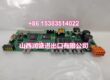
Product Core Brief
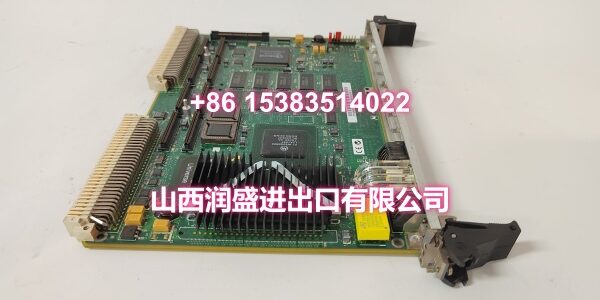
- Model: MOTOROLA MVME2434
- Brand: Motorola (MVME2400 series)
- Series: MVME2400 PowerPlus II VME Single Board Computer
- Core Function: 6U VMEbus processor module that runs real-time control, data acquisition, and legacy system workloads in industrial and aerospace racks.
- Product Type: VME Single Board Computer (SBC) / Processor Module
- Key Specs: PowerPC 750-class CPU | 32 MB–512 MB ECC SDRAM | 2× PMC expansion slots
- Condition: New Surplus / Factory Sealed (availability varies by batch)

Product Introduction (Rotation Engine)
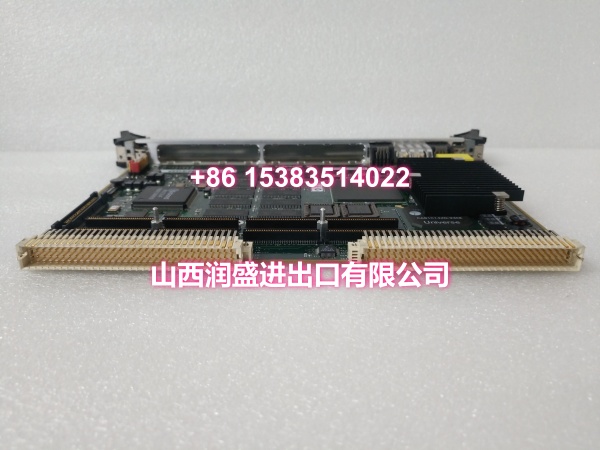
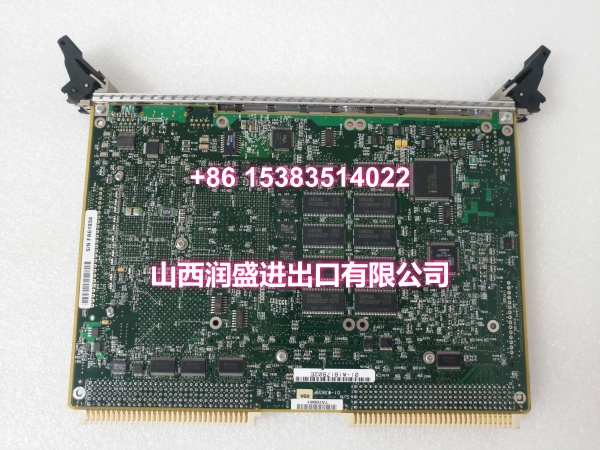
When a legacy VME rack loses its controller board, the real problem is not just hardware availability. It is whether the replacement can keep existing firmware, PMC mezzanines, and chassis wiring intact. The MOTOROLA MVME2434 sits in that gap as a PowerPlus II-era VME SBC built for 6U VME64/VME64x backplanes.
This board pairs a PowerPC 750-class processor with up to 512 MB ECC SDRAM and two PMC slots, so it can carry legacy I/O, communication, or signal-processing mezzanines without rewiring the rack. That matters because many installed systems still run VxWorks or Linux BSPs tied to specific VME memory maps and PMC configurations. Replacing the whole chassis is expensive. Replacing the right SBC is not.
Key Technical Specifications
| Parameter | Value |
|---|---|
| Product Family | Motorola MVME2400 Series VME SBC |
| Processor | PowerPC 750-class 32-bit CPU |
| L1 Cache | 32 KB instruction / 32 KB data |
| L2 Cache | 1 MB backside L2 cache |
| Memory | 32 MB–512 MB ECC SDRAM (configuration-dependent) |
| Bus Interface | VME64 / VME64x compatible |
| Expansion | 2× PCI PMC mezzanine slots |
| Serial Ports | RS-232/422/485 (port count varies by configuration) |
| Ethernet | 10/100 Mbps Ethernet (configuration-dependent) |
| Form Factor | 6U VME |
| Typical OS Support | VxWorks, Linux (BSP-dependent) |
| Typical Applications | Industrial control, aerospace, defense, data acquisition, legacy system maintenance |
Note: Exact memory size, serial/Ethernet count, and firmware revision depend on the specific board configuration. Confirm from the label before purchase.
Key Selling Points & Differentiators
- Matches MVME2400 PowerPlus II architecture, reducing migration risk for existing VME racks.
- Dual PMC slots support legacy mezzanine I/O without cabinet rewiring.
- ECC SDRAM helps protect data integrity in long-run industrial and aerospace applications.
- Suitable for VxWorks and Linux-based BSP environments, subject to firmware compatibility.
- Useful for obsolescence replacement when the original SBC is no longer in production.
- Not recommended for projects that require modern multi-core PowerPC, Gigabit Ethernet, or native PCIe unless a full system redesign is planned.
Quality Transparency SOP (DYNAMIC GENERATION)
- Label and Revision Audit — Verify model, serial number, hardware revision, and memory configuration against the physical board label.
- Visual and Connector Inspection — Check VME edge connector pins, PMC slots, serial/Ethernet ports, and capacitors for corrosion, bent pins, or rework marks.
- Power and POST Verification – Install in a compatible 6U VME chassis, verify power rails, and confirm board POST/boot behavior under VxWorks or Linux BSP.
- Memory and Cache Test — Run ECC SDRAM read/write checks and cache validation to confirm stable operation across the installed memory range.
- Interface and PMC Validation — Test serial ports, Ethernet link negotiation, and PMC slot detection; confirm no bus timeouts or parity errors.
- ESD-Safe Packing — Seal in anti-static packaging with foam support, desiccant, and a test record for traceability.
Technical Risk Avoidance (DYNAMIC GENERATION)
❗ Confirm the exact hardware revision before ordering. MVME2400-family boards can ship with different memory sizes, firmware, and mezzanine support. A mismatched revision may require BSP updates.
❗ Check PMC mezzanine compatibility. Not every PMC module is plug-and-play. Confirm driver support, PCI mapping, and power requirements before installation.
❗ Verify VME chassis compatibility. This is a 6U VME module. It requires a compatible VME64/VME64x backplane, correct keying, and adequate power budget.
❗ Back up firmware and BSP settings first. Replacing the SBC may require reloading boot parameters, IP configuration, memory maps, and application binaries.
Buyer’s FAQ
1. Is the MOTOROLA MVME2434 still in production?
No. This is a legacy VME SBC. Available units are typically new surplus, tested surplus, or refurbished inventory. Exact condition should be confirmed per lot.
2. Can this board replace other MVME2400 modules?
Sometimes, but not automatically. Compatibility depends on processor family, memory size, PMC configuration, firmware, and BSP support. Always compare the label on the failed board before substituting.
3. Does it support VxWorks or Linux?
MVME2400-family boards have historically supported VxWorks and Linux BSPs, but support depends on the specific firmware and BSP version. Confirm BSP availability for your application.
4. What is the difference between new surplus and refurbished?
New surplus typically means unused original inventory. Refurbished units have been inspected, cleaned, and functionally tested. Both can be acceptable for legacy systems if testing documentation is provided.
5. What warranty or testing documentation is provided?
Surplus industrial boards should ship with a functional test record and a clear warranty term. If a supplier cannot provide either, treat the listing as unverified.