Product Core Brief
- Model:
- Common Alias: IET800
- Brand: ABB / ABB Bailey
- Series: Symphony Plus HR series Ethernet CIU
- Core Function: Ethernet communication interface unit connecting SPLUS Ethernet to INFI-NET / HR controller nodes.
- Product Type: ABB Ethernet CIU / Transmission Module
- Key Specs: 100 Mbps Ethernet; SPLUS ENET interface; HR rack-mounted; supports redundancy in supported configurations
- Condition: New Original / New Surplus (verify per lot)
- Status: Legacy DCS communication module; still used in existing Symphony/Harmony/Symphony Plus systems
Key Technical Specifications
| Parameter | Specification |
|---|---|
| Manufacturer | ABB / ABB Bailey |
| Model | (IET800) |
| Product Type | Ethernet CIU / transmission module |
| System Compatibility | Symphony Plus, Harmony, Symphony, INFI 90 |
| Network Speed | 100 Mbps Ethernet |
| Function | SPLUS ENET to INFI-NET / HR controller communication bridge |
| Mounting | HR rack-mounted |
| Availability | Surplus / OEM replacement stock |
Note: 第三方资料中出现的“380 V 供电、Profinet、EtherNet/IP、Modbus TCP 网关、0.72–16.3 μs 处理速度、107.5×45×16.8 mm 尺寸”等参数可信度不足,建议不要直接写死。 具体以太网端口数量、固件版本、冗余配置需以铭牌和原厂手册为准。
Product Introduction
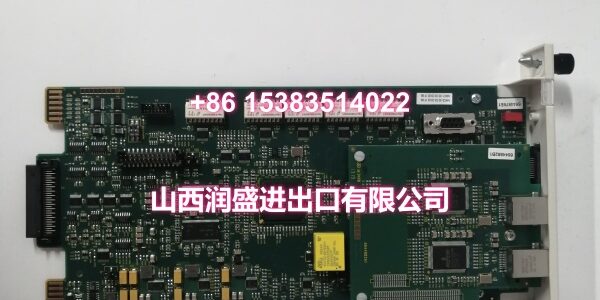
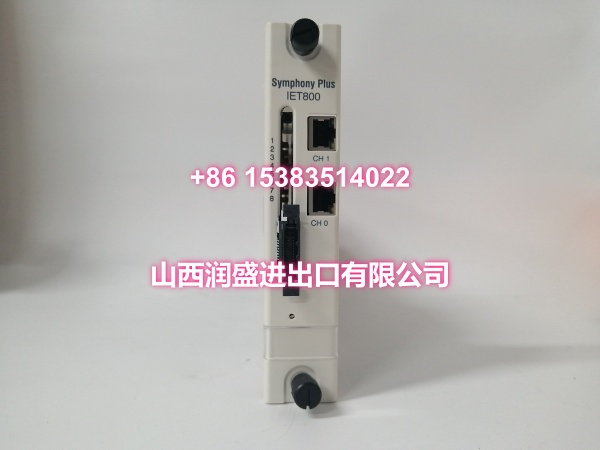
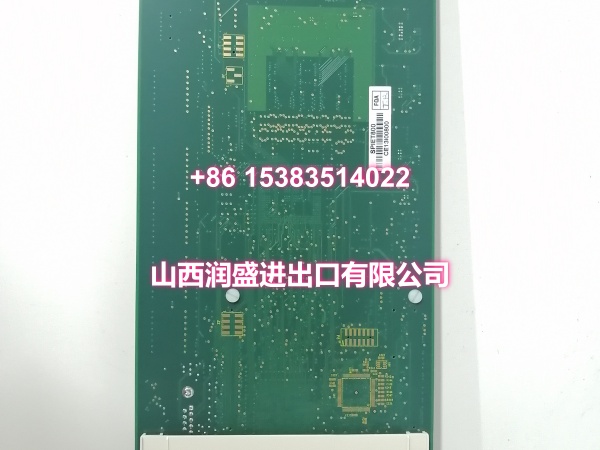
The ABB SPIET800, also known as IET800, is an Ethernet Communication Interface Unit used in ABB Symphony Plus, Harmony, Symphony, and INFI 90 distributed control systems. It serves as a communication bridge between the SPLUS Ethernet network and lower-level INFI-NET or HR series controller nodes.
In typical system architecture, SPIET800 sits at the Ethernet transmission layer, enabling operator consoles, engineering tools, and higher-level applications to communicate with H
R series controllers such as BRC400/BRC410 and legacy INFI 90 nodes. It supports 100 Mbps Ethernet communication and is installed in the HR series rack.
Its main value today is as a verified replacement for existing Symphony/Harmony/Symphony Plus installations. Because it is a legacy communication module, exact hardware revision and firmware compatibility should be confirmed before deployment.
QA & Testing SOP
- Nameplate verification: Confirm SPIET800 / IET800 model, hardware revision, and serial number.
- Physical inspection: Check Ethernet ports, backplane connectors, LEDs, and mounting hardware.
- Firmware check: Verify firmware version and compatibility with the existing Symphony Plus/HR system.
- Network test: Connect to the SPLUS Ethernet and verify communication with operator stations and controllers.
- Redundancy test: If configured for redundancy, verify failover behavior and network stability.
Installation Pitfalls
❗ Not a general-purpose PLC. SPIET800 is an Ethernet CIU module, not a standalone controller.
❗ Not a digital/analog I/O card. Do not confuse it with S800 I/O or HR I/O modules.
❗ Not a universal Modbus/Profinet gateway. Its primary role is SPLUS ENET to INFI-NET/HR communication, not third-party protocol conversion.
❗ Verify firmware compatibility. Module replacement requires matching system firmware and network configuration.
Replacement steps:
- Record slot position, IP address, and network configuration.
- Verify system redundancy and hot-swap policy.
- Replace the module in the correct HR rack slot.
- Restore network settings and verify communication with controllers and operator stations.
- Perform functional testing before returning to full service.
Technical FAQ
1. Is SPIET800 the same as IET800?
Yes. SPIET800 is commonly referenced as IET800 within the Symphony Plus HR series.
2. What system does it belong to?
It belongs to the ABB Bailey INFI 90 / Symphony / Harmony / Symphony Plus communication module family, specifically the HR series Ethernet CIU.
3. Does it support Modbus TCP or Profinet?
Its primary function is SPLUS ENET communication. Third-party claims about Modbus TCP/Profinet support are not reliably confirmed and should not be stated without official documentation.
4. Is it an I/O module?
No. It is an Ethernet communication interface unit, not a process I/O card.
5. What should I check before buying?
Confirm the exact model, hardware revision, firmware version, Ethernet port configuration, rack compatibility, and whether the unit has been tested in a live Symphony Plus/HR system.