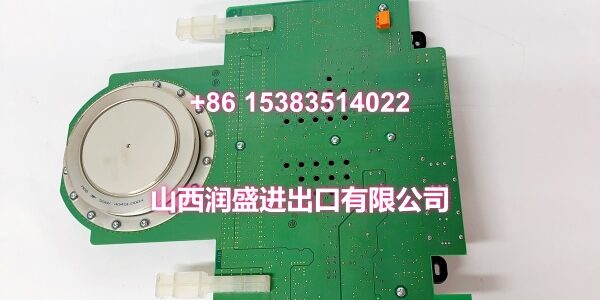
Product Core Brief
- Model: 5SHY4045L0004
- Brand: ABB
- Series: ABB 5SHY Series IGCT (Integrated Gate-Commutated Thyristor)
- Core Function: High-power switching device for medium-voltage inverters and converters, combining the low conduction loss of thyristors with fast, gate-controlled turn-off capability.
- Product Type: IGCT Power Module / Press-Pack Power Semiconductor
- Key Specs: Rated voltage 4500V | Press-pack mechanical design | Snubberless operation | Integrated gate driver interface
- Condition: New Original / New Surplus
Key Technical Specifications
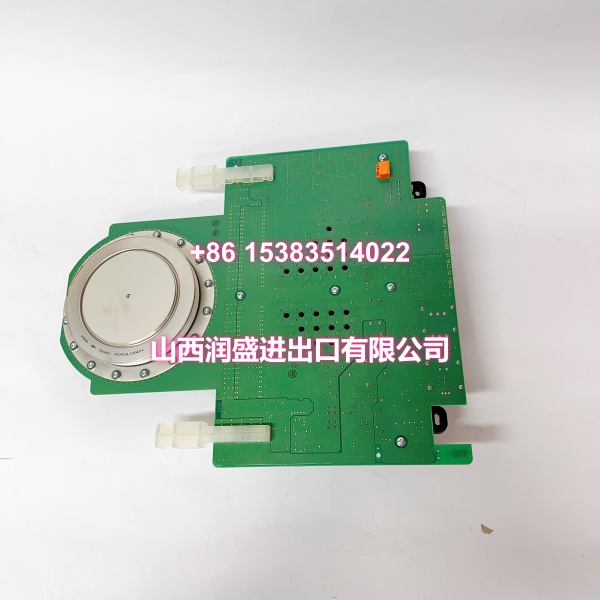
- Product Type: IGCT (Integrated Gate-Commutated Thyristor) Power Module
- Brand: ABB
- Model Number: 5SHY4045L0004
- Order Code: 3BHB021400R0002
- Series: ABB 5SHY Series (Reverse-Conducting IGCT family)
- Device Structure: Press-pack power semiconductor integrating a GCT (Gate-Commutated Thyristor) and an anti-parallel freewheeling diode in a single housing
- Rated Voltage (V_DRM): 4500V — suitable for 3.3kV / 4.16kV medium-voltage drive systems
- Switching Frequency: Optimized for medium-voltage PWM inverter applications, typically up to approximately 1 kHz
- Gate Drive: Requires a dedicated low-inductance gate driver unit; gate turn-off is achieved by diverting the full anode current through the gate terminal
- Turn-Off Capability: Hard gate turn-off without external snubber circuits, reducing component count and system losses
- Conduction Loss: Significantly lower on-state voltage drop compared to equivalent IGBT modules, improving overall inverter efficiency at high power levels
- dv/dt and di/dt Robustness: High tolerance to voltage and current transients, suitable for harsh industrial electrical environments
- Mechanical Design: Press-pack (pressure-contact) housing enabling double-sided cooling and high vibration/shock resistance
- Thermal Management: Designed for heatsink mounting with thermal interface material; typically requires forced-air or liquid cooling depending on application power density
- Protection Features: Integrated temperature sensor for over-temperature protection (OTP); short-circuit and over-current protection handled by the gate driver and system-level controls
- Mounting Method: Bolted/clamped press-pack installation onto a heatsink with specified mounting force; requires precision alignment to ensure uniform pressure distribution
- Typical Applications: Medium-voltage variable frequency drives (ACS6000/ACS8000 series and similar); wind turbine converters (≥5MW class); photovoltaic and energy storage PCS inverters; STATCOM and SVG reactive power compensation systems; HVDC and FACTS power transmission equipment; railway traction converters; large industrial motor drives for mining hoists, rolling mills, and compressors
Product Introduction
The ABB 5SHY4045L0004 is a press-pack IGCT (Integrated Gate-Commutated Thyristor) power module from ABB’s 5SHY series, designed for medium-voltage, high-power energy conversion applications. As a reverse-conducting IGCT, it integrates the main switching device and a freewheeling diode into a single pressure-contact package — delivering the low conduction losses of a thyristor combined with the fast, gate-controlled turn-off of a transistor.
What sets the 5SHY4045L0004 apart from conventional IGBT modules is its efficiency at the multi-megawatt scale. In medium-voltage drives (3.3kV–4.5kV) and large converter systems, conduction losses dominate total losses. The IGCT’s lower on-state voltage drop translates directly into reduced heat generation and higher system efficiency — especially important in continuous-duty applications like wind power converters, compressor drives, and rolling mill motors where even a 1% efficiency gain has significant operational cost impact over the equipment lifecycle.
The press-pack mechanical design is another key advantage. Unlike wire-bonded IGBT modules, the press-pack structure uses pressure contacts instead of soldered or wire-bonded interconnects. This eliminates bond-wire fatigue — a common failure mode in high-cycle applications — and enables double-sided cooling for superior thermal performance. The result is a device that withstands vibration, thermal cycling, and high di/dt stress far better than conventional module packaging, making it ideal for mining hoists, railway traction, and offshore wind installations.
For MRO procurement teams and system integrators maintaining medium-voltage drive systems, the 5SHY4045L0004 is a critical power semiconductor spare. When an IGCT fails in an ACS6000 or similar drive, the entire inverter leg is down — production stops. Having a verified genuine unit on hand means you can restore the drive quickly without waiting for long-lead OEM orders or risking counterfeit replacements that may lack the proper press-pack force tolerance and thermal characteristics.
QA & Testing SOP
Every unit undergoes a standardized verification process before shipment:
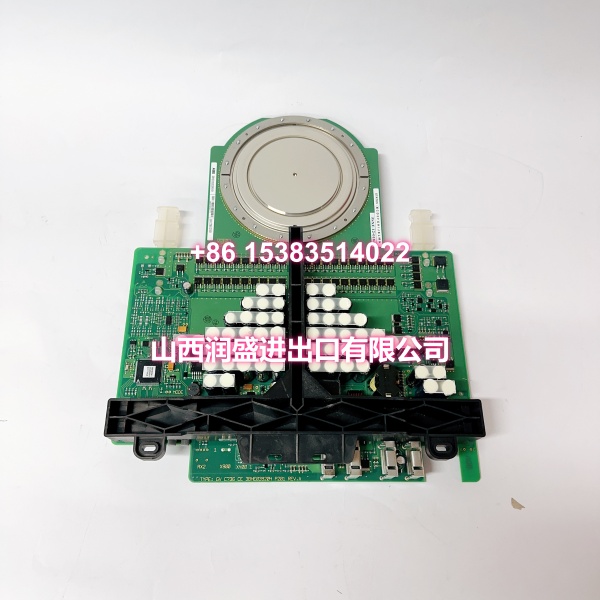
- Visual & Anti-Counterfeit Check: Inspect the press-pack housing for proper ABB branding and part number marking (5SHY4045L0004). Check for physical damage including cracked ceramic housing, damaged pressure-contact surfaces, bent mounting studs, or signs of thermal runaway (discoloration, melted solder on external connections).
- Pressure-Contact Surface Inspection: Examine the anode and cathode contact surfaces for flatness, scratches, or corrosion. Press-pack devices require mirror-finish contact surfaces to ensure uniform current distribution — any surface defect can create hot spots and premature failure.
- Gate Terminal Integrity Check: Verify the gate terminal connector is intact, with no bent pins or corrosion. The gate interface is critical for proper turn-off performance; a damaged gate connection can cause incomplete turn-off and device destruction.
- Static Parameter Test (V_DRM / V_RRM): Apply rated blocking voltage in both forward and reverse directions and verify that leakage current remains within specification. This confirms the PN junctions are intact and the device can block rated voltage.
- On-State Voltage Drop Test (V_T): Pass rated current through the device and measure the forward voltage drop. Compare against datasheet specifications — an abnormally high V_T indicates degraded junctions or contact resistance issues.
- Gate Trigger / Turn-Off Test: Using a dedicated IGCT gate driver test setup, verify that the device turns on with the specified gate trigger current and turns off cleanly when the gate current is diverted. Check for tail current and verify turn-off time is within specification.
- Freewheeling Diode Test: Test the integrated anti-parallel diode for forward voltage drop and reverse recovery characteristics. A degraded diode can cause excessive switching losses and voltage spikes during commutation.
- Thermal Sensor Verification: If the module includes an integrated temperature sensor (NTC or PTC), verify its resistance-temperature characteristic against the datasheet curve to confirm accurate over-temperature protection.
- Anti-Static & Mechanical Protection: After passing all tests, the module is placed in anti-static shielding with protective caps on the gate connector and contact surface protectors. It is then packed in rigid cardboard with foam cushioning to prevent mechanical shock during transit — critical for press-pack devices where ceramic housing fracture is a risk.
Installation Pitfalls & Guide
Real-World Risks When Replacing This Module:
❗ Incorrect Mounting Force: Press-pack IGCTs require a specific clamping force (typically specified in kN) to ensure proper electrical contact and thermal transfer. Too little force causes high contact resistance, overheating, and eventual failure. Too much force can crack the ceramic housing or damage the internal silicon structure. Always use a torque wrench or hydraulic press with the manufacturer-specified force value — never guess or overtighten by hand.
❗ Contaminated Contact Surfaces: Dust, oil, or oxidation on the heatsink or device contact surfaces creates thermal resistance hot spots. Before installation, clean both the heatsink surface and the IGCT contact surfaces with isopropyl alcohol and apply the specified thermal interface material (TIM) evenly. Even a fingerprint can create a localized hot spot that leads to thermal runaway.
❗ Gate Driver Mismatch: IGCTs require a dedicated gate driver unit designed for the specific device family. Using an incorrect gate driver — or one with wrong gate current, timing, or voltage levels — can cause incomplete turn-off, excessive switching losses, or gate-emitter damage. Always verify that the gate driver model matches the 5SHY4045L0004 specifications.
❗ Snubber Circuit Misconfiguration: One of the IGCT’s advantages is snubberless operation. However, if the system was originally designed with snubbers for a different device (e.g., GTO), leaving snubbers in place can cause oscillations and voltage spikes. Conversely, removing snubbers from a circuit not designed for snubberless IGCT operation can lead to overvoltage failure. Verify the system design matches the device requirements.
❗ Insufficient Cooling: The 5SHY4045L0004 generates significant heat at rated current. If the cooling system (forced-air fans, liquid cooling plates, or heatsink fins) is degraded — clogged filters, failed fans, dried thermal paste — the device will overheat and fail. Before installing a replacement, verify the cooling system is fully functional and the heatsink thermal resistance is within specification.
❗ Electrostatic Discharge (ESD) Damage: Although press-pack devices are more robust than wire-bonded modules, the gate terminal is still sensitive to ESD. Always wear an ESD wrist strap when handling the module and avoid touching the gate connector pins directly.
4-Step Replacement Guide:
- Pre-Install: De-energize the drive system and wait for the DC link capacitors to fully discharge (verify with a voltmeter — DC bus voltage must be below safe threshold, typically <36V). Document the existing wiring, gate driver connections, and cooling system configuration. Back up drive parameters and fault logs from the control unit.
- Removal: Disconnect all power cables, gate driver cables, and cooling connections. Release the clamping mechanism (bolts or hydraulic clamp) in the sequence specified by the drive manufacturer — typically a cross-pattern to release pressure evenly. Carefully lift the old IGCT out of the heatsink. Inspect the heatsink contact surface for damage or contamination.
- Install: Clean the heatsink surface and the new IGCT contact surfaces with isopropyl alcohol. Apply the specified thermal interface material evenly. Place the new 5SHY4045L0004 onto the heatsink, ensuring proper alignment with mounting holes and gate driver connector. Apply clamping force in the specified sequence and to the specified torque/force value using a calibrated torque wrench or hydraulic press. Reconnect gate driver cables, power cables, and cooling connections.
- Power-On Test: Before applying full power, perform a low-voltage gate driver test to verify proper gate signal delivery and device switching. Then apply rated voltage at reduced current and monitor the device temperature, gate waveforms, and output current waveforms. Gradually increase load to full rated current while monitoring for abnormal heating, voltage spikes, or gate signal distortion. Verify that the drive operates without fault codes across the full speed/torque range.
Technical FAQ
What is the difference between an IGCT and an IGBT? An IGCT combines the low conduction loss of a thyristor with the gate-controlled turn-off of a transistor. Compared to IGBTs, IGCTs have significantly lower on-state voltage drop (better efficiency at high power), higher voltage and current ratings per device, and a more robust press-pack mechanical design. However, IGCTs have lower switching frequencies (typically ≤1 kHz vs. tens of kHz for IGBTs) and require more complex gate drivers. IGCTs are preferred for medium-voltage, high-power applications (≥1MW) where conduction losses dominate; IGBTs are preferred for lower-power, higher-frequency applications.
Can I substitute the 5SHY4045L0004 with a different ABB IGCT model? Substitution depends on voltage rating, current rating, switching characteristics, and mechanical dimensions. The 5SHY4045L0004 is part of the 5SHY reverse-conducting IGCT family. A different model (e.g., 5SHY3545L0016 or 5SHY4045L0001) may have different voltage ratings, current ratings, or gate driver requirements. Always consult the ABB datasheet and the drive system documentation before substituting. In many cases, the gate driver and heatsink are designed for a specific device — changing the IGCT may require redesigning the gate drive circuit and verifying thermal performance.
What are common failure modes for this IGCT module? Common failure modes include: thermal runaway due to insufficient cooling or degraded thermal interface material; gate driver failure causing incomplete turn-off and device destruction; overvoltage spikes from switching transients or snubber misconfiguration; mechanical damage from incorrect mounting force (cracked ceramic housing); and gate terminal damage from ESD or incorrect wiring. In most cases, a failed IGCT is accompanied by a drive fault code (overcurrent, short circuit, or device temperature fault).
How do I verify the cooling system is adequate before installation? Check the following: forced-air fans are running at rated speed and airflow is unobstructed (clean filters and heatsink fins); liquid cooling systems have proper flow rate and coolant temperature within specification; thermal interface material is fresh and properly applied; heatsink thermal resistance is within the value specified in the drive documentation. If the previous IGCT failed due to overheating, the root cause is often the cooling system — not the device itself. Replacing the IGCT without fixing the cooling problem will result in repeat failure.
What warranty do you offer on New Surplus parts? We provide a full 12-month warranty on all New Original / New Surplus units. This is fundamentally different from refurbished or pulled IGCTs, which often carry 30–90 day warranties and come with unknown thermal cycling history, degraded press-pack contact surfaces, and potential gate driver interface damage. For a press-pack power semiconductor that sits at the heart of your medium-voltage drive, the reliability difference between new surplus and refurbished directly impacts drive uptime and the risk of catastrophic inverter failure.