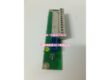
Product Core Brief
- Model: IS200AEPAH1AHD
- Brand: GE (General Electric)
- Series: Speedtronic Mark VI / Mark VIe — Excitation Power Control (AEPC) Board
- Core Function: Excitation current regulation and power amplification board for gas and steam turbine excitation systems, providing closed-loop 4-quadrant DC output control.
- Product Type: Excitation Power Amplifier / Control Board
- Key Specs: ±10A continuous output (±15A for 30s overload) | 0-28VDC output range | Nominal 24VDC ±20% input | Self-contained H-bridge with IGBTs | CAN/RS-485 communication | 6 LED bar graph current indicators | 2.5 kV power-to-logic isolation | TMR-compatible
- Condition: New Original / New Surplus
Product Introduction
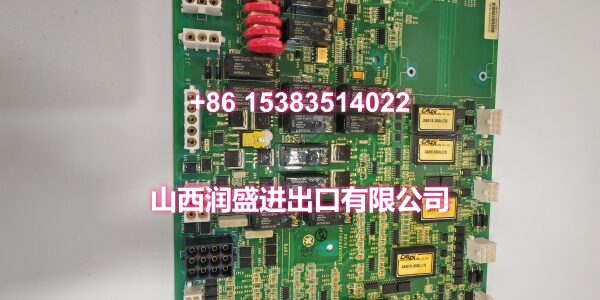
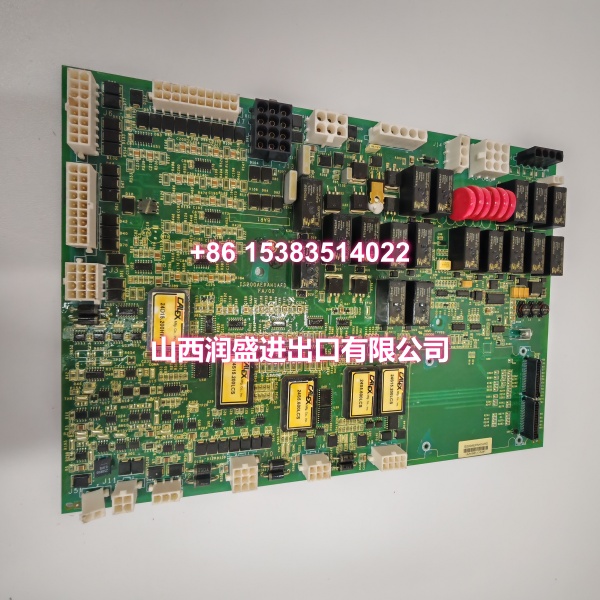
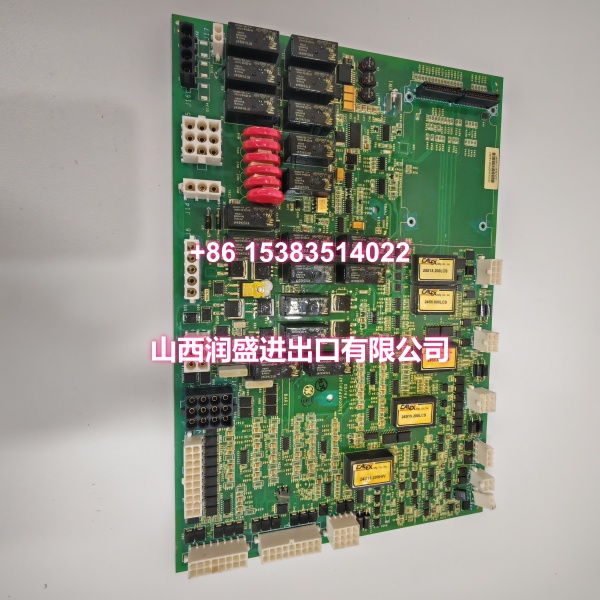
The GE IS200AEPAH1AHD is an Excitation Power Control (AEPC) board from GE’s Mark VI / Mark VIe Speedtronic turbine control series. It serves as the core power amplification and current regulation module in turbine excitation systems, converting controller commands into precise DC excitation current to regulate generator field voltage and reactive power output in gas and steam turbine applications.
This board features a self-contained H-bridge topology built with IGBTs and gate drivers, enabling true 4-quadrant DC output capability — meaning it can both source and sink excitation current, providing fast and precise field current control during transient conditions such as load rejection or grid faults. The continuous output current rating is ±10A, with a 30-second overload capacity of ±15A, and the output voltage range is 0-28VDC (limited by the 24VDC bus). The nominal input is 24VDC ±20% with a maximum input current of up to 10A.
For control and communication, the board interfaces with the Mark VIe controller via an internal CAN/RS-485 link, with a dedicated fiber-optic status port for diagnostic monitoring. It incorporates a 16-bit control DAC and FPGA-based closed-loop current control for high-resolution current regulation. Status is indicated via 6 LED bar graphs showing output current in 2A increments, providing at-a-glance operational visibility without external instrumentation.
The board includes comprehensive protection features: short-circuit protection, overload protection, thermal foldback (activating at 85°C junction temperature), and IGBT desaturation protection. Electrical isolation is rated at 2.5 kV power-to-logic and 500V field-to-chassis, ensuring safe operation in high-voltage excitation environments. It is compatible with both simplex and TMR redundant excitation system configurations and reuses existing ACPA screw terminal blocks for field wiring.
Key Technical Specifications
| Parameter | Value |
|---|---|
| Manufacturer | GE (General Electric) Energy |
| Product Family | Speedtronic Mark VI / Mark VIe |
| Board Type | Excitation Power Control (AEPC) Board |
| Core Function | Excitation current regulation, power amplification, closed-loop control |
| Output Topology | Self-contained H-bridge (4-quadrant DC) |
| Continuous Output Current | ±10A |
| Overload Output Current | ±15A for 30 seconds |
| Output Voltage Range | 0-28VDC (limited by 24V bus) |
| Input Voltage | Nominal 24VDC ±20% |
| Max Input Current | Up to 10A |
| Communication | Internal CAN/RS-485 link, fiber-optic status port |
| Control Components | FPGA, 16-bit control DAC, IGBTs, gate drivers, current sensors |
| Status Indication | 6 LED bar graphs (output current in 2A steps) |
| Isolation | 2.5 kV power-to-logic, 500V field-to-chassis |
| Protection | Short-circuit, overload, thermal foldback (85°C junction), IGBT desaturation |
| EMI Immunity | Compliant with IEEE 1613 surge requirements |
| Protection Rating | IP20 (board-level), compatible with IP54 enclosures |
| Operating Temperature | -30°C to +70°C (inside cabinet) |
| Humidity | 5% to 95% RH (non-condensing) |
| Physical Dimensions | 300 mm × 150 mm × 200 mm |
| Weight | Approx. 0.76 kg |
| Redundancy Support | Simplex and TMR redundant excitation systems |
| Terminal Block Compatibility | Reuses existing ACPA screw terminal blocks |
Quality Control Process
Every IS200AEPAH1AHD board goes through a four-stage bench check before shipping. First, a visual inspection under magnification checks for cold solder joints, cracked traces, IGBT package damage, and screw terminal block integrity — common failure points on power boards exposed to excitation system thermal cycling and vibration. Second, we power up the board on a verified Mark VIe test rack and confirm the 24VDC input circuit reads within spec using a Fluke 87V, verifying all protection circuits (overcurrent, thermal foldback) are functional. Third, we command the H-bridge across all four quadrants and verify output current accuracy against a precision reference meter, confirming ±10A continuous and ±15A overload capability, and validate the 6 LED bar graph indicators respond correctly in 2A increments. Fourth, we confirm CAN/RS-485 communication with the controller and verify the fiber-optic status port transmits diagnostic data correctly. Finally, the board is sealed in anti-static foam with desiccant — no exceptions.
Replacement Pitfall Guide
❗ 4-quadrant output verification. The AEPC board supports true 4-quadrant DC output (source and sink). If your excitation system requires field current reversal during transient conditions (e.g., load rejection, grid fault recovery), verify the replacement board’s H-bridge is fully functional in all four quadrants. A board with a damaged IGBT in one leg will only operate in 2-quadrant mode, potentially causing loss of field control during critical transients.
❗ Thermal foldback threshold. The board’s thermal foldback protection activates at 85°C junction temperature. If the excitation cabinet ventilation is inadequate or the heatsink is clogged with dust, the board may enter thermal foldback prematurely, reducing output current and potentially causing generator voltage instability. Always inspect and clean the heatsink and verify cabinet airflow during replacement.
❗ CAN/RS-485 address configuration. The board communicates via CAN/RS-485, and in TMR configurations, each board must have the correct node address. An incorrect address will prevent the controller from communicating with the board, resulting in loss of excitation control. Verify the address configuration matches the system documentation before installation.
❗ IGBT desaturation protection. The IGBT desaturation protection monitors the collector-emitter voltage during conduction. If the desat threshold is set incorrectly or the sensing circuit is damaged, the board may either fail to protect against IGBT short-circuit (causing catastrophic failure) or nuisance-trip during normal operation. Verify the desat protection circuit is functional during bench testing.
❗ ACPA terminal block compatibility. The board reuses existing ACPA screw terminal blocks. If the terminal blocks are corroded, loose, or damaged, high-current connections can overheat and fail. Always inspect and torque the ACPA terminal blocks to specification during replacement, and replace any damaged terminals.
❗ Fiber-optic status port connection. The fiber-optic status port provides diagnostic monitoring to the controller. A dirty, damaged, or disconnected fiber-optic cable will prevent the controller from receiving board status information, making it impossible to monitor output current, temperature, and fault conditions remotely. Inspect the fiber-optic connector and cable during replacement.
Keep these in mind and you’ll cut 90% of rework time.
Compatibility Matrix & Benchmarks
| Original Model | Replacement / Successor Model | Compatibility Level | Migration Notes |
|---|---|---|---|
| IS200AEPAH1AHD (same part, new revision) | Direct | Verify firmware version and CAN address configuration | |
| IS200AEPAH1ACB | Needs Adaptation | AEPAH1ACB is Mark VIe Analog I/O Processor; different function and pinout; not a direct replacement | |
| IS200AEPAH1AFD | Needs Adaptation | AEPAH1AFD is a power distribution board; different function; verify system requirements | |
| IS215AEPAH1A | Not Compatible | IS215AEPAH1A is Mark V series analog I/O board; incompatible backplane and communication |
Benchmarks:
- ±10A continuous / ±15A 30s overload 4-quadrant DC output
- Self-contained H-bridge with IGBTs, FPGA, and 16-bit control DAC
- CAN/RS-485 communication with fiber-optic status port
- 6 LED bar graph current indicators (2A steps)
- 2.5 kV power-to-logic isolation with comprehensive protection
- TMR-compatible with ACPA screw terminal block reuse