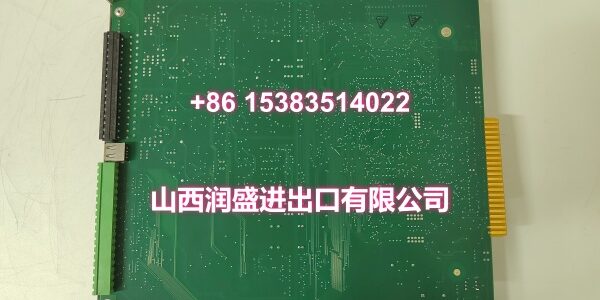
Product Core Brief
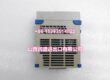
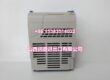
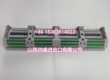
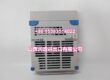
- Model: IOP345
- Brand: Metso
- Series: IOP300 Series I/O
- Core Function: Processes high-speed discrete status signals and critical safety interlocks for DCS integration.
- Product Type: Digital Input Module
- Key Specs: 24VDC Logic | 50kHz Processing | Galvanic Isolation
- Condition: New Original / New Surplus
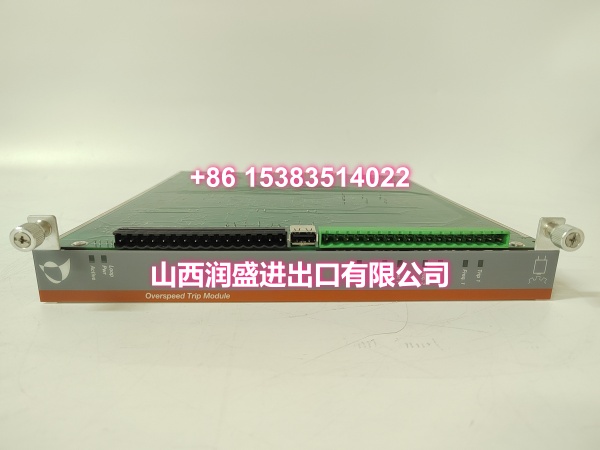
Key Technical Specifications
- Module Type: Digital Input (DI)
- Product ID:
- Signal Types: Dry Contact, 24VDC Sinking/Sourcing
- Processing Speed: Output frequency up to 50kHz
- Isolation: Galvanic isolation per channel
- Communication: RS-485 and Ethernet interfaces
- Operating Temp: -40°C to +85°C
- Power Supply: 24VDC nominal
- Dimensions: 17cm x 10cm x 3cm
- Weight: 0.5 kg
Product Introduction
Sitting in the IOP300 series rack, this module handles high-speed digital signal processing for demanding industrial environments. It captures rapid state changes from field devices and transmits data reliably via RS-485 or Ethernet, even in high-noise areas.
Field engineers rely on the extended temperature range and anti-interference design to maintain uptime in harsh conditions. The compact form factor saves valuable panel space while delivering the precision needed for automated production lines and safety-critical loops.
QA & Testing SOP (Dynamic & Transparent)
Every Metso IOP345 gets a full digital workout, not just a power-on check. We start with a visual inspection under magnification, looking for cold solder joints or flux residue that screams “field repair.” Then we test all channels by injecting 24VDC signals and verifying state changes in the status register.
Next, we validate the high-speed processing capability by injecting 50kHz pulse trains to confirm zero missed counts. We also test both RS-485 and Ethernet communication under load to ensure data integrity in noisy environments. Units ship in anti-static foam with a test certificate showing pass/fail for each channel and interface.
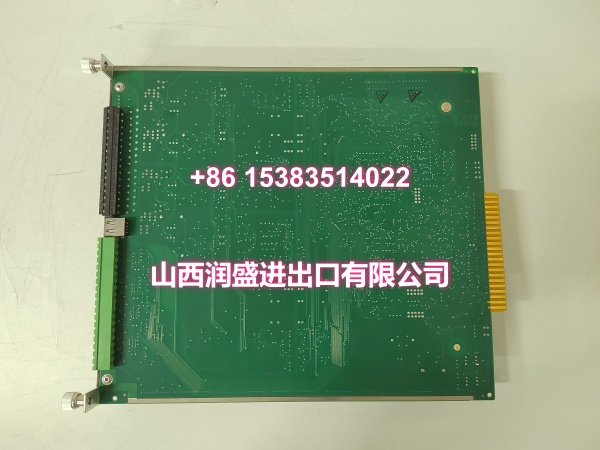
Installation Pitfalls & Guide
❗ EMI Environment: This module is designed for high-interference areas, but proper installation is still critical. Keep signal cables separated from VFD output cables by at least 12 inches. Use the RS-485 interface for long runs in electrically noisy zones—it rejects common-mode noise far better than Ethernet in these conditions.
❗ Temperature Derating: The -40°C to +85°C rating is impressive, but only if airflow is adequate. Don’t stack heat-generating modules directly adjacent without spacing. If your panel runs hot, verify the IOP345 has clearance for convection cooling.
❗ Communication Grounding: RS-485 requires a clean ground reference. If you’re seeing data corruption, check the shield termination and ensure the RS-485 ground is bonded to the module chassis. A floating ground turns the bus into an antenna.
Replacement SOP:
- Pre-Install: Tag every wire; photograph the terminal and comm cable layout before pulling.
- Removal: Release the top and bottom latches simultaneously; pull straight out.
- Install: Verify the keying tab aligns; push until you hear the dual click.
- Power-On: Apply backplane power; wait for the “Module OK” LED; verify comm link status before enabling inputs.
Technical FAQ
Q: Can I mix IOP345 and IOP331 modules in the same rack?
A: Yes, the IOP300 backplane supports mixed digital input and output cards. Just ensure your configuration software matches the slot assignment to the physical card type. The backplane doesn’t auto-detect; you have to tell it what’s where.
Q: Why would I choose RS-485 over Ethernet for this module?
A: In environments with heavy electromagnetic interference from VFDs, welders, or large motors, RS-485’s differential signaling rejects noise far better than standard Ethernet. Use Ethernet for high-bandwidth data to upper-level systems, but trust RS-485 for the dirty field-level communication.
Q: Is this module compatible with third-party DCS systems?
A: The IOP345 is designed for Metso DCS backplanes. While the digital signals are standard, the backplane communication protocol is proprietary. You can’t plug this into a Siemens or Allen-Bradley rack without a gateway. Stick to the OEM ecosystem for this card.
Q: What does the 50kHz processing speed actually mean for my application?
A: It means this module can accurately capture pulse trains from high-speed encoders, flow meters, or tachometers up to 50,000 counts per second. Standard DI modules typically max out at 1-5kHz. If you’re counting fast pulses, this is the card you need.
Q: Do I need to configure the communication interface?
A: Yes. The IOP345 supports both RS-485 and Ethernet, but you must configure which interface is active and set the correct baud rate or IP address in the engineering software before commissioning. Mismatched settings will result in communication loss even if the hardware is wired correctly.